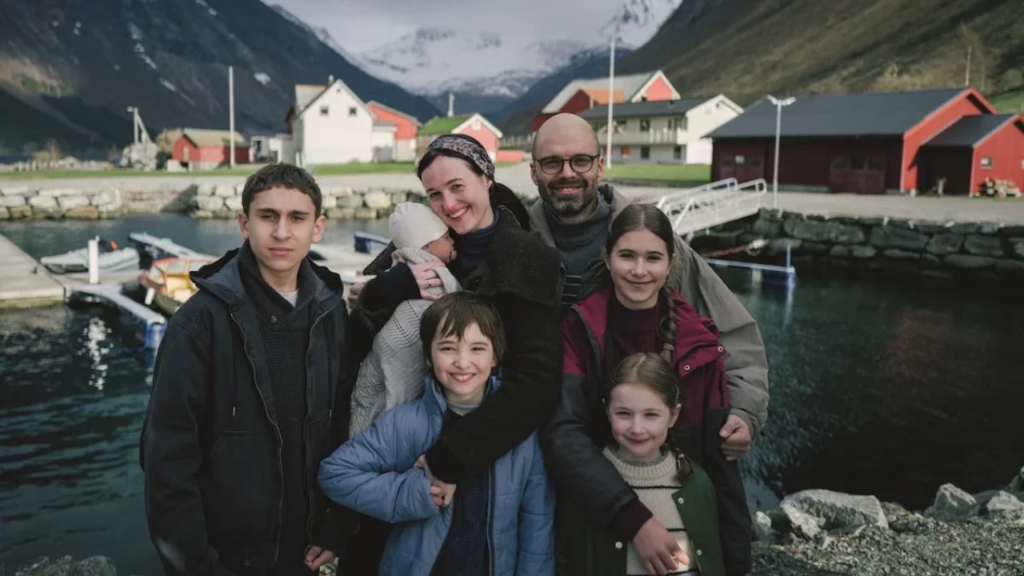
Cristian Mungiu’s Fjord has added another major honour to its international journey, winning the Audience Award at Jakarta World Cinema 2026 in Indonesia. The Romanian drama opened the festival before securing the distinction through audience votes. The win carries added significance as it was the only feature film prize presented at this year’s event, giving the Palme d’Or winner a notable reception from Indonesian moviegoers.
The Jakarta recognition adds a public vote to a run already marked by major international honours. Fjord won the Palme d’Or, the highest award at the 2026 Cannes Film Festival, where it also received the FIPRESCI Prize, the Ecumenical Jury Prize, the Prix de la Citoyenneté and the François Chalais Prize. Its latest success demonstrates how the film’s reach is extending beyond the established festival circuit and finding audiences in different parts of the world. The Jakarta Audience Award also adds a distinction based on viewers’ responses to the recognition it has received from international juries and critics.
Its place at Jakarta World Cinema was significant even before the award was announced. Fjord was selected as the festival’s opening film, bringing one of the year’s prominent international titles to Indonesian audiences at the start of the event. The Audience Award gave that opening-night spotlight a second chapter. The film did not simply arrive in Jakarta with an acclaimed reputation; it left with a distinction decided by the people who watched it. This reception provides another indication of its ability to connect with audiences beyond the European setting of its story.
The film also has a major awards-season journey ahead. Romania has officially selected Fjord as its submission for the International Feature Film category at the 99th Academy Awards in 2027. The selection puts the film in contention for the category, although it does not guarantee a nomination. The Academy will announce its shortlist and final nominees in the coming months. Following its success at Cannes and its latest audience recognition in Jakarta, the Oscar campaign will be another important stage in the film’s international journey.
Written and directed by Cristian Mungiu, Fjord stars Sebastian Stan and Renate Reinsve as Mihai and Lisbeth Gheorghiu, a Romanian-Norwegian couple who move with their children to a remote village in Norway. Hoping to build a new life near Lisbeth’s family, they initially find warmth among their neighbours. However, their fragile sense of belonging is unsettled when their daughter, Elia, arrives at school with bruises. The incident brings the family into conflict with local child-protection authorities, setting the central dramatic tensions in motion.
The story has become a point of debate among critics. Some have questioned whether the film gives too much weight to the family’s conservative beliefs, while others see it as a courageous examination of contemporary Western society and the assumptions that shape public life. The divide reflects the difficult questions at the centre of the drama: how far should institutions intervene in family life, and how do communities balance children’s welfare, religious freedom and parental rights? Rather than presenting these questions as straightforward conflicts, the film places the family and the surrounding community within a situation shaped by competing beliefs and responsibilities.
That discussion has helped Fjord move beyond the usual conversation around festival awards. Rather than offering an easy answer, the film places different values and perspectives in conflict and asks viewers to consider the limits of their own certainty. Its subject has particular resonance in Europe, but the questions it raises are not confined to one country or culture. The response in Jakarta adds another dimension to this discussion, suggesting that the film’s central concerns can engage audiences in a different social and cultural environment as well.
The film is a six-country co-production involving Romania, France, Norway, Denmark, Finland and Sweden, and runs for 146 minutes. Its cross-border production reflects the story’s own movement between cultures, with the Norwegian setting placing the family’s private struggles against an unfamiliar social environment. Sebastian Stan and Renate Reinsve lead the cast, which also includes Lisa Carlehed. Their performances contribute to the film’s portrait of a family attempting to establish a new life while navigating the expectations and institutions of the community around them.
For Cristian Mungiu, the Jakarta win adds another dimension to a film that has already travelled from Cannes’ highest prize to Romania’s Oscar selection. Its reception in Indonesia suggests that the questions raised on screen can connect with audiences far beyond the geographical and cultural setting of the story. The Audience Award is particularly significant in this respect, as it reflects the response of festival viewers rather than another jury decision.
As Fjord moves towards the 2027 Academy Awards, its growing international journey is being shaped not only by the honours it collects but also by the conversations it continues to provoke. The Cannes recognition established its position among the year’s major international films, while the Jakarta award has added evidence of its audience appeal. With its Oscar campaign ahead, the film now carries recognition from both festival juries and viewers in different parts of the world.