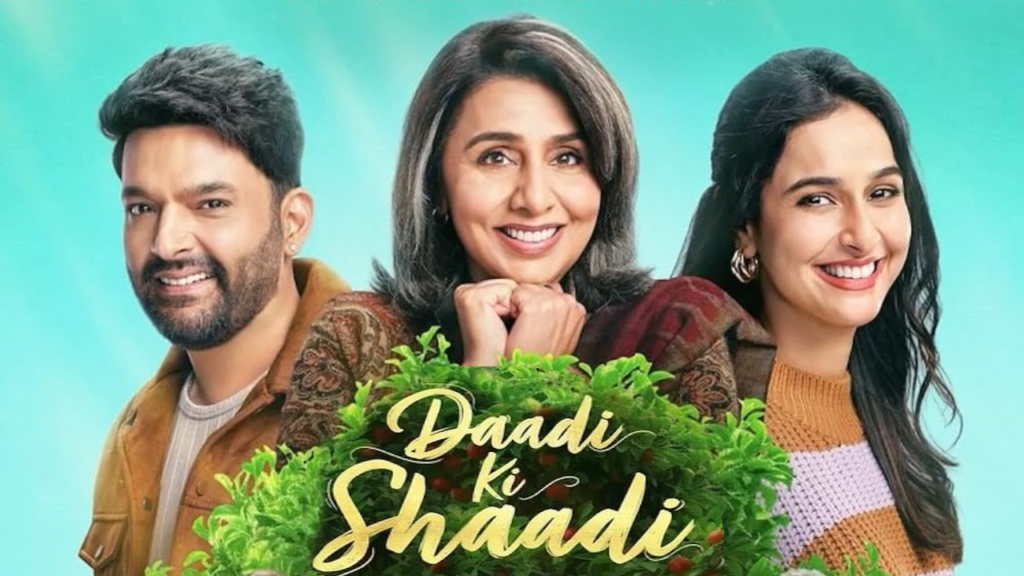
Hindi cinema has often explored aging parents through sacrifice and emotional guilt, but Daadi Ki Shaadi attempts to add a more unusual twist to that familiar formula — a grandmother deciding to remarry. The Daadi Ki Shaadi Review Roundup suggests that critics appreciate the film’s emotionally relevant premise and moments of situational humor, but many believe the family drama eventually gets weighed down by preachy messaging, weak writing, and overextended melodrama.
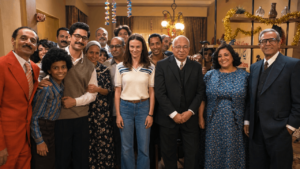
Directed by Ashish R. Mohan, the film begins with a simple but socially provocative setup. Vimla Ahuja, a widowed grandmother living alone in Shimla, shocks her family after posting online that she plans to get married again. The announcement immediately creates panic within her children and grandchildren, interrupting a family engagement and triggering a chaotic trip to Shimla. As relatives rush in to stop the wedding, misunderstandings pile up, hidden resentments surface, and the family slowly confronts loneliness, neglect, and emotional distance that had quietly settled over the years.
One of the most commonly praised aspects of the film is its central idea. Critics largely agree that the premise itself feels emotionally relevant, especially within the context of mainstream Hindi family dramas that rarely explore companionship and emotional isolation among elderly women. Anuj Kumar of The Hindu describes the film as “a gently subversive, commercially packaged provocation,” praising its attempt to challenge the stereotype of widows being reduced to silent figures of sacrifice and austerity. Kumar notes that the film works best when it treats the grandmother not as a symbol of morality, but as a human being still entitled to romance, companionship, and emotional fulfillment.
Several critics also appreciated the film’s lighter situational comedy, particularly during its first half. Anuj Kumar praises the grounded family humor and panic-driven misunderstandings that emerge once the family reaches Shimla, noting that the comedy feels rooted in recognizable middle-class family behavior rather than exaggerated slapstick. He particularly highlights how the screenplay flips familiar family-drama roles, with younger family members suddenly becoming insecure and reactive while the grandmother takes control of the situation.
The comedy also received some appreciation from critics who were otherwise mixed on the film overall. Sana Farzeen of India Today notes that parts of the confusion-driven humor genuinely work, especially when the film allows its family chaos to remain playful and absurd rather than emotionally heavy-handed. She argues that some stretches become “silly in an entertaining way,” particularly during the escalating misunderstandings surrounding the fake wedding setup.
Performance-wise, critics generally agree that Neetu Kapoor becomes the emotional anchor of the film. Rather than celebrating celebrity presence, reviewers consistently focus on how effectively she balances the film’s tonal shifts between humor and vulnerability. Shubhra Gupta of The Indian Express writes that Kapoor “stays consistently watchable” even when the screenplay around her begins to lose direction. Gupta praises her natural screen presence and emotional steadiness, arguing that she helps hold together scenes that otherwise drift into melodrama.
Similarly, Chirag Sehgal of News18 says Kapoor shoulders much of the film’s emotional burden, bringing warmth and sincerity to a character that could have easily become caricatured. Sehgal writes that the film works best whenever it allows Vimla’s loneliness and mischievousness to coexist naturally instead of turning every emotional moment into a lecture.
However, the strongest criticism across reviews revolves around the film’s writing and tonal inconsistency. Several critics argue that while the premise is promising, the execution slowly collapses under repetitive emotional scenes and excessive messaging. Shubhra Gupta calls the execution “a drag,” criticizing the flat sitcom-like staging where characters repeatedly line up in rooms delivering emotional speeches before exiting the frame. According to Gupta, what begins as a potentially refreshing family entertainer eventually transforms into a “creaky melodrama” overloaded with lectures about loneliness, old age, and family responsibility.
A similar complaint is echoed by Sana Farzeen, who argues that the film increasingly resembles “a stretched TV serial” rather than a tightly structured feature film. Farzeen criticizes the movie’s habit of stopping every few scenes to explain its own emotional themes through dramatic monologues and exaggerated confrontations. She notes that while the emotional core of parental loneliness is understandable, the screenplay repeatedly over-explains its message instead of allowing the drama to emerge naturally.
That issue of preachiness becomes one of the biggest recurring criticisms throughout the roundup. Nandini Ramnath of Scroll.in argues that the film eventually abandons its humor for moralizing, while Rahul Desai of The Hollywood Reporter India describes the movie as “joint-family propaganda.” Desai criticizes the screenplay for simplifying modern family relationships into one-sided emotional guilt trips, where younger generations are repeatedly scolded for independence while the film avoids engaging with the more complicated realities of adult life, work pressure, and emotional distance.
Desai is especially critical of the film’s reliance on emotional manipulation, arguing that the grandmother’s increasingly elaborate schemes to keep her family together become exhausting rather than moving. He notes that the movie repeatedly manufactures emotional crises instead of trusting its original premise to sustain itself organically.
Another criticism repeated across multiple reviews is the film’s excessive runtime and repetitive screenplay structure. Anuj Kumar notes that while the premise initially feels fresh and funny, the novelty begins to wear off after the first hour as the film keeps recycling the same “embarrassed family versus defiant grandmother” setup in slightly different forms. He argues that the screenplay gradually loses momentum and begins to resemble an overextended skit stretched far beyond its natural limits.
Likewise, Rahul Desai criticizes the film for exhausting its emotional and comedic beats too early before continuing to repeat them across its 150-minute runtime. Several critics suggest that the movie’s emotional message might have worked more effectively had the film remained lighter, shorter, and more focused on situational comedy instead of repeatedly escalating into emotional lectures.
What becomes increasingly clear across the Daadi Ki Shaadi review roundup is that critics believe Daadi Ki Shaadi works best when it remains playful, observational, and rooted in everyday family awkwardness. The film’s strongest moments emerge from its emotionally relevant premise and its willingness to acknowledge loneliness among elderly parents in modern families. But many reviewers feel the movie struggles to trust that simplicity, repeatedly interrupting its humor with moral lessons and melodramatic confrontations.
Ultimately, Daadi Ki Shaadi appears to be a film divided between two instincts — a warm situational family comedy and a heavy-handed social lecture. Critics generally agree that the emotional intentions behind the film are sincere, but many also believe that the screenplay’s preachy tone and repetitive structure prevent those intentions from landing as effectively as they could have.
For audiences nostalgic for old-school Bollywood family dramas, the film may still offer moments of emotional warmth and familiarity. But critics suggest that beneath its relevant premise lies a film that too often mistakes loud emotional messaging for meaningful storytelling.
Film Info
- Daadi Ki Shaadi (2026)
Release Date: May 8, 2026 - Director: Ashish R. Mohan
- Cast:
Neetu Kapoor,
Kapil Sharma,
R. Sarathkumar,
Sadia Khateeb,
Riddhima Kapoor Sahni - Genre: Family Drama, Comedy
- Runtime: 150 minutes
Read More Review Roundups on POF