The normalization of injustice and inequality can be so deeply conditioned that we seldom recognise the unfairness of it all. We become so accustomed to the way the world works that we stop questioning things that should never have been accepted in the first place.
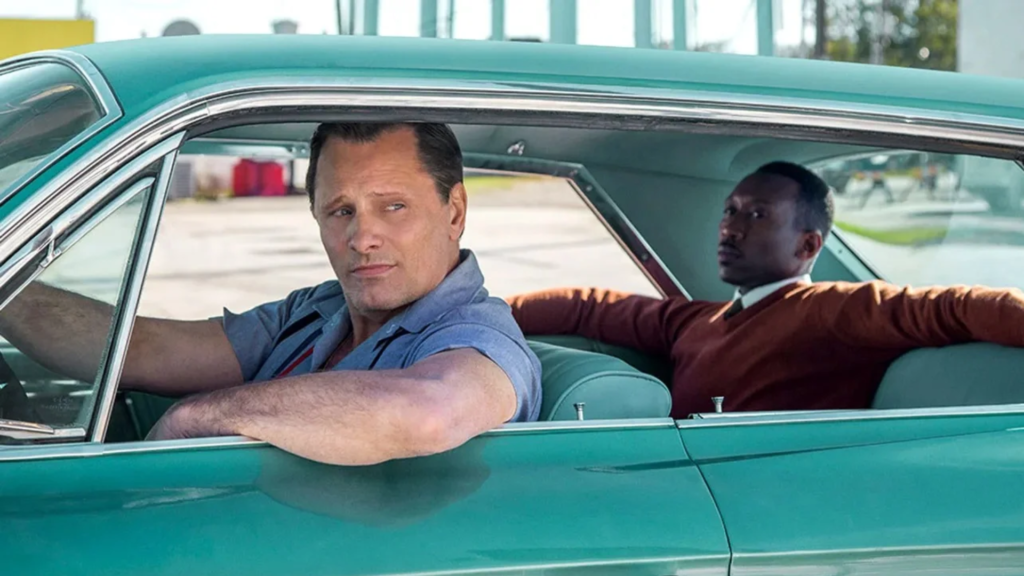
One such film that explores this is Green Book (2018), directed by Peter Farrelly. The film won the Academy Award for Best Picture in 2019, along with two other Oscars, including Best Supporting Actor for Mahershala Ali. Inspired by the true story of African-American pianist Don Shirley and Italian-American bouncer Frank “Tony Lip” Vallelonga, the film follows the two on a tour of the American South in 1962, with Tony serving as Shirley’s driver and bodyguard. What begins as a professional arrangement gradually turns into a friendship, as Tony begins to see the world a little differently.

Funny enough, the title comes from The Negro Motorist Green Book, a guidebook founded by Victor Hugo Green in 1936 to help African-American travellers find places where they would be welcome. When Tony’s wife learns about the existence of such a book, she is understandably surprised. And so is the audience. Imagine needing a book to know where you can stay while travelling, only because of the colour of your skin. A book for travelling while black.
Sounds bizarre, to say the least, but that’s how the world worked. Black people were not welcome in every restaurant, pub or hotel. If they wished to travel, they had to research beforehand and find places where they would be allowed to stay and eat. Imagine having to plan an ordinary journey around the places that would accept you. The fact that such a guidebook had to exist says enough about the world Shirley lived in.
Throughout the film, we see Tony’s preconceived notions about black people. In one instance, while writing to his wife about Shirley’s extraordinary piano playing, he mentions that Shirley doesn’t play like a coloured guy. It is an astounding thing to say, because what does that even mean? One could talk about someone playing off-key, lacking rhythm or not knowing the right notes. But to make a distinction like this on the basis of colour is irrational, absurd, and senseless. Being black or white or brown isn’t a determining factor in whether someone will be good or bad at anything.
And yet, Tony doesn’t seem to question the assumption behind his words. It is simply a part of how he has learnt to see the world. This is what makes the film’s exploration of prejudice so interesting. When we are habituated to certain ways of thinking, we can stop recognising the unfairness in them.
Tony and Shirley begin their journey as two people who have little in common and even less understanding of each other’s worlds. Tony has his own ideas about black people, but he has never really had to think about what it means to live with the kind of discrimination Shirley faces. As they travel together, he begins to see things he had never stopped to think about before. And somewhere along the way, between their differences, their disagreements and the time they spend together, they begin to find a friendship neither of them had set out to seek.
One moment that stood out to me was when Shirley is found in a restroom with another man and Tony helps secure his release. He doesn’t shame Shirley or judge him. In fact, he supports him and tries to help him. Shirley has to live with the discrimination that comes with being black, while this moment reveals another part of his life that leaves him vulnerable to judgement. Tony may not fully understand Shirley’s life, but he doesn’t make him feel that he deserves to be humiliated for it.
There is a certain kindness in the way he responds, in not making Shirley explain or defend himself before offering his support. Although, when you think about it, this is the only right way to respond, and doing the right thing should not necessarily be seen as an act of kindness. And yet, because of the times they lived in, it somehow is.
But there is also a moment when Tony’s lack of understanding becomes painfully clear. After calling Shirley someone who isn’t black enough and claiming that he himself is more black than Shirley, Tony leaves him with words that bring years of frustration to the surface. Drenched in heavy rain, Shirley finally asks him: “If I’m not black enough, if I’m not white enough, if I’m not man enough, then tell me, Tony, what am I?”

There is so much pain in this question. Shirley is a celebrated pianist, admired for his talent, and yet he is still treated as someone who doesn’t belong. His success cannot protect him from racism, and he finds himself caught between identities, never quite accepted for who he is.
Tony has never had to worry about these things in the same way. He doesn’t know what Shirley has had to live through, and he cannot imagine what it feels like to be in his position. But in that moment, he begins to understand that there is so much about Shirley’s life that he has never stopped to think about.
Tony says to Shirley at one point, “The world’s full of lonely people afraid to make the first move.” It is a simple line, but it stays with you when you think about the friendship that develops between them. Two men who begin their journey with little in common slowly become people who can turn to each other. And this line comes full circle when, after initially refusing to come to Tony’s house, Shirley himself visits him in the end, finding the courage to make the first move.
The final stop on their tour is particularly memorable. Despite being the star attraction of the evening, Shirley isn’t allowed to have dinner in the restaurant where everyone else is eating, just because he is black. Imagine inviting someone to perform for your guests, celebrating their talent, claiming they’re the guest star, and then denying them the basic dignity of sitting down to eat with everyone else. His music is welcome, but he isn’t.

Shirley takes a stand for himself, saying that if he cannot have dinner there, he will not perform. When the conversation between Tony and the location manager gets heated, Shirley is willing to play without having dinner, but leaves the decision to Tony, saying that he will do it if Tony wants him to.
Tony doesn’t hesitate. He says they’re leaving immediately.
And that moment matters. Tony has come to understand something he couldn’t see at the beginning of their journey. He refuses to let Shirley be treated this way, even when leaving means giving up the evening’s performance and the money that comes with it. Their friendship has come a long way, and Tony is now willing to stand by Shirley when it truly matters.
When they return to New York City, Tony goes home to his family for Christmas, and Shirley joins them. He is welcomed with more than open arms, and the friendship they found along the way continues long after their journey ends. The two remained close friends until their deaths in 2013.
What stays with me about Green Book is how easily injustice can become generalized when we are not the ones experiencing it. Tony has grown up accepting certain ideas about the world without questioning them. But as he gets to know Shirley, he begins to see things differently and understand the unjustness he had never really thought about. And that is what makes their friendship meaningful. It doesn’t undo the injustice Shirley has faced, but it changes the way Tony sees him and how he chooses to stand by him.
Because no matter how long an injustice has existed, or how normal it has become for people, nothing can ever make it seem right.