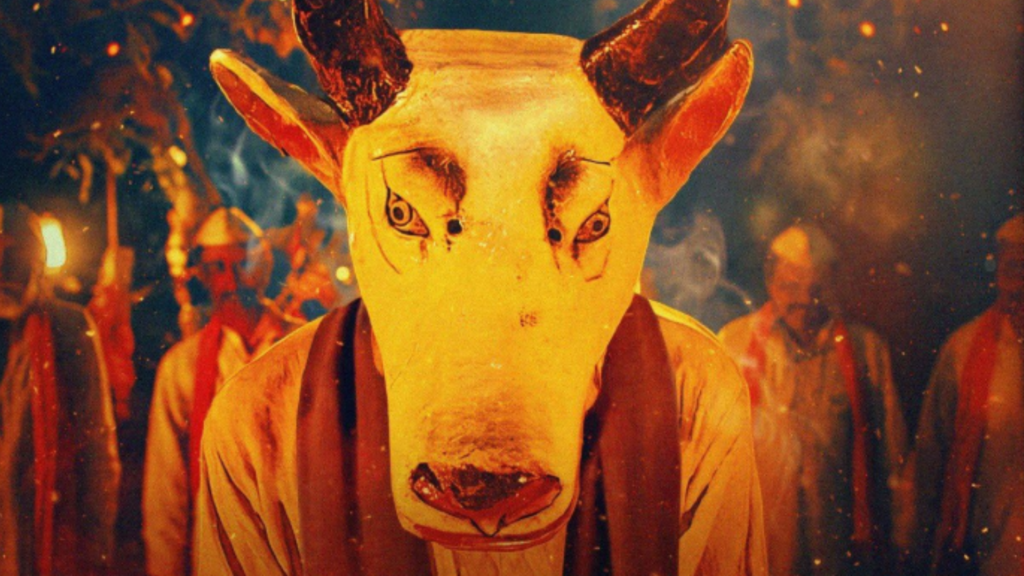
Gondhal, the Marathi psychological folk thriller written and directed by Santosh Davakhar, is scheduled for a worldwide theatrical release on November 13, 2026, in seven languages: Marathi, Hindi, Tamil, Telugu, Malayalam, Kannada and English. The release follows the film’s selection as India’s official submission for the 99th Academy Awards in the Best International Feature Film category. Featuring a reported 25-minute opening shot filmed in a single continuous take, a score by Ilaiyaraaja and a story rooted in Maharashtra’s ritual traditions, the film is taking a distinctly regional narrative to audiences beyond its home state.
The worldwide rollout is being presented as a first for Marathi cinema, with screenings planned across India and international markets, including the United States, the United Kingdom, Europe, Australia, Africa and Dubai. The seven-language release is intended to make the film accessible to audiences who may not understand Marathi, while retaining its cultural setting and folklore at the centre of the narrative.
Set in rural Maharashtra, Gondhal revolves around a sacred folk ritual that becomes entangled with desire, obsession and betrayal. The story follows Suman, a young woman trapped in an unhappy marriage, who attempts to gain control over her life by using her lover Sarjerao’s intense attachment to the ritual. As devotion and personal motives collide, a night of ceremony develops into a psychological struggle with dangerous consequences.
One of the film’s most distinctive technical features appears at the very beginning. According to the filmmakers, Gondhal opens with an unbroken shot lasting approximately 25 minutes. Rather than cutting between camera angles, the sequence keeps the audience within the unfolding action, placing considerable demands on the performers, camera movement and timing. The makers have described the sequence as a landmark for Indian cinema, although that characterisation remains their claim rather than an independently established record.
The film’s Oscar selection has brought further attention to the project. On September 18, 2026, the Film Federation of India selected Gondhal from a field of 33 films to represent India at the 99th Academy Awards. It is the fourth Marathi-language film to be selected as India’s official submission, following Shwaas (2004), Harishchandrachi Factory (2009) and Court (2015).
The selection marks an important milestone for the film, but it does not constitute a nomination for the final Academy Award. Gondhal must still progress through the Academy’s Best International Feature Film selection process to reach the final nominations.
Davakhar had already received recognition on the festival circuit. At the 56th International Film Festival of India (IFFI) in 2025, he won the Silver Peacock for Best Director. The festival jury praised the film’s handling of tradition, form and storytelling, describing it as “a Shakespearean fable set in the real world.” The recognition added to the film’s profile before its selection as India’s Oscar submission.
Music is another important element of Gondhal’s identity. The score is composed by Ilaiyaraaja, whose work draws on the film’s atmosphere and the rhythms of traditional Maharashtrian performance. The drums and sounds associated with the ritual serve more than a background function; they contribute to the tension and connect the psychological thriller to the community and cultural environment in which the story unfolds.
Produced under the Davakhar Films banner, Gondhal was reportedly made on a budget of approximately ₹4 crore. Its journey from a modestly budgeted Marathi production to India’s official Oscar submission highlights the potential for regional cinema to attract wider attention while retaining its cultural specificity.
The November 13 release will test whether the film’s combination of local folklore, psychological suspense, distinctive filmmaking techniques and a multilingual theatrical rollout can connect with audiences across markets. Its international reach will depend not only on the availability of language versions, but also on distribution, theatrical access and audience response.
For Marathi cinema, Gondhal’s worldwide release represents an opportunity to bring a story shaped by Maharashtra’s traditions to a broader audience. The film’s Oscar selection and festival recognition have established important milestones in its journey; its theatrical performance will determine how successfully that recognition translates into audience engagement.