There are films that make you feel something, and then there are films that make you look at cinema differently.
French cinema’s greatest influence may lie in the way it made filmmakers look at the medium differently.
It showed that filmmaking did not have to be confined to the conventions that had been established before it. A camera could move differently, a scene could unfold differently, and a story could find its rhythm in places that traditional cinema may have overlooked.
This way of looking at cinema did not appear overnight. France had been experimenting with the medium since its earliest days. The pioneering filmmakers, the Lumière brothers, helped bring moving images to the public with their invention of the Cinématographe in 1895, while filmmaker Georges Méliès took cinema into an entirely different world with his imaginative sets and special effects. One was fascinated by the possibilities of capturing life, while the other showed what could happen when cinema began creating a life of its own.
But it was the generation that followed the Second World War that began questioning the language of filmmaking more directly.

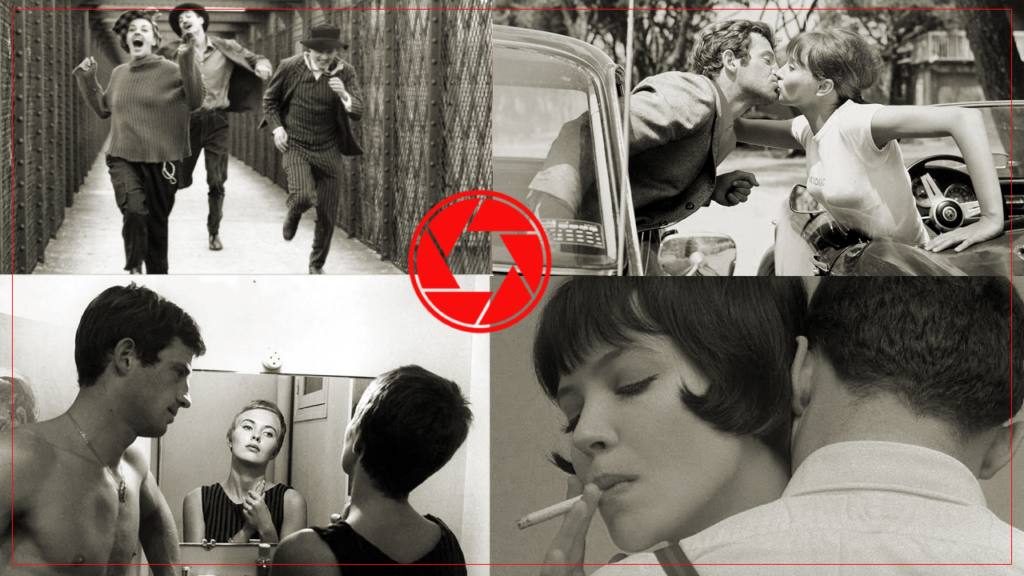
By the late 1950s, a group of young French filmmakers who had grown up watching and writing about cinema began turning their criticism into films. François Truffaut, Jean-Luc Godard, Claude Chabrol, Éric Rohmer, and Agnès Varda became some of the most important names associated with what came to be known as the French New Wave.
What made their films feel so different was not simply that they looked different. It was that they seemed to have a different understanding of what a film could be.
Instead of relying entirely on studios and constructed sets, these filmmakers often took their cameras onto the streets. Instead of elaborate lighting, they made use of natural light. Smaller crews and portable cameras allowed them to work quickly and adapt to their surroundings. The city was no longer just a backdrop that had to be recreated. It somehow became part of the story.
And the people inside those spaces felt less like actors performing inside a carefully controlled world and more like people simply existing in it.
François Truffaut’s The 400 Blows (1959) is one of the clearest examples of this. The film follows Antoine Doinel, a young boy dealing with school, an unhappy home life, and the loneliness of growing up feeling misunderstood. There is a delicacy in the way Truffaut handles him. The film does not need to tell us repeatedly that Antoine is unhappy. It allows us to see it in the way he moves through the world.
A vulnerable character can easily become a device for creating emotion. But Antoine never feels like he is there to make the audience feel sorry for him. He is allowed to be confused, mischievous, lonely, and hopeful at the same time. The film observes him rather than constantly explaining him.
It is this kind of restraint that made the New Wave feel so honest.
The same freedom could be seen in Truffaut’s Jules and Jim (1962) and Shoot the Piano Player (1960), where the films moved between emotions and tones without feeling trapped by one conventional way of telling a story. There was a sense that the filmmaker himself was discovering the film while making it.
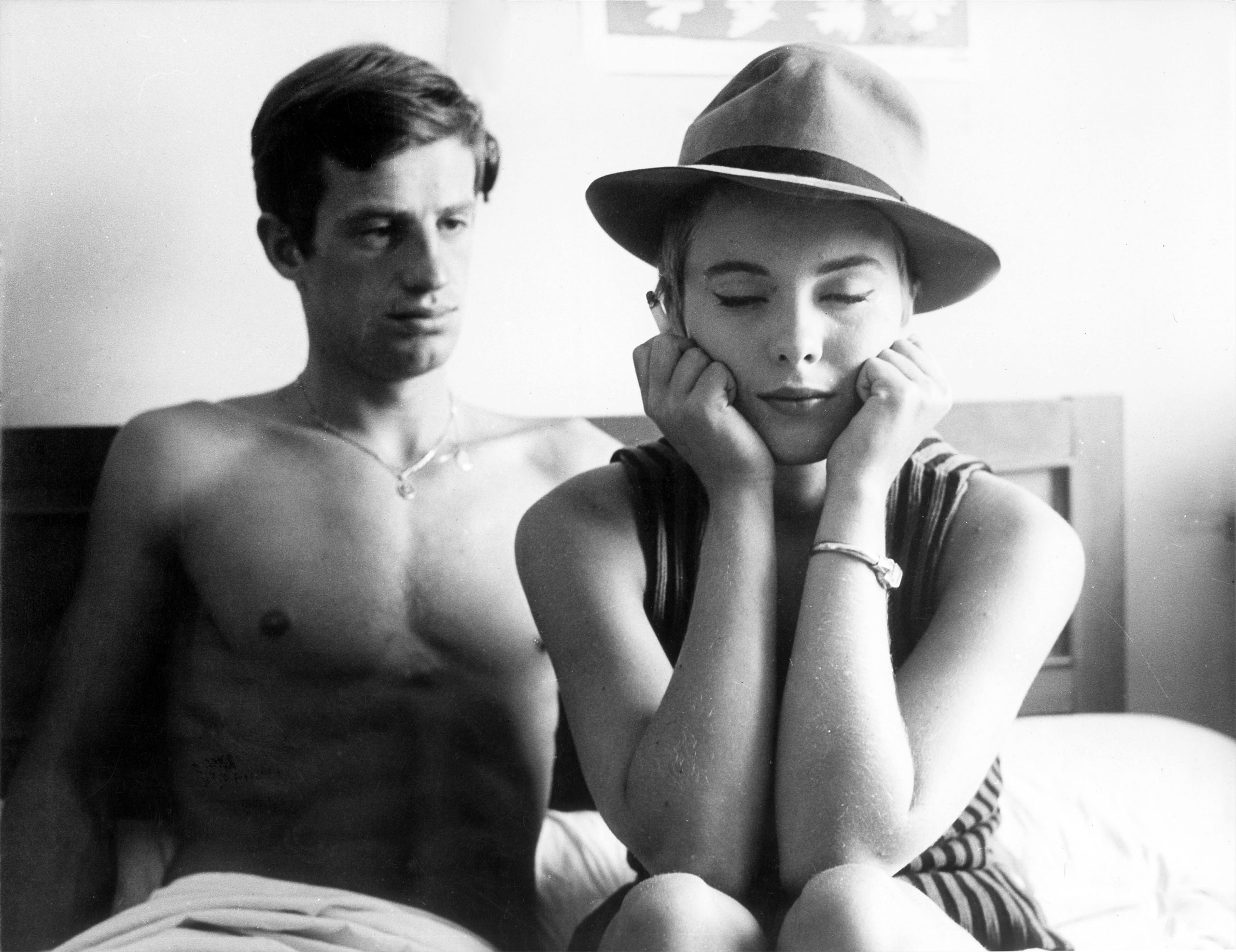
Jean-Luc Godard took that feeling even further. In Breathless (1960), the famous jump cuts suddenly made editing visible. Instead of allowing every cut to disappear smoothly into the next shot, Godard allowed the interruptions to remain. The rhythm became part of the experience. It was a small technical decision that carried a much larger idea.
Why should an edit have to hide?
For years, continuity had helped make films feel seamless, as if the camera had simply witnessed a continuous reality. Godard was comfortable reminding the audience that there was a filmmaker behind the camera, an editor deciding what we would see, and when we would see it. He even allowed his characters to look towards the audience, breaking the fourth wall that cinema had carefully built between the screen and the person watching it.
The film was no longer pretending to be reality. It was a film, and it was comfortable being one.
That attitude towards filmmaking changed more than the visual style of a few French films. It helped change the idea of the filmmaker itself.
The French New Wave grew alongside the auteur theory, which placed greater importance on the director as the creative voice behind a film. A director’s personality, ideas, and way of seeing could become visible throughout their work.
Today, it is something audiences almost expect.
There are directors whose films can be recognised within minutes because their worlds have a certain rhythm, visual language or way of looking at people. Quentin Tarantino’s relationship with genre and dialogue, or Wes Anderson’s highly controlled compositions and distinct sense of humour, are not separate from their identities as filmmakers. Their films feel like they could have come from no one else.
That idea owes much to the shift that French cinema helped create. But the New Wave’s influence was not limited to directors with large productions and recognisable styles. In fact, one of its most important lessons came from working with less.
Many of these filmmakers did not have the resources of the traditional studio system. So they found another way of making films. Real locations replaced elaborate sets. Natural light became part of the image. Smaller crews made movement easier. Improvisation could replace the need to control every moment.
What could have looked like a limitation became a creative choice. This would go on to influence independent filmmaking across the world.
The technology has changed enormously since then. A camera can now fit into a pocket. An entire film can be edited on a laptop. A filmmaker can reach an audience without first finding a studio willing to take a chance on the project.
But the thought behind it remains the same. You can make something with what you have.
The French New Wave also made experimentation feel less like an exception and more like a natural part of filmmaking. Once filmmakers began seeing cinema this way, the possibilities became difficult to contain. Its influence travelled far beyond France. Filmmakers in America, Japan, India, and elsewhere began absorbing the movement’s ideas. Its techniques became part of the language of independent and director-driven cinema, while its larger philosophy continued to influence filmmakers who may have never consciously described their work as part of the New Wave tradition.
French cinema also helped establish a culture around filmmaking that treated it as more than a commercial product. France’s support for its film industry, including through the Centre National du Cinéma (CNC), gave filmmakers more space to make films without depending entirely on commercial success. Film festivals also became an important part of this culture, with the Cannes Film Festival growing into one of the world’s biggest platforms for cinema.
These institutions matter because artistic movements do not exist only because filmmakers have ideas. They also need places where those ideas can survive, be seen, find an audience, and thrive.
The French New Wave found that space.
The movement was not simply about handheld cameras, jump cuts or filming on the streets of Paris. Those techniques can be replicated. What is harder to copy is the curiosity behind them. The filmmakers were willing to look at something as familiar as a conversation and ask whether it had to be filmed in the familiar way.
That changed the way cinema was viewed. It also changed what audiences could expect from it.
The New Wave did not just give filmmakers a new set of techniques. It gave them the confidence to question the techniques they had inherited. Its most lasting contribution may be the understanding that filmmaking is not a finished language. It is something that can keep being rewritten.
French cinema showed the world that sometimes, to discover what cinema can become, you first have to stop believing that it can only be one thing.