We see the changing colours in the sky and are instantly mesmerized, as if under a spell. We find that just by looking at it, we’re at peace. We’re more centred. So many things happen at sunsets. Epiphanies happen at sunset. We’re taken to another world. We feel life at its peak. We feel life living. There’s never a dull moment at a sunset.
But why is that? Why are we so drawn to sunsets? And why do sunsets somehow feel more special when we’re at the beach than when we’re standing on the side of a road?
The answer, I think, lies in cinema. And in a way that’s also probably why they look so cinematic.
What shapes, or rather moulds, our idea of ideal travel is cinema. Right from when we’re very young, we have been exposed to cinema’s idea of travel. And over time, that idea gets fed into our brains. So much so that many of our travel plans are based on it, often without us even realising it.
Think about it. When we imagine travel, what comes to mind?
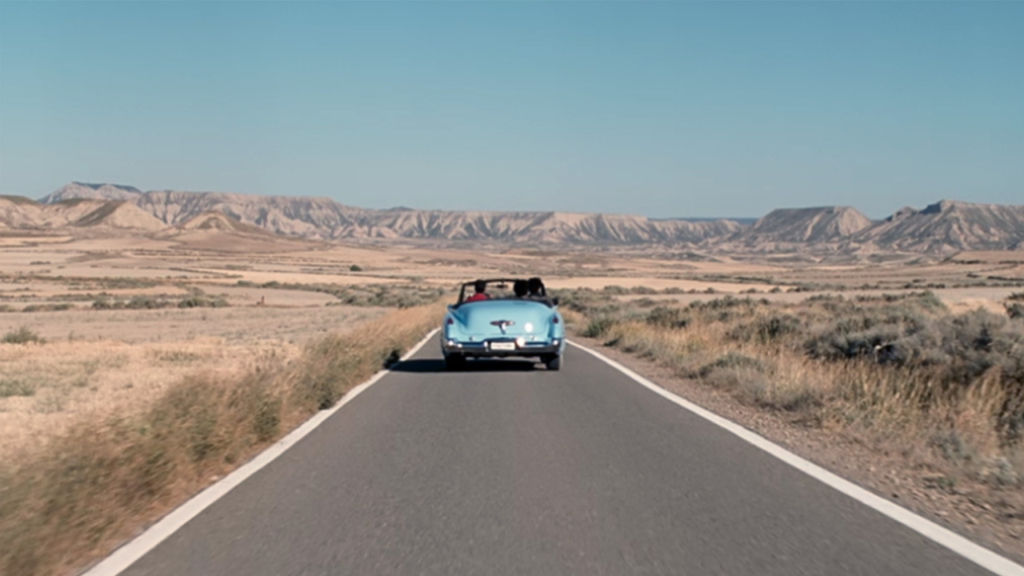
A road trip with friends. A train journey through evolving landscapes. Walking through the streets of an unfamiliar city. A sunset on a beach. A mountain town tucked away in the clouds.
These images don’t just appear out of nowhere. They have been repeatedly shown to us on screen. Cinema didn’t just show us places. It also taught us how to feel about those places.

One of cinema’s greatest powers is its ability to transform ordinary locations into cultural symbols. Goa became synonymous with friendship, freedom and youth for an entire generation of Indians after the release of the Indian film Dil Chahta Hai (2001), written and directed by Farhan Akhtar. Switzerland became the ultimate destination for romance through decades of Indian cinema, particularly the films of Yash Chopra such as Chandni (1989), and later Dilwale Dulhania Le Jayenge (1995), directed by Aditya Chopra. New York’s skyscrapers became symbols of ambition and possibility through decades of American cinema. More recently, Dubai’s Burj Khalifa gained an added layer of global fascination after films such as Mission: Impossible – Ghost Protocol (2011) and Furious 7 (2015) showcased it in spectacular fashion, with Tom Cruise doing unbelievable stunts in the Burj Khalifa. What more could attract a person to want to visit the Burj Khalifa? These places were already beautiful or impressive, but cinema gave them more meaning.
Paris somehow became “the city of love.” But why? I’m of the opinion that love is more a feeling than a place. It’s the sweetest scent in a sea of garbage. It’s magic in a barren land. It’s fulfilling hunger without ever touching food. It’s presence in the midst of complete absence. It’s finding purpose in a void of darkness. It’s all this, and more. And yet, we associate it more closely with Paris because of conditioning. We have seen so many romances unfold in Paris across films, books and television that it now feels like an unquestionable fact. In reality, it’s just another construct made and believed by people.
Cinema doesn’t just shape where we travel. It shapes how we travel.
Think about your daily commute. The journey from home to work, from work to home, or even the route back to your hometown probably contains countless new things every day. Different people. Different stories. Different moments unfolding right in front of you. But there are slim chances you’ve noticed most of them. When we know a route too well, our brains stop paying attention. Familiarity switches observation off. Yet when we travel somewhere new, observation switches on.
We try to absorb everything. Every street. Every face. Every sound. Every little detail. Part of that is because the experience is new. But part of it is also because cinema has taught us that this is what travelling looks like.
When a character travels in a film, they don’t simply move from one destination to another. They absorb every moment of the journey. The landscapes matter. The conversations matter. The pauses matter. And so, when we travel, consciously or unconsciously, we begin doing the same.
Films have taught us how to look at landscapes. How to look at waterfalls. How to look at open roads, and sunsets.
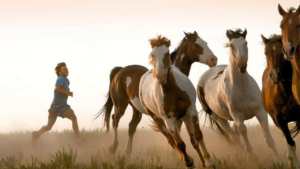
Whether it’s Richard Linklater’s Before Sunrise (1995), which turned wandering through an unfamiliar city into something deeply meaningful, or Sean Penn’s Into the Wild (2007), which transformed wilderness into a symbol of self-discovery, cinema has consistently framed landscapes as more than plain scenery. Across cultures and industries, films have taught us to slow down from our busy lives and look at places not just for what they are, but for what they make us feel. It’s that thing of remembrance. A moment that made you feel the most special might not remain in your memory a decade later, especially the intricacies of it, but what you will forever remember is how you felt in that moment.

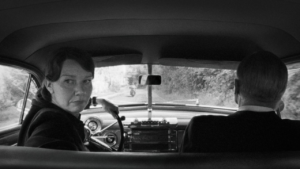
Cinema doesn’t just influence where we travel, it influences how we believe life should be experienced. Friendship road trips gained enormous attraction through films like Dil Chahta Hai (2001) and Zindagi Na Milegi Dobara (2011), both of which presented travel as a tool for self-discovery and stronger relationships. Indian film Piku, directed by Shoojit Sircar, offered a different kind of travel story altogether. Through a road trip between a daughter and her aging father, it reminded audiences that travel doesn’t always have to be about adventure or escape, sometimes it’s simply about spending time with the people we love before life moves on, or before they’re snatched away from us. Solo travel became associated with independence and personal growth through films such as Queen (2014), directed by Vikas Bahl, and the Hollywood film Eat, Pray, Love (2010), directed by Ryan Murphy and based on Elizabeth Gilbert’s memoir. Even experiences like the Tomatina festival in Spain reached wider audiences through Zindagi Na Milegi Dobara, helping transform a local celebration into a bucket-list experience for many viewers around the world. Specifically, in India, it’s incorporated in the celebration of Holi, an Indian festival, which was earlier only played with colours and water.
The same can be said for adventure activities like paragliding, scuba diving, and skydiving. They’re incredible experiences in their own right, sure. But this idea that you’re somehow missing out on life if you haven’t done them before you die didn’t emerge out of thin air. For many people, and especially for Indians, films like Zindagi Na Milegi Dobara turned these activities into symbols of truly living. We began to believe that a life fully lived must include experiences like these.
And perhaps that’s cinema’s greatest influence. It doesn’t just sell destinations. It sells emotions, possibilities, and versions of ourselves. The traveler. The adventurer. The romantic. The wanderer. The dreamer. That’s why travel often feels cinematic. Because our desire falls on wanting to be a part of every aspect of travel shown on the big screen. Because long before we stepped onto that beach, boarded that train, walked through that unknown city, or stood in a field of mustard flowers, we had already travelled there in our minds.
Someone had shown us how to see it. Someone had shown us how to feel it. And that someone, more often than not, was cinema.
Read More:
- Beyond Hype: The 10 Indian Films Defining Anticipation in 2026
- Hollywood Box Office Failures 2025 Explained — What The Year’s Biggest Misses Taught Us
- Why James Cameron’s Films Refuse to Fade — Even When the Box Office Is Done
- Best Santa Claus Movies of All Time, Ranked by Impact and Legacy
- 35 Years Later: From Traps to Triumphs: Where Are the Stars of ‘Home Alone’ Now?