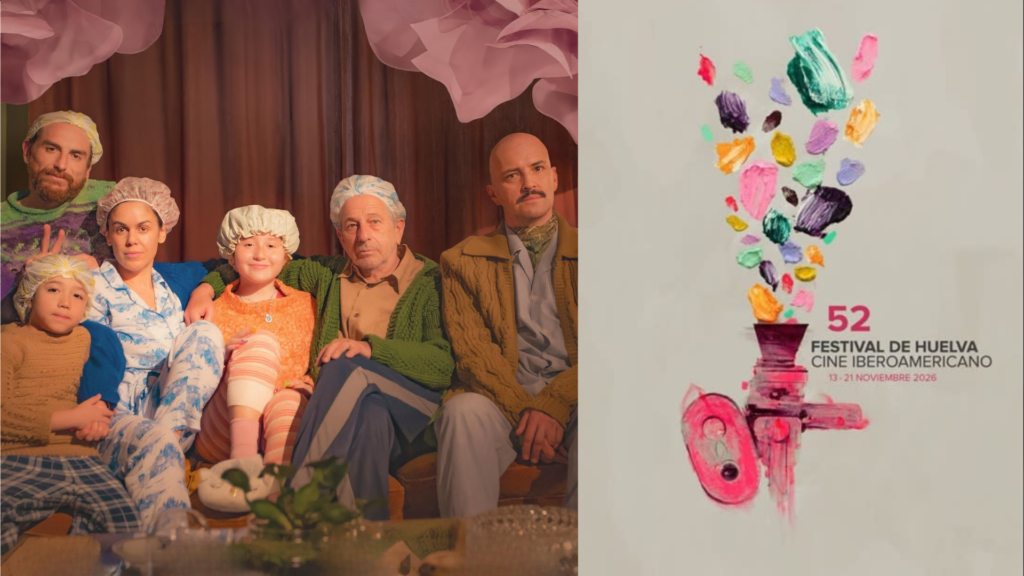
Shawn Garry’s Chilean film After Elena (Después de Elena) emerged as the biggest winner at the 52nd Huelva Film Festival, receiving the Golden Columbus for Best Feature Film and the Best Actor award for Alfredo Castro. The festival’s 2026 awards also recognised Argentine filmmaker Lucía Puenzo, Brazilian actor Duda Santos and Spanish directing duo Javier Calvo and Javier Ambrossi, among other talents from across Ibero-American cinema.
The awards were announced during the festival’s closing ceremony on November 21. A co-production between Chile, Colombia and Italy, After Elena follows 70-year-old Roberto, whose adult children move into his home following the death of their mother, Elena. Although they claim to have returned to look after their father, their presence is also influenced by questions surrounding the family’s inheritance.
Blending grief with comedy, the film explores complicated family relationships and the tensions that emerge when personal loss intersects with questions of responsibility and money. Its treatment of these themes, particularly its ability to find humour in difficult circumstances, helped it stand out among this year’s selections. The film also received the Manuel Barba Award for Best Screenplay from the Huelva Press Association, adding another recognition to its awards haul.
Castro won Best Actor for his performance as Roberto. His award accompanied the film’s top honour, making After Elena the leading title at this year’s festival. The film’s recognition across both the main competition and the screenplay category highlighted its strength in combining character-driven storytelling with a distinctive tonal approach.
The Special Jury Prize went to Mexican film I Am Mario (Soy Mario), directed by Sharon Kleinberg. The film centres on Mario, a 40-year-old transgender taxi driver whose unexpected pregnancy challenges his understanding of masculinity while bringing him closer to his dream of becoming a father. Its story examines identity, parenthood and personal expectations through the experiences of its central character.
Argentine filmmaker Lucía Puenzo received the Best Director award for Pepita, the Gunslinger (Pepita, la pistolera), a thriller inspired by the real-life Margarita Di Tullio. Played by Luisana Lopilato, the character responds to the deaths of fellow sex workers in 1980s Mar del Plata by building her own brothel and nightlife business. Combining crime storytelling with questions of gender and power, the film draws on a real-life figure to explore the circumstances surrounding its protagonist’s actions. The award recognised Puenzo’s direction of the film.
Brazilian actor Duda Santos received the Best Actress award for her performance in Aly Muritiba’s Funk. She plays MC Sabrina, a funk singer whose confident stage persona contrasts with the vulnerability she experiences while pursuing fame. The role brings together the public image of a performer and the personal challenges that accompany her ambitions, with Santos receiving recognition for her portrayal of the character.
The Best Supporting Actor award went to Rubén Ochandiano for his performance in Mexican filmmaker Lorena Villarreal’s Life Is (La vida es). Ochandiano plays a musician who has a significant influence on the protagonist’s life. His recognition added another Mexican production to the list of award-winning films at this year’s event.
The Silver Columbus Audience Award was presented to Brazil’s Gugu’s World (O Mundo de Gugu), directed by Allan Deberton Nogueira. The film was also Brazil’s entry for the International Feature Film category at the Academy Awards. Its recognition at Huelva added to its previous festival honours, while the audience award reflected its reception among festival viewers.
Spanish cinema also featured prominently in the awards. Javier Calvo and Javier Ambrossi, collectively known as Los Javis, received Best Spanish Direction in the Acento. Cine Español section for La Bola Negra. The directing duo’s recognition formed part of the festival’s acknowledgement of work from Spain alongside productions from across Latin America.
Elías Pérez won Best Andalusian Direction for Plus Ultra, adding another Spanish title to the list of award recipients. The two directing honours highlighted the presence of Spanish filmmaking within the wider Ibero-American programme.
The festival also presented the City of Huelva Honorary Award to Chilean actor Paulina García in recognition of her career. García is known internationally for her performance in Gloria, and the honorary distinction acknowledged her contribution to cinema.
This year’s awards reflected the range of stories and filmmaking approaches represented at the Huelva Ibero-American Film Festival. The winning titles explored themes including grief, identity, family relationships, gender, personal ambition and the pursuit of fame, often bringing social concerns into different cinematic genres. From the combination of comedy and mourning in After Elena to the crime-driven narrative of Pepita, the Gunslinger and the performance-centred story of Funk, the awards recognised films working across varied subjects and styles.
With After Elena securing the Golden Columbus and two additional recognitions, including Alfredo Castro’s Best Actor award and the Manuel Barba screenplay honour, it became the most prominent title of the 2026 edition. The awards also brought attention to filmmakers and performers from Chile, Mexico, Argentina, Brazil and Spain, underlining the festival’s role in showcasing the breadth of contemporary Ibero-American cinema.