The Rambo legacy is heading back to its roots — and this time, it’s doing so with a new face, a new perspective, and a clear intent to rebuild one of action cinema’s most iconic characters for a new generation.
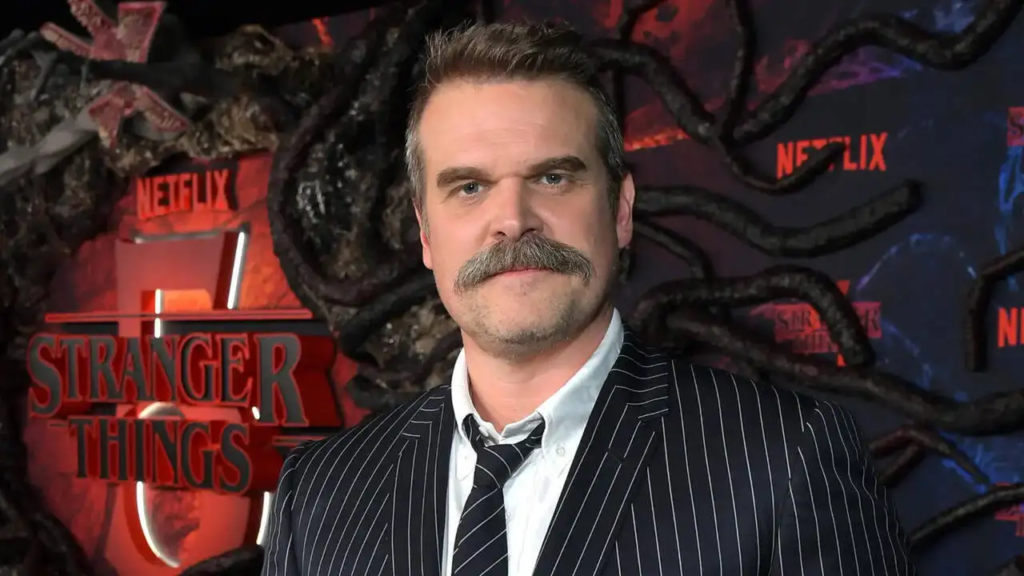
In a development confirmed by major trade publications, David Harbour has officially joined the cast of John Rambo, an origin story that will explore the early life of the legendary soldier long before the events of First Blood. Harbour will step into the role of Major Samuel Trautman, the commanding officer and mentor figure who plays a pivotal role in shaping Rambo’s journey. The character, originally portrayed by Richard Crenna, has always been central to the emotional and psychological framework of the franchise, making Harbour’s casting a significant addition to the film’s core dynamic.
Leading the film is Noah Centineo, who takes on the challenge of portraying a younger John Rambo — a character immortalized by Sylvester Stallone across multiple decades. Unlike the later entries in the franchise, which leaned heavily into large-scale action and spectacle, this new chapter is positioned as a grounded, character-driven narrative. It aims to delve into Rambo’s formative years as a Special Forces soldier, tracing the origins of his combat skills, psychological trauma, and the survival instincts that would later define him.
Set against the backdrop of the Vietnam War era, John Rambo is designed as a prequel that shifts the focus away from myth and toward human experience. The story is expected to examine not just the making of a soldier, but the cost of war on identity, memory, and morality. By anchoring the narrative in Rambo’s early military life, the film appears to be returning to the tonal roots that made First Blood a landmark in action cinema — a film that was as much about post-war trauma and alienation as it was about survival.
The project is being directed by Jalmari Helander, best known for his work on Sisu, a film that blended visceral action with a stark, survivalist tone. That sensibility is expected to carry into John Rambo, suggesting a film that prioritizes intensity and realism over stylized spectacle. The screenplay, penned by Rory Haines and Sohrab Noshirvani, further signals a shift toward a more introspective approach, focusing on character psychology as much as action.
Backing the project is a strong production lineup that includes Lionsgate, Millennium Media, and AGBO, indicating that the film is not merely a standalone experiment but a calculated attempt to reintroduce Rambo as a viable modern franchise. Production has already moved at a steady pace, with filming taking place in Bangkok earlier this year and wrapping within a few months, placing the film firmly in its post-production phase.
Importantly, Sylvester Stallone remains attached to the project as an executive producer, ensuring a level of continuity with the legacy of the character. While Stallone will not reprise the role on screen, his involvement signals an endorsement of the film’s direction — one that respects the original while attempting to reinterpret it for contemporary audiences.
The timing of this origin story is also telling. In an era where Hollywood continues to mine legacy IP for new narratives, John Rambo stands out for choosing introspection over escalation. Instead of attempting to outdo previous installments in scale, the film appears to be recalibrating the franchise by returning to its emotional and thematic foundations. It reflects a broader industry trend where audiences are increasingly drawn to character-driven storytelling, even within established action properties.
Read More:
- How much does responsibility seep into filmmaking? Or does it at all?
- When Beauty Becomes a Prison: The Eternal Relevance of Jalsaghar
- Roger Corman: The King of Cult Cinema and His Enduring Legacy