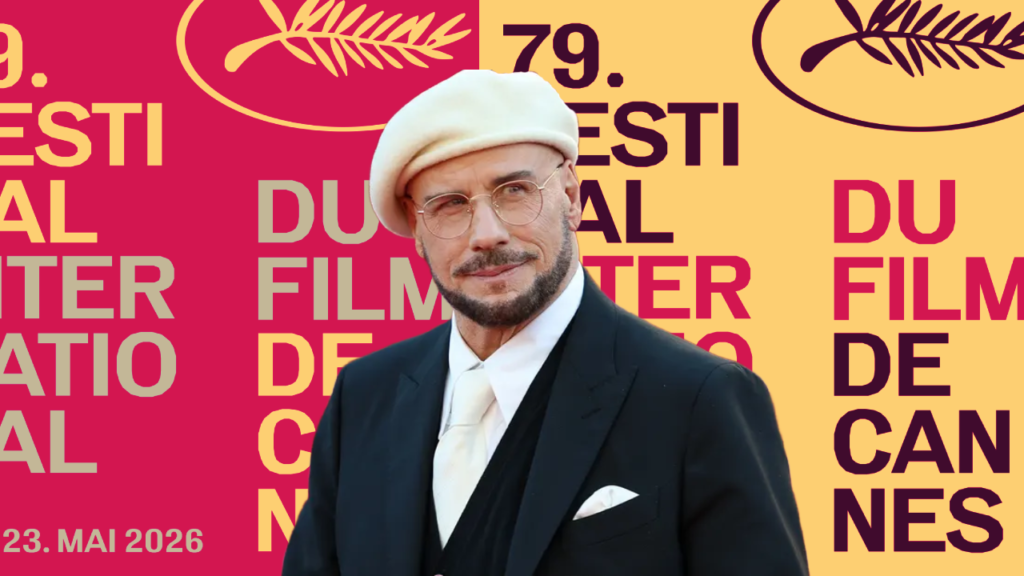
John Travolta received one of the most emotional surprises of the 79th Cannes Film Festival when he was presented with an honorary Palme d’Or ahead of the screening of his directorial debut, Propeller One-Way Night Coach. The actor-filmmaker, who arrived at Cannes with one of the most personal projects of his career, was visibly moved as festival head Thierry Frémaux handed him the honor.
Travolta did not appear to know the award was coming. Reacting to the surprise, he said, “You said this would be a special night, but I didn’t think you meant this.” He called the moment humbling and added that the recognition was “beyond the Oscar,” underlining how deeply the Cannes tribute affected him.
View this post on Instagram
The honorary Palme d’Or turned the screening of Propeller One-Way Night Coach into more than a festival premiere. It became a career-spanning tribute to Travolta’s decades in cinema, while also marking the beginning of a new chapter for him as a writer-director. For an actor whose screen journey includes some of the most recognizable films of the last half-century, the Cannes moment carried both nostalgia and renewal.
Frémaux reportedly described Travolta as one of the great artists of the 20th and 21st centuries. He also revealed that Propeller One-Way Night Coach was the first film chosen for the 79th edition of the festival. Travolta said he cried when Frémaux told him the film had been accepted so early, adding that he had no expectation the movie would be selected when he first brought it to Cannes.
The film is based on Travolta’s 1997 children’s book of the same name and follows a young aviation enthusiast named Jeff and his mother as they take a cross-country flight to Hollywood during the golden age of aviation. The story reflects Travolta’s lifelong love of flying and carries a strong autobiographical quality, drawing from his childhood imagination, family influences and early dreams of show business.
Before the screening, Travolta described the film as “the most personal thing” he had ever done. That personal connection is visible in how deeply involved he is with the project. Travolta wrote, directed, produced, financed and narrated the film, making Propeller One-Way Night Coach not just his directorial debut, but a work shaped almost entirely around his own memory and creative vision.
Travolta told the Cannes audience that other people had wanted to produce and direct the film, but he felt the story was too personal to hand over. He said he wanted, at this stage of his life, to offer a reflection of where everything started for him. That sentiment gives the film a different weight from a conventional debut. It is not only a first directorial effort, but also a return to childhood origins.
The family connection runs through the film as well. Travolta said the project exists because of the people closest to him, pointing to his family in the audience. He explained that his oldest sister Ellen inspired the lead character, while the role also carries elements of his mother. He credited both women with shaping his hopes and dreams and watching him make those dreams come true.
Propeller One-Way Night Coach stars Clark Shotwell as young Jeff and Kelly Eviston-Quinnett as his mother. Travolta’s daughter, Ella Bleu Travolta, appears in the film as a flight attendant and was also present at the Cannes screening. Olga Hoffmann is also part of the cast.
The film screened at the Debussy Theater, where the audience gave Travolta a warm reception. Reports from the screening said the crowd applauded several times during the film and later gave him a standing ovation. Travolta thanked the audience for being there and for witnessing his directorial debut.
Speaking about the emotional world of the film, Travolta reflected on an earlier era when aviation, architecture, automobiles, clothing and style carried a sense of hope and adventure. He suggested that young people today may be missing some of that romance and forward-looking optimism, and said the film could serve as a gentle reminder of that spirit.
The Cannes presentation also connected Travolta’s new film to his long history with the festival. His career is closely tied to Cannes through Pulp Fiction, which premiered at the festival in 1994 and went on to win the Palme d’Or. That film helped define a major second act in Travolta’s career and remains one of the most important Cannes success stories of the modern era.
Travolta has had other Cannes connections as well. She’s So Lovely played in competition in 1997, while Primary Colors screened out of competition in 1998. Grease and Saturday Night Fever, two of the films that made him a global star, have also played as Cannes beach screenings. Those links made the honorary Palme d’Or feel like a recognition of both his individual career and his long relationship with the festival.
The surprise honor also fits Cannes’ recent pattern of giving unannounced honorary Palme d’Or awards during the festival. The 2026 edition had already announced honorary Palmes for Peter Jackson and Barbra Streisand, but Travolta’s award was kept as a surprise. In recent years, Cannes has used similar surprise tributes to celebrate major figures during key festival moments.
For Travolta, the timing made the recognition even more meaningful. Instead of receiving the award only as a retrospective honor, he accepted it just before presenting a new film that he had personally written and directed. That made the moment both backward-looking and forward-facing: a celebration of his legacy and a public introduction to his next creative identity.
The film is backed by Apple and is set to stream on Apple TV from May 29. Its Cannes premiere gives it a high-profile launch before its digital release, while Travolta’s emotional appearance adds a strong human story around the project.
When asked whether he would direct again, Travolta said he has spent 55 years watching filmmakers work, both well and not so well, and believes he can navigate the process. But he also made it clear that he would need to feel genuine passion for the material. That answer suggests that Propeller One-Way Night Coach was not simply an experiment, but a project he felt compelled to make.
Read More: