How often do you go to the theatre today? It’s a question that feels more relevant each day because for many people, the answer is very different from what it was perhaps a decade ago. Even before the pandemic, theatre-going habits were probably changing, but post-pandemic, the shift has become impossible to ignore. The films that are succeeding in theatres today look very different from many of the films that used to thrive just a few years ago.
This raises a larger question, are larger-than-life films becoming the only viable form of theatrical cinema in Bollywood?

Whenever discussions around the box office emerge, there is often an assumption that good films succeed and bad films fail. History suggests otherwise. Take Satyajit Ray, for instance. Today, he is regarded as one of the greatest filmmakers in world cinema, yet many of his films were not major commercial successes during their release. The gap between critical acclaim and commercial success has always existed. It’s not something new. Cinema has never been just about the quality of a film. It is also about distribution, marketing, timing, audience behaviour, and business. Sometimes a film is appreciated by everyone who watches it, but not enough people show up to watch it in theatres.
For a long time, it seemed like Bollywood had space for multiple kinds of theatrical experiences. A big star film could work, but so could a social drama, a thriller, or a mid-budget film, driven entirely by writing and performances. Films like Andhadhun, Article 15, Badhaai Ho, Hindi Medium, Piku, Pink, Raazi, and several others proved that audiences were willing to leave their homes for stories that did not rely on spectacle. Their appeal lay in strong writing, compelling performances and exceptional execution. Today, however, that seems far more difficult.
The pandemic did not create this shift, but it surely added to it. During lockdown, audiences became accustomed to consuming quality content at home. Streaming platforms offered dramas, thrillers, romances and slice-of-life stories, everything that one ever wanted just at the click of a button. As a result, that habit seeped into audiences of watching these stories at home and enjoying themselves in a comfortable environment. But because of that, many films that would once have been considered ideal theatrical releases now face a different challenge. The audience is no longer simply asking whether a film is good. It is asking whether the film is worth leaving home for.
The theatre is no longer competing amongst different films. It is competing with convenience itself. When a viewer knows that a well-made drama or thriller will likely arrive on a streaming platform within weeks, the motivation to buy a ticket is bound to decrease. Spectacle, on the other hand, remains difficult to replicate at home. Scale, action, visual grandeur, larger-than-life characters and the collective energy of a packed theatre still possess a unique appeal. This is one reason why theatrical cinema increasingly seems to favour huge-event films.

Recent successes make this trend difficult to ignore. Pathaan, Jawan, Animal, Gadar 2, Tiger 3, and more were all designed as theatrical events. Whether one likes these films or not is almost beside the point. They promised scale, stars and moments that audiences wanted to experience collectively. Looking ahead, films like King are already being positioned in a similar way. The audience is not merely paying for a story. It is paying for an experience.
Audiences may be more selective today, but they have repeatedly shown that they will turn up when a film feels something out of the ordinary. The success of films across different scales and genres over the years suggests that people are not rejecting good stories, they are rejecting stories that feel ordinary. If theatrical cinema has become a harder market to crack, then the responsibility on filmmakers is arguably greater than ever. The challenge is not simply to make a good film, but to make one good enough to convince audiences that it deserves two hours of their time, attention and money outside the home.
This is where an important distinction emerges. A film can still be good without being theatre-worthy in the eyes of audiences. That sounds harsh, but it may be the reality of the current market. A brilliantly written drama can receive critical acclaim, strong audience reviews and still struggle commercially because viewers are willing to wait for its digital release. The question for filmmakers today is not just whether a story is worth telling, but whether it offers something that justifies a trip to the cinema.
The business side of the industry also plays a role. Larger stars, recognizable franchises and proven formulas often attract greater confidence. Bigger films receive larger marketing budgets, creating greater visibility, and eventually, increasing the chances of a strong opening weekend. This creates a structure where scale becomes an advantage long before audiences have even watched the film. Meanwhile, smaller films often struggle for attention, screens, and marketing support.
Another noticeable trend in recent years has been the rise of films that seem driven by a larger mission, message or agenda. Some are political, some historical, some nationalistic and some seek to engage with larger cultural conversations. Regardless of where one stands on these films, they often generate discussion before release. Attention is harder to capture than ever, and films that can provoke debate often gain visibility.
All of this raises another concern. Will every film eventually become larger-than-life? Will the industry stop making smaller, more intimate stories altogether?
That seems unlikely. Cinema has always been evolving. Every era develops its dominant trend, and every dominant trend eventually produces a counter-trend. The success of spectacle does not necessarily mean intimate storytelling disappears. More often, it means those stories find a different home.
The arrival of AI could add another dimension to this conversation. In the short term, AI will likely affect filmmaking through production efficiencies, visual effects, planning tools, and more. If studios increasingly rely on data, algorithms and audience analytics to identify successful patterns, there may be greater pressure to create stories that resemble previous successes. That could make it harder for unconventional ideas to secure backing. At the same time, history repeatedly shows that audiences eventually tire of formulas. Data can identify what worked yesterday, but it cannot predict what people might love tomorrow. Some of cinema’s most memorable successes were films that looked risky before they became hits.
So, are larger-than-life films the future of theatrical cinema in Bollywood?
For the moment, they appear to be. Not because audiences have stopped valuing strong writing, nuanced performances or original stories, but because the role of theatre itself has changed. When people go to cinemas less frequently, they become more selective about what deserves a theatre visit. The films winning that battle today are often the ones offering scale, spectacle and a sense of occasion. The bigger question is whether this represents a permanent transformation or simply another phase in cinema’s long history. Because if there is one thing cinema has consistently demonstrated, it is that it is ever changing. And the next theatrical revolution may well come from a film that, today, nobody sees coming.
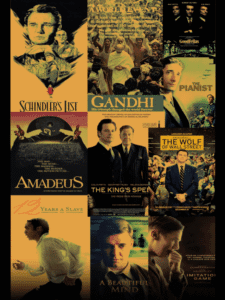
As a very famous quote from the 2014 American film The Imitation Game says, “Sometimes it’s the very people who no one imagines anything of, who do the things that no one can imagine.” And when a writer, a creator fulfills that, an audience will surely be compelled to leave their home.
Read More Articles:
- Spotlight: Making Injustice Heard in a World of Untouchable Power
- Harry Potter and the Question Every Reboot Must Answer
- Good Films Are Often Bad Experiences
- Top 10 Sequels That Elevated Cinema: When Hollywood Got Better the Second Time
- How much does responsibility seep into filmmaking? Or does it at all?