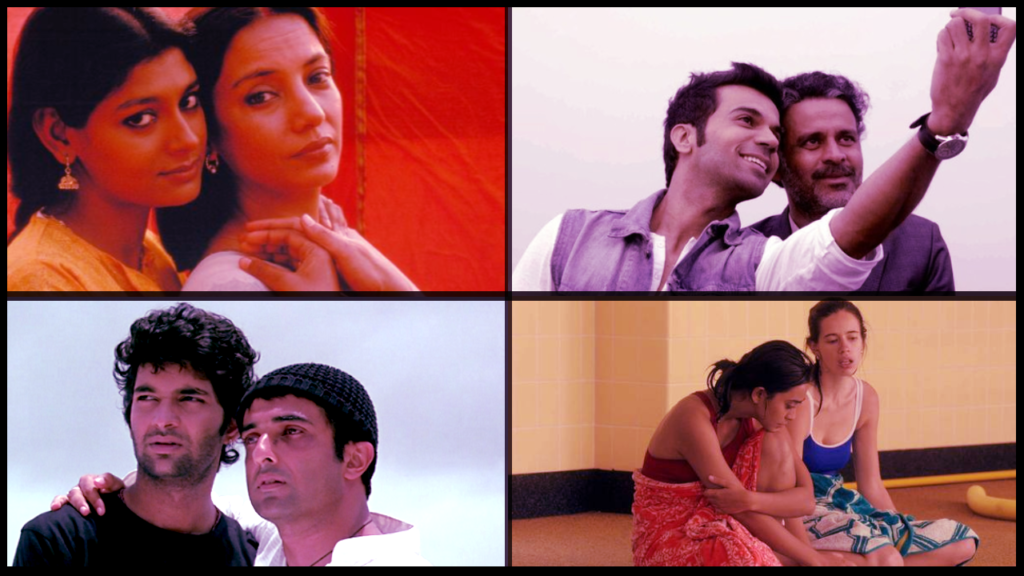
How is one proclaimed to be a part of the LGBTQIA+ community? It’s a horrifyingly dangerous, terror-inflicting cult, isn’t it? So according to that logic, I’m guessing there must be some sort of form that needs filling, or some tasks that need to be done. No? Oh, my bad.
That sarcasm itself says enough. Because that still remains the perception among many people. And unfortunately, cinema, especially mainstream Hindi cinema, has not always helped in changing that perception. In many ways, it has only reinforced it.
For decades, queer people in Hindi films have either been reduced to stereotypes, turned into comic relief, or portrayed as something abnormal, dramatic, or dangerous. And when representation itself is already so little, every portrayal begins carrying even more weight. The problem is not just the lack of representation, but the kind of representation that has been normalized.
One among many mainstream examples is Student of the Year (2012), directed by Karan Johar, where Rishi Kapoor plays a gay man. And to say that the portrayal is over-the-top would be an understatement. There’s a scene where his character, without any comfort level or warning, starts pressing Ronit Roy’s character’s shoulders. A, that is simply crossing a line. And B, who even does that to a subordinate regardless of sexual orientation? But portrayals like these, feed directly into the stereotype that gay men will randomly start hitting on straight men without consent or welcome.
And that has been one of Hindi cinema’s longest-running problems, queer representation being used mostly for laughs.
In a lot of films, queer characters feel less like actual human beings and more like exaggerated caricatures. Gay men are often shown walking, talking, dressing, and behaving in only one particular way, as if there is a fixed template for homosexuality. And because mainstream cinema reaches millions, these portrayals slowly become accepted as truth.
Another major example is Dostana (2008), written and directed by Tarun Mansukhani. The film became hugely popular, but much of its humour relied entirely on stereotypes. The song Maa Da Laadla especially plays queerness for laughs. One of the most absurd moments in the sequence is when the two male characters are shown getting married, with one dressed in a lehenga and the other in a sherwani. While people may find that funny, what it indirectly suggests is that even in a same-sex relationship, one person has to become “the woman.” As if heterosexual dynamics remain the default “norm” no matter what.
But gender identity, gender expression, and sexuality are all entirely different things. Two men marrying each other does not suddenly make one of them a wife. Yet films continue to blur these distinctions, further strengthening already existing misconceptions.
And perhaps that is exactly why queer representation in Hindi cinema continues to remain limited, because cinema itself has long reflected society’s discomfort with queerness rather than challenging it.
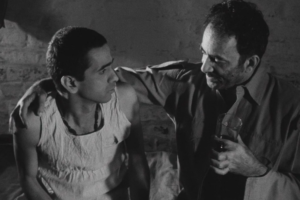
Going further back, the first Hindi film to feature queer representation was Badnaam Basti (1971), directed by Prem Kapoor and based on Hindi writer Kamleshwar’s novel Ek Sadak Sattavan Galiyan. The plot was surprisingly layered and nuanced for its time, especially considering that even the term LGBTQIA+ did not exist then in the way it does today. The film follows Sarnam Singh, a bus driver and bandit, who finds himself emotionally torn between Bansuri, a woman he rescues and forms a connection with, and Shivraj, a man he hires as a cleaner on his bus and gradually falls in love with.
What’s tragic is that after its release, the film almost completely disappeared. No proper copies remained, and for decades people believed the film was lost forever. Then, nearly forty years later, a copy resurfaced in a Berlin-based archive, after which restoration work began. Only in 2019–2020 was a newer generation in India finally able to witness the film again.
Even the journey of Badnaam Basti outside the screen reflects the larger issue, queer stories in Indian cinema have repeatedly been erased, ignored, forgotten, or pushed away.
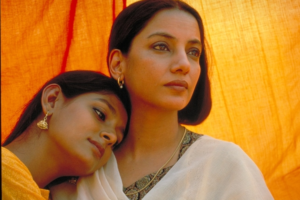
The first Hindi film with lesbian representation was Fire (1996), written and directed by Deepa Mehta. Although classified as an Indo-Canadian co-production, it still falls under the broader umbrella of Hindi cinema. The film follows two sisters-in-law who find comfort, love, and emotional intimacy within each other when both their husbands are emotionally absent from their lives.
What makes Fire remarkable is how normally and sensitively it treats the relationship. There are no exaggerated stereotypes, no mocking tone, no sensationalism. It simply presents love as love.
Ironically, that normalcy itself became controversial.
Initially, the censor board passed the film without cuts, and it was released as a normal mainstream film, and ran peacefully for a week or two. But soon after, right-wing groups began storming theatres and burning posters. Suddenly, the film stopped being viewed as a love story between two women and became labelled as an “attack” on marriage as an institution altogether. Debates emerged claiming that “lesbianism” was a concept imported from the “evil West” rather than something natural and real.
Yet despite all the backlash, Fire also sparked some of India’s earliest public conversations around lesbian rights. There were protests, young girls and boys carrying placards saying, “We are Indians and we are lesbians.” And honestly, what a powerful sight that must have been.
Another remarkable representation of homosexuality came with My Brother…Nikhil (2005), written and directed by Onir. The film follows Nikhil, a talented swimmer diagnosed with HIV, who is slowly abandoned by society, friends, and even family due to fear and stigma. The only people who remain by his side are his sister, her boyfriend, and his partner.
The film follows his struggle as he’s forced into living in isolation by law. It shows how HIV/AIDS, especially when associated with gay men, became something society treated with fear instead of empathy as people suffering from a disease. Eventually, Nikhil develops AIDS and dies, making the story even more heartbreaking.
My Brother…Nikhil remains one of the rare Hindi films to address the AIDS crisis through the perspective of a gay man. It received critical acclaim and is still considered a gem, but sadly, much like its protagonist, the film itself remained somewhat closeted from mainstream recognition.
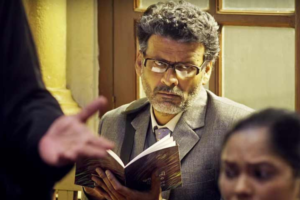
Another important film is Aligarh (2015), directed by Hansal Mehta and written by Apurva Asrani. Based on the real life of Dr. Ramchandra Siras, a professor at Aligarh Muslim University, the film becomes all the more devastating because of its reality.
The timing surrounding the incident is important. In 2009, the Delhi High Court decriminalized homosexuality by declaring Section 377 unconstitutional. Yet only months later, Dr. Siras was secretly filmed in his own home by journalists while engaging in a consensual act with another man. His privacy was violated, his dignity stripped away, and his life slowly dismantled as a result.
Even though he eventually won the legal battle and was ordered to be reinstated by the University. Tragically however, the next day, Dr. Siras is found dead in his apartment. Police discover traces of poison in his blood but rule out foul play.
But either way, society killed him. And his crime? Being himself. Being who he was born to be. Being his truth.
While talking about Aligarh, one also remembers Kapoor & Sons (2016), directed by Shakun Batra. Completely different films, yes, but connected by one painful reality, both characters are respected and valued until their sexuality becomes known. Dr. Siras is celebrated for his intellect until he is exposed as gay. Karan in Kapoor & Sons is the ideal son until his truth comes out.
Because once somebody is queer, society suddenly forgets everything else about them. Their intelligence, kindness, achievements, humanity, all of it gets overshadowed by one aspect of their identity.
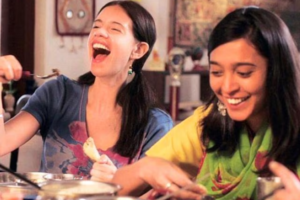
Another phenomenal example is Margarita with a Straw (2015), directed by Shonali Bose. The film follows Laila, a young woman with cerebral palsy who gradually discovers her bisexuality while navigating relationships, identity, disability, and independence. What makes the film stand apart is that it never treats her sexuality as something shocking or unnatural. Nor does it reduce her disability to pity.
Laila is allowed to be flawed, confused, sexual, and human, something queer characters in Hindi cinema are rarely permitted to be. The film depicts bisexuality with honesty and sensitivity instead of preconceived notions. And perhaps that is what makes it feel so refreshing. It doesn’t scream representation for applause, it simply allows its character to exist truthfully.
A mainstream film about trans representation that sparked major controversy was Laxmii (2020), written and directed by Raghava Lawrence. In the name of awareness, films like these often end up doing the exact opposite. Trans people continue to be portrayed as frightening, predatory, or aggressive, as if they are somehow “out to get” others. What does that even mean? They’re people, not rhinos.
Since I’ve mentioned some stronger examples above, it’s also important to discuss more recent mainstream attempts like Shubh Mangal Zyada Saavdhan (2020), directed by Hitesh Kewalya. While the film deserves credit for placing a gay relationship at the centre of a mainstream narrative, the representation itself often feels loud and surface-level. At times, it feels less like a genuinely queer story and more like a typical heterosexual Bollywood rom-com where the couple has simply been replaced by two men.
Somewhat similar, though slightly better handled, is Badhaai Do (2020) directed by Harshavardhan Kulkarni. The film touches upon important realities like lavender marriages, which still happen today. But even then, the treatment often feels safer than sincere, as though Hindi cinema still hesitates from fully diving into queer realities with depth and complexity.
And perhaps that is the biggest issue of all, Hindi cinema still largely “plays safe” with queer representation.
The limitations of queer portrayal also come from the way society and institutions continue to view LGBTQIA+ people. Even today, queer people in India cannot donate blood, couples cannot legally marry or jointly adopt children. Queer people are still viewed through suspicion rather than humanity. And when society itself continues carrying prejudice, cinema reflects that same discomfort.
It is the 21st century, and Hindi cinema is still struggling to move beyond stereotypes when it comes to LGBTQIA+ representation. And perhaps that is what cinema still needs to understand the most. Because prejudice is not natural. It is taught, repeated, normalized, and ingrained over generations, much like misogyny has been. And if prejudice can be taught, empathy can be taught too.
The quicker society learns that, the quicker Hindi cinema will stop treating queer people as stereotypes, jokes, or “issues,” and finally begin viewing and portraying them as people.
More Articles: