Indian filmmaker Di Sica Ray’s debut feature, A Requiem in Bishkek, brings together the story of a South Asian refugee, an unconventional approach to filmmaking and the distinctive urban landscape of Kyrgyzstan. The film has secured the backing of acclaimed filmmaker and cinema historian Mark Cousins, who has joined the project as an executive producer. The India-France co-production received the Fondazione Claudia Cardinale Award at FIDMarseille 2026, where it premiered in the First Film Competition.
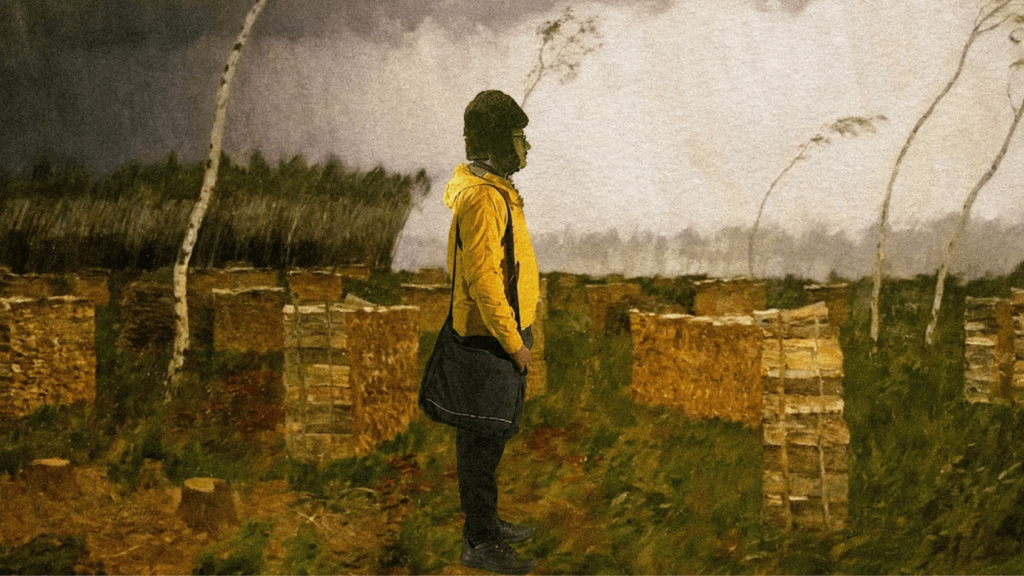
Set in Bishkek, the capital of Kyrgyzstan, A Requiem in Bishkek follows a South Asian refugee attempting to build a life far from his home country. Living in a converted mountain garage, he takes on different jobs while searching for someone willing to produce his screenplay. However, his refugee status makes it difficult to secure opportunities and establish himself in an unfamiliar environment. The city’s imposing post-Soviet architecture and shifting political atmosphere form an important part of the setting, reflecting the uncertainty that shapes his everyday existence.
One of the film’s distinctive elements is the connection it establishes between the protagonist’s circumstances and his interest in cinema. With limited resources, he begins experimenting with discarded 16mm film stock, using drawings, scratches and other materials directly on the film strip to create moving images. The technique, known as cameraless animation, allows him to make films without using a camera. Rather than relying on conventional filmmaking equipment, he works directly on the physical surface of the film to bring his ideas to life.
This handmade process also gives A Requiem in Bishkek a distinctive visual identity. The images created by the protagonist gradually become an important part of his world as he navigates isolation and the difficulties of living in an unfamiliar country. His creative work provides an outlet for self-expression at a time when his circumstances leave him with few choices. The contrast between Bishkek’s concrete urban structures and the experimental images produced from discarded film stock adds another layer to the film’s visual storytelling. The filmmaking technique is therefore closely connected to the character’s personal circumstances rather than serving merely as an aesthetic experiment.
The narrative also explores the protagonist’s everyday encounters in Bishkek. He works at a cricket farm run by a Chinese man and lives in a property owned by a Pakistani businessman. His attempts to establish connections with the people around him are complicated by his identity and refugee status. He also finds a sense of comfort in a museum, particularly through the paintings of Russian landscape artist Isaac Levitan. As political unrest develops in the city, his already uncertain circumstances become increasingly difficult, forcing him to confront the instability of the life he has attempted to build.
Cousins’ involvement brings additional international attention to the independent feature. Best known for The Story of Film: An Odyssey, the filmmaker and cinema historian has spent much of his career examining the history, language and development of cinema. His decision to join A Requiem in Bishkek as executive producer gives the project the support of an established figure in international filmmaking. He is also helping advocate for the film as it moves beyond its festival premiere and reaches wider audiences.
The film is produced by Thanikachalam SA under the banner of Barycenter Films. The creative team includes Roderick Jaynes, who handles cinematography and editing; Peter Theremin, who has composed the music; and Rana Eid, who is responsible for sound. Di Sica Ray also plays the central character, bringing the refugee’s experiences directly into the film’s narrative.
With its recognition at FIDMarseille and its unconventional visual approach, A Requiem in Bishkek offers a perspective on migration through the experiences of an individual trying to find his place in an unfamiliar city. The use of discarded film stock is closely tied to the protagonist’s circumstances, making the process of creating images an integral part of his journey. By bringing together displacement, artistic expression and an experimental approach to cinema, Di Sica Ray’s debut feature explores how creative expression can become a means of navigating isolation and uncertainty.