
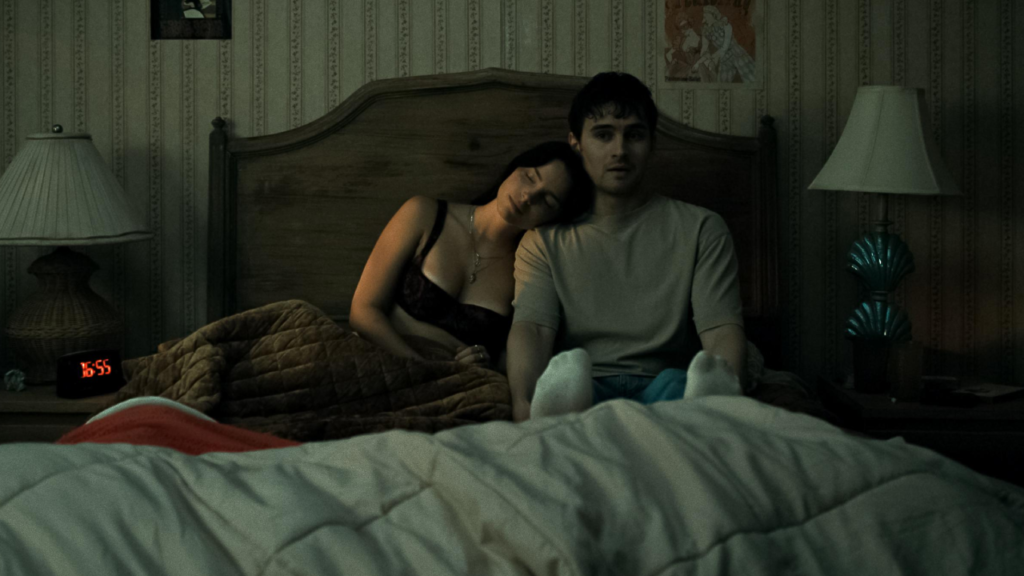
Obsession Review Roundup: Curry Barker’s horror film has opened to strong early reactions from critics, who see it as more than a familiar “be careful what you wish for” story. Built around a cursed-object premise, the film has been described as a darkly comic and unsettling genre piece that turns romantic longing into something frightening, uncomfortable, and morally ugly.
Directed and written by Curry Barker, Obsession follows Bear, a shy music store employee who is unable to express his feelings for Nikki, his co-worker and longtime crush. When he comes across a strange novelty object called the One Wish Willow, he uses it to wish that Nikki would love him more than anyone in the world. The wish appears to work, but the sudden romance soon becomes unnatural, obsessive, and dangerous.
Across early reviews, critics have largely responded to how the film uses a simple supernatural setup to explore control, entitlement, and the darker side of romantic fantasy. While some reviews note that the film could have been tighter in its pacing, the broader consensus suggests that Obsession is being received as a confident horror breakout with strong tonal control and a disturbing emotional core.
Critics Praise Curry Barker’s Control Over Horror and Dark Comedy
One of the strongest points in the early response is Barker’s handling of tone. Critics have noted that Obsession moves between awkward comedy, relationship horror, dread, and sudden violence without losing its central idea.
Frank Scheck of The Hollywood Reporter wrote that the film takes the well-worn “Monkey’s Paw” idea and makes it feel fresh through its blending of dread, jump scares, and dark comedy. He also described the film as an instant breakout for Barker, pointing to the way the director turns a familiar wish-gone-wrong premise into something more personal and unsettling.
Nikki Baughan of Screen International called Obsession an incisive and entertainingly schlocky study of romantic co-dependency, patriarchal entitlement, and the easy corruption of good intentions. Her review highlights how the film uses horror not just for shock, but to examine the moral consequences of Bear’s wish.
Luca Mehta of Discussing Film also responded positively to Barker’s tonal approach, saying the film shows how pure terror and dark comedy can work together. He noted that Barker keeps the story simple yet effective, using his low-budget comedy roots to the film’s advantage.
Debbie Lynn Elias of Behind The Lens praised Barker’s understanding of tone, restraint, and visual storytelling, saying the film feels intimate and unsettling without overreaching. That response matches the broader critical view that Obsession works best when it trusts discomfort rather than overexplaining its supernatural mechanics.
Inde Navarrette’s Nikki Becomes a Major Critical Talking Point
While critics are not treating Obsession as a star vehicle, many reviews have singled out Inde Navarrette’s performance as one of the film’s most important elements. Nikki is not simply written as an obsessive horror figure; the role requires shifts between affection, possession, confusion, vulnerability, and physical unease.
Frank Scheck wrote that Navarrette gives the film its “mojo,” describing her performance as virtuosic and frightening. His review points out that Nikki’s intensity becomes one of the film’s strongest sources of fear, especially as the character moves between spellbound devotion and brief flashes of helpless confusion.
Katherine McLaughlin of SciFiNow called Navarrette’s work a powerhouse performance opposite Michael Johnston’s Bear. She noted the physically demanding nature of the role, comparing the performance’s intensity to classic body-and-mind horror traditions.
Robert Kojder of Flickering Myth also highlighted Navarrette’s commitment, saying she gives everything to a role that is revolting, jarring, disturbing, and darkly funny, often all at once. His response reflects how much of the film’s effect depends on Nikki feeling both terrifying and trapped.
Anthony O’Connor of FILMINK called Obsession a terrific, chilling, and astonishingly well-acted horror film, while Nikki Baughan noted that Navarrette keeps Nikki’s vulnerability intact even as the character becomes increasingly erratic. That balance appears to be central to why the film’s horror has connected with critics.
The Real Horror Lies in Bear’s Moral Failure
Several critics have focused on the film’s most uncomfortable idea: Obsession is not only about what happens to Nikki, but about Bear’s decision to use the wish in the first place. The horror grows from the fact that he chooses control over honesty, and then continues to benefit from Nikki’s altered state even after it becomes clear that something is wrong.
Christian Zilko of IndieWire argued that the film is frightening because it makes viewers afraid of being the perpetrator, not only the victim. His review reads Obsession as a horror film about male entitlement and social accountability, where the central fear is not just supernatural punishment but the recognition of moral failure.
Nikki Baughan similarly wrote that Bear’s willingness to manipulate the situation for his own satisfaction is the film’s most chilling aspect. In her view, the scares and gore matter, but the deeper horror comes from Bear convincing himself that he is helping Nikki while refusing to admit that he caused her suffering.
Carlos Aguilar of The Playlist said Barker uses the film’s grotesque horror to comment sharply on poisonous relationships. His response places Obsession within a wider tradition of horror films that turn emotional dysfunction into physical and psychological terror.
This is where the film appears to have found its sharpest critical identity. The wish itself may be supernatural, but the reviews suggest that Obsession is most disturbing because Bear’s desire is recognizably human. He wants love without risk, intimacy without consent, and romance without the possibility of rejection.
Critics Respond to the Film’s Awkward, Uncomfortable Genre Energy
Another repeated point in the reviews is that Obsession does not separate horror from comedy. The film’s awkwardness, absurdity, and violence are all part of the same emotional design. Critics have noted that the film often makes viewers laugh before making them uncomfortable about why they laughed.
Jordy Sirkin of Jordy Reviews It said the film gets under the skin through the wild places it goes, while also leaving the viewer sinking into the absurd awkwardness of a toxic relationship. That reaction captures how the film turns relationship discomfort into genre tension.
Courtney Howard of Fresh Fiction described Obsession as an intense, ingenious, and subversive spin on romantic-comedy tropes filtered through a horror kaleidoscope. Her response points to the way Barker uses familiar romance imagery only to twist it into something darker.
Richard Crouse called the film a “Hallmark in Hell” kind of love story, suggesting that Obsession takes the shape of a sentimental romance and corrupts it from within. Carla Hay of Culture Mix also found the film memorable and wickedly funny, though she noted that parts of the story become repetitive.
The common thread is that critics are not only responding to the scares. They are responding to the discomfort of watching romantic fantasy collapse into possession, denial, and violence.
Gore, Dread and the Final Act
As a horror film, Obsession also appears to deliver on shock value. Critics have mentioned its sudden violence, grotesque turns, and escalating physical horror, but the strongest responses suggest that the gore works because it grows out of the film’s emotional and moral unease.
Frank Scheck noted that the film contains several shocking moments, including one sudden violent attack that leaves the viewer reeling. He also wrote that Barker has the confidence to let suspense build slowly, even if the film could have lost some of its 110-minute runtime.
John Daniel Tangalin of Hue Watched It called the film brutal, bleak, barely beautiful, and soul-shattering. Julian Roman of MovieWeb said Obsession takes its logline to gruesome glory as a slow-burn horror thriller likely to become a genre hit.
Travis Hopson of Punch Drunk Critics described it as the kind of horror film audiences will want to see with friends and then discuss afterward. Carla Hay added that viewers will need a high tolerance for on-screen gore, even though she found the film memorable and darkly funny.
These reactions suggest that Obsession is not being seen as a clean or restrained horror film. Instead, critics are reading its excess as part of its identity: a film where romantic obsession becomes physically ugly.
Some Critics Point to Pacing and Repetition
The response has not been without reservations. The most common criticism is that Obsession may run slightly longer than necessary, and that some story beats become repetitive before the final stretch.
Frank Scheck wrote that the film could stand to lose some of its 110-minute runtime, even while praising Barker’s control over suspense and shock. Carla Hay also noted that some parts of the story feel repetitive, though she felt the film leads to a knockout ending.
There is also an acknowledgment that the wish-gone-wrong idea is not new. The “Monkey’s Paw” structure has been used many times in horror. However, critics generally seem to agree that Barker’s film finds freshness through perspective. Instead of treating the cursed wish only as a plot device, Obsession uses it to examine the person who makes the wish and the entitlement behind it.
Rotten Tomatoes Critics Snapshot
On Rotten Tomatoes, the early critic reactions point toward a strongly positive response, with many reviewers praising the film’s tone, performances, and genre confidence.
Anthony O’Connor of FILMINK called Obsession terrific, chilling, and astonishingly well acted, highlighting the strength of its lead performance.
Jordy Sirkin of Jordy Reviews It said the film gets under the viewer’s skin while pulling them into the absurd awkwardness of a toxic relationship.
Katherine McLaughlin of SciFiNow praised Inde Navarrette’s physically demanding performance and the intensity she brings opposite Michael Johnston.
Luca Mehta of Discussing Film said the film shows how terror and dark comedy can work together when the story remains simple and effective.
Robert Kojder of Flickering Myth highlighted Navarrette’s total commitment to a role that demands disturbing, revolting, and darkly funny extremes.
Jeff Nelson of WeHo Times described Obsession as a genre mind-screwer that earns strong crowd reactions, while still leaving something to say beneath the surface.
Alistair Harkness of Scotsman suggested that Barker’s handling of the old “be careful what you wish for” idea should put him in conversation with bigger modern horror filmmakers.
Richard Crouse described the film as a love story unlike any other, turning longing into anxiety and “be careful what you wish for” dread.
Lee McCoy of DrumDums called it the kind of horror film that gives the genre a strong kick.
Barry Hertz of Globe and Mail wrote that Barker does not let anyone off the hook, including the film’s own central character.
Kyle Anderson of Nerdist praised the film’s dread, uncanny valley effect, and nerve-shredding awkwardness, saying those qualities stayed with him.
Nikki Baughan of Screen International called it an incisive study of romantic co-dependency and patriarchal entitlement.
Carlos Aguilar of The Playlist said Barker uses grotesque horror to comment on poisonous relationships without fully detaching the shock from emotional reality.
Courtney Howard of Fresh Fiction called it a subversive horror spin on romantic-comedy tropes, describing it as deeply upsetting, darkly hysterical, and sharply observed.
Carla Hay of Culture Mix found the film memorable and wickedly funny, while also noting that some parts of the story are repetitive and that viewers need a tolerance for gore.
Final Consensus
The early critical consensus around Obsession is that Curry Barker has taken a familiar horror premise and given it a sharp contemporary edge. The film’s cursed-wish setup may be simple, but critics are responding to how it turns romantic fantasy into a story about control, entitlement, and moral responsibility.
The strongest praise has gone to Barker’s tonal control and to Inde Navarrette’s demanding performance as Nikki. Critics also appear to value the film’s ability to mix awkward comedy, slow-burn dread, and brutal horror without losing sight of its central idea.
At the same time, some reviews mention pacing issues and repetition, especially around the film’s 110-minute runtime. But those reservations have not overshadowed the broader response. For many critics, Obsession works because the real horror is not only the supernatural wish, but the human desire behind it.
Obsession Film Details
Film: Obsession
Director: Curry Barker
Writer: Curry Barker
Cast: Michael Johnston, Inde Navarrette, Cooper Tomlinson, Megan Lawless, Haley Fitzgerald, Darin Toonder, Andy Richter
Genre: Horror
Runtime: 1 hour 50 minutes
Rating: R
Release Date: May 15, 2026
Production Companies: Under the Shell, Blumhouse, Capstone Studios, Tea Shop Productions
Cinematography: Taylor Clemons
Production Design: Vivian Gray
Editing: Curry Barker
Music: Rock Burwell
Read More Review Roundups on POF














One Response