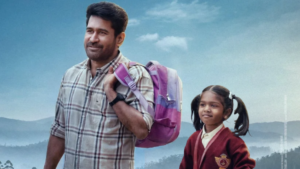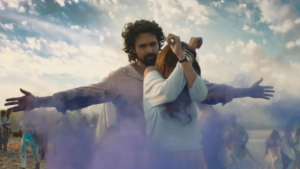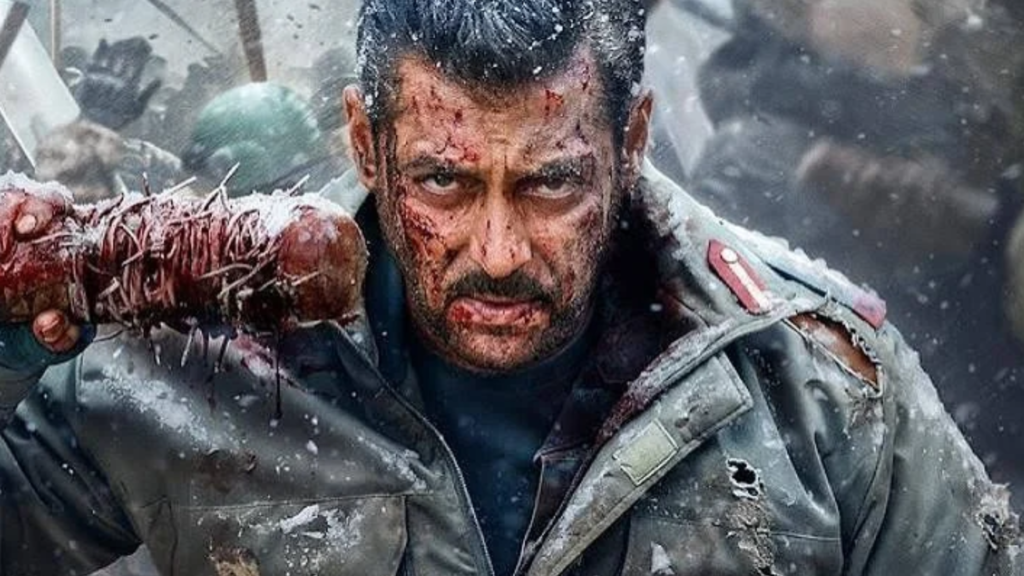
Salman Khan has unveiled the trailer of Maatrubhumi: May War Rest in Peace, a war drama inspired by the June 2020 Galwan Valley clash that places the experiences of soldiers on both sides at the centre of its narrative. Directed by Apoorva Lakhia and co-starring Chitrangda Singh, the film is scheduled to release in cinemas on December 4, 2026. Initially announced as Battle of Galwan for an April 2026 release, the project has since undergone a title change and a shift in its dramatic direction, moving its emphasis beyond the confrontation towards the human consequences of conflict.
The trailer has already attracted attention for its duration. Cleared by the Central Board of Film Certification (CBFC) with a U/A 16+ certificate, the preview runs for 4 minutes and 43 seconds, making it one of the longest theatrical trailers in Hindi cinema. Its extended runtime allows the film to move between tense confrontations along the border and glimpses of the personal lives affected by the conflict. Rather than relying entirely on large-scale explosions and conventional action set pieces, the trailer builds much of its intensity through close-range combat in the difficult mountain terrain.
One of its defining features is the absence of gunfire during the hand-to-hand combat sequences. The real Galwan confrontation took place under border arrangements that restricted the use of firearms along the Line of Actual Control (LAC). The trailer reflects this aspect of the incident through brutal physical clashes, with the harsh terrain adding another layer of danger to the encounters. The result is a portrayal of combat that relies on physical confrontation and the immediate threat faced by soldiers rather than an exchange of bullets.
Salman Khan portrays Colonel Bikkumalla Santosh Babu, the commanding officer of the 16 Bihar Regiment who led Indian troops during the June 15, 2020 clash. Colonel Santosh Babu was posthumously awarded the Maha Vir Chakra for his leadership and courage. However, Salman Khan has clarified that Maatrubhumi is not intended to be a conventional biopic. While the film draws from the real incident, its narrative extends beyond one individual to consider the soldiers and families whose lives are shaped by conflict.
The project’s original connection to the Galwan incident came through defence journalists Shiv Aroor and Rahul Singh. The film was inspired by a chapter in their book India’s Most Fearless 3, which documents acts of courage by members of the Indian armed forces. The two journalists subsequently stepped away from the project, stating that it had evolved beyond the Galwan account that had initially brought them on board. Their departure reflected a significant change in the film’s creative direction, with the story moving away from a closer retelling of a specific episode towards a broader, fictionalised human drama.
The change in title further signals this evolution. Battle of Galwan placed the military confrontation directly in the foreground, while Maatrubhumi: May War Rest in Peace suggests a wider emotional and thematic framework. Director Apoorva Lakhia has said that the new title better captures the film’s interest in humanity, empathy and the sacrifices made by soldiers. The historical clash remains the starting point, but the film is not being positioned as a straightforward account of the battle.
At the Mumbai trailer launch, Salman Khan also addressed reports that the script had been rewritten under government pressure or reshaped into an anti-China narrative. He dismissed those claims, saying that the film has “no negative force”. Explaining its approach, he indicated that the difficult circumstances surrounding the confrontation create the conflict rather than either side’s soldiers being portrayed as its sole source. According to Khan, the story considers what servicemen and their families experience on both sides of the border.
His comments underline the film’s stated attempt to look beyond the immediate confrontation and consider the people caught up in it. By extending its focus to soldiers and their families on both sides, Maatrubhumi appears to be placing the human cost of the clash alongside its battlefield drama. This approach also gives the film’s peace-focused title a more direct connection to its narrative.
With its unusually long trailer, close-combat sequences and shift towards the human consequences of war, Maatrubhumi: May War Rest in Peace is taking a distinct approach to a real-life incident that remains part of recent history. The trailer connects the action along the border with the lives and families waiting behind it, suggesting that the film’s concerns extend beyond the battlefield. Its theatrical release on December 4, 2026, will reveal how effectively it brings together the historical inspiration, fictionalised storytelling and message of peace.