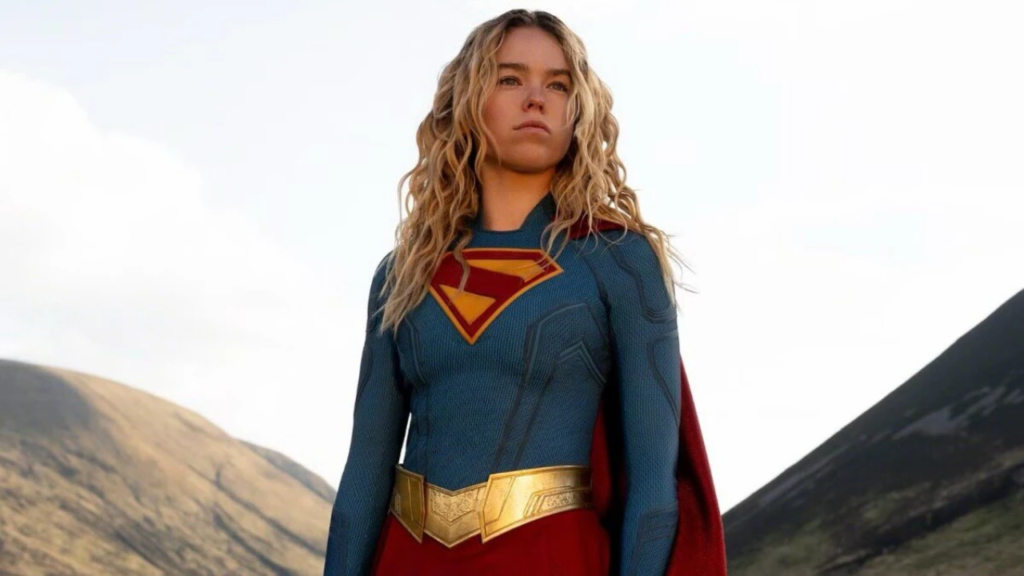
DC Studios’ Supergirl has entered theaters with a softer-than-expected debut, raising fresh questions about the commercial prospects of superhero films centered on lesser-known comic book characters. The Craig Gillespie-directed film opened to $37.1 million domestically and $62.6 million worldwide, falling well short of pre-release expectations and finishing behind Disney and Pixar’s Toy Story 5, which comfortably retained the top spot at the North American box office.
While one weekend does not define a film’s theatrical fate, Supergirl now faces an uphill battle to recover its reported $170 million production budget, especially with major summer releases arriving over the next few weeks. The opening also represents a significant step down from last year’s Superman, the first film in James Gunn and Peter Safran’s rebooted DC Universe, which went on to earn $618 million worldwide.
Supergirl Opens Well Below Expectations
Heading into its debut, industry tracking had projected Supergirl to launch in the $50-55 million range domestically. Instead, the film finished the weekend with $37.1 million, making it one of the weaker openings for a modern DC superhero release.
The performance also places it below Marvel Studios’ The Marvels, which opened to $46.1 million domestically before ending its theatrical run with just over $206 million worldwide. While Supergirl still has several weeks in theaters, its opening suggests it will need exceptionally strong holds to avoid a similar trajectory.
Internationally, the picture added $25.5 million, taking its worldwide opening to $62.6 million. The overseas launch was similarly subdued, offering little immediate indication that international markets will significantly offset its modest domestic debut.
Can Supergirl Recover at the Global Box Office?
The challenge now shifts from opening weekend to sustainability. Industry estimates suggest Supergirl will need approximately $315 million worldwide to reach its break-even point after accounting for production and marketing costs. Reaching that figure will require consistent week-to-week holds, something that has become increasingly difficult during the crowded summer movie season.
The film also faces stiff competition in the coming weeks. Toy Story 5 continues to dominate family audiences after a strong second weekend, while Universal’s Minions & Monsters arrives shortly with blockbuster expectations. Later in July, Christopher Nolan’s The Odyssey, Disney’s live-action Moana, and Sony’s Spider-Man: Brand New Day will further intensify competition for premium screens and general audiences.
With several high-profile releases targeting overlapping demographics, Supergirl has limited room to build momentum through word of mouth alone.
What Held the Film Back?
Several factors appear to have contributed to the film’s underwhelming opening. Critical reception proved mixed, with reviewers divided over the film’s darker tone and its approach to Kara Zor-El’s story. Audience reactions have also been more reserved than those typically seen for successful comic book tentpoles, making repeat business less certain.
Marketing momentum never fully materialized either. While the trailers generated discussion among fans, they struggled to create the kind of widespread anticipation that often accompanies major superhero releases. Online engagement remained noticeably lower than comparable DC and Marvel titles, suggesting the film never broke through beyond its core fanbase.
The character itself may also have presented a commercial challenge. Unlike Superman, Batman or Spider-Man, Supergirl has rarely headlined major live-action theatrical projects. Although the character has a dedicated comic book following, translating that recognition into mainstream box office appeal has proven considerably more difficult.
Is This Really Superhero Fatigue?
The disappointing opening has once again reignited debate over the health of the superhero genre, but the broader box office picture remains more complicated. Some analysts argue that audiences are not necessarily experiencing “superhero fatigue” but are becoming increasingly selective about which comic book films they choose to watch. Recent years have produced both billion-dollar successes and high-profile disappointments, often within the same calendar year.
Films built around marquee characters have continued to perform strongly. Spider-Man: No Way Home became one of the highest-grossing films of all time, while Deadpool & Wolverine and last year’s Superman also delivered impressive commercial results. At the same time, projects centered on lesser-known heroes—including The Marvels, Blue Beetle, Kraven the Hunter and now Supergirl—have struggled to attract mainstream audiences.
The trend suggests that brand recognition alone is no longer enough. Today’s audiences appear more willing to wait for positive reviews and strong word of mouth before committing to expensive franchise films.
What Does This Mean for DC Studios?
Supergirl represents only the second theatrical release in James Gunn and Peter Safran’s long-term plan for DC Studios. The studio has repeatedly emphasized that its strategy extends beyond Superman and Batman, with future projects focusing on a wider range of characters across different genres. Upcoming releases include the body-horror-inspired Clayface as well as Superman: Man of Tomorrow.
While Supergirl‘s performance is undoubtedly disappointing, it is unlikely to alter the broader roadmap after just two films. However, it does highlight the difficulty of building blockbuster franchises around secondary characters without the level of audience awareness enjoyed by DC’s biggest icons.
The Budget Question
Perhaps the biggest lesson from Supergirl‘s opening concerns budgets rather than superheroes. With a reported production cost of around $170 million, plus an estimated $120 million global marketing campaign, the film entered theaters carrying significant financial expectations. Those economics leave little margin for error if audience demand falls short.
The contrast with lower-budget comic book adaptations is becoming increasingly noticeable. Films such as Joker demonstrated that character-driven superhero stories can generate substantial profits without requiring blockbuster-level production costs, while DC’s upcoming Clayface is reportedly being produced for around $40 million.
As studios continue to diversify their comic book portfolios, future projects centered on lesser-known characters may increasingly adopt more modest budgets rather than attempting to compete directly with flagship franchises.
A Defining Test for Modern Superhero Movies
It would be premature to declare Supergirl the film that ended the superhero era. One disappointing opening cannot erase the genre’s decades of commercial success or the strong performances of recent marquee titles.
However, its debut does reinforce a reality that has become increasingly clear over the past few years: audiences have become far more selective. Superhero films are no longer guaranteed event movies simply because they belong to a major franchise.
Whether Supergirl ultimately recovers at the global box office or not, its opening weekend is likely to influence how studios approach future comic book adaptations. For DC Studios, the challenge now is not just creating interconnected stories but ensuring that every release feels like an event worth leaving home to see.
Read More: