Thailand has added 12 films and film collections to its 2026 National Film Heritage list, taking the country’s registered total to 275 titles. The Thai Film Archive’s 16th annual registry brings together works from very different periods and subjects, ranging from a rare 1929 silent film and a 1976 historical epic to a censored film by Apichatpong Weerasethakul and a documentary about Southeast Asian migrant women in West Germany.
Together, the selections reflect the breadth of Thailand’s film history, preserving material connected to royal traditions, social change, political conflict, migration, censorship and memories that remain significant today. Rather than focusing on a single period or style, the 2026 selections bring together films and archival material that document very different aspects of Thai society and its changing relationship with cinema.
One of the most unusual entries is Khon, a 13-minute black-and-white silent film made in 1929 by the Newsreel Division of the Royal State Railway Department. The film records a royal performance of Khon, the traditional Thai masked dance drama, featuring an episode from the Ramakien. More than nine decades later, the surviving short reel provides a rare moving-image record of a performance from Thailand’s past. Its inclusion highlights the importance of preserving early film material, particularly works that capture cultural and royal traditions through images that might otherwise have been lost.
Our Land, released in 1976, is another major addition to the registry. The 140-minute film adapts the acclaimed novel by Malai Chupinit, whose 120th birth anniversary is being commemorated in 2026. According to the Thai Film Archive, the film gives contemporary audiences an opportunity to look back at the ideas and social attitudes surrounding the period in which it was made. Its preservation therefore connects a literary work, its cinematic adaptation and the social context in which the film was produced.
The 2026 list also gives considerable attention to Thailand’s difficult political history. Facts Concerning the Events of 6 October 1976 was made in the aftermath of the crackdown and presents the events from the perspective of state security authorities. Anocha Suwichakornpong’s By the Time It Gets Dark, released in 2016, approaches the same history differently, using cinema to explore the continuing impact of the October 6 violence. The inclusion of both films is particularly significant in a year marking 50 years since those events, as the two works preserve different cinematic approaches to the same period of political trauma and historical memory.
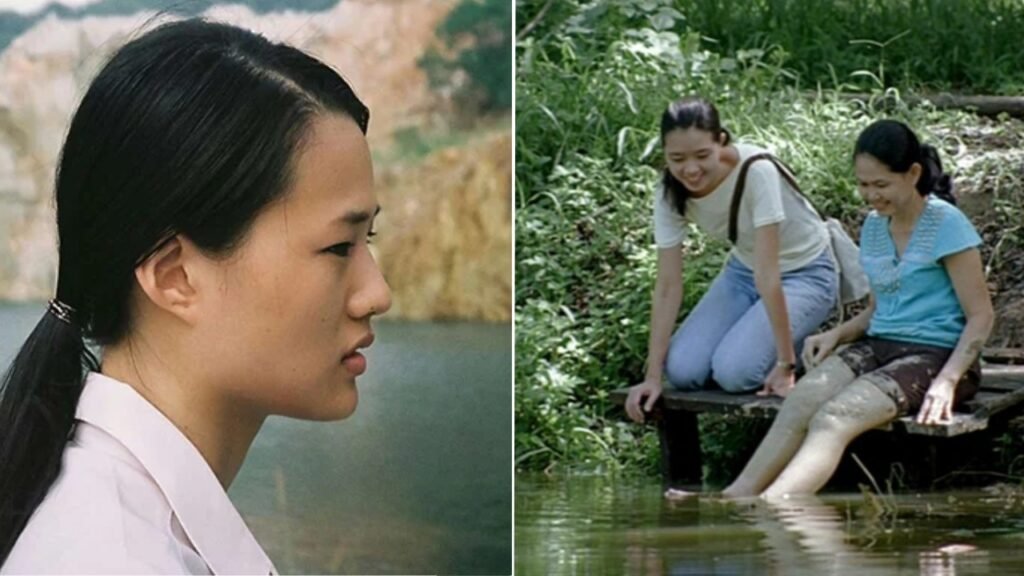
Censorship is another important part of this year’s selection. Apichatpong Weerasethakul’s Syndromes and a Century, released in 2006, became the first Thai film to compete in the main competition at the Venice International Film Festival. When the film was released in Thailand, scenes that had not passed censorship were covered with black film. As a result, the film itself became part of a broader discussion about artistic freedom and the role of censorship in determining what audiences are allowed to see. Its inclusion in the heritage list preserves not only the film but also an important chapter in Thailand’s cinematic history.
The registry also reaches beyond Thailand. WESTWARDS…Sudostasiatinnen in der BRD, a 1989 documentary, follows Southeast Asian women in West Germany and was made shortly before the Berlin Wall fell. Its inclusion adds an international perspective to the heritage list, documenting migration and the lives of women living far from their home countries at a significant moment in European history. The film expands the scope of the collection by showing how Thai film heritage can also preserve stories connected to experiences outside the country.
Some of the most valuable material in the 2026 registry is not a single feature film at all. Dr. Boonsong Lekagul’s Film Archive contains around 22 hours of 16mm black-and-white and colour footage made between 1947 and 1987. The collection covers his personal life, medical work, wildlife, advertising and nature conservation activities, creating a broad visual record of several aspects of Thai life across four decades. The inclusion of the archive demonstrates that film heritage can encompass collections of footage as well as individual completed films.
Other selections include Midnight My Love, a 2005 film reflecting Thai society in the 2000s, and The Mysterious Sword, which marked Mitr Chaibancha’s first and only acting performance to reach an international level before his death in 1970. The registry also includes Journalists and Newspaper Reporters Go to Red China and North Vietnam, a 1957 political travelogue, alongside archival films documenting heroin production and ethnic communities in Thailand. Together, these selections further widen the historical range of the 2026 registry, covering social life, political travel, individual performance and documentary records.
What makes the 2026 registry particularly notable is precisely this variety. The 12 selections do not tell one story about Thailand; they preserve many different ones. From a 13-minute royal performance captured in 1929 to films examining censorship and remembering political violence, the collection gives future audiences an opportunity to see how Thailand looked, lived and thought across different periods.
The heritage list therefore functions as more than a collection of old films. It brings together moving images that document cultural traditions, political history, social attitudes, migration, professional life and changing ideas about cinema and artistic freedom. By preserving both individual films and larger archival collections, the Thai Film Archive ensures that these images remain available as historical records as well as works of cinema.
The value of such preservation lies in keeping these images alive so that history can continue to be watched, questioned and understood. The 2026 additions, with their wide range of periods, subjects and forms, underline how film can serve as a record of a society and the many different experiences that have shaped it.