As much as we know about Bollywood, we would not know half as much about the cinema of the Northeast, let alone the cinema of a specific place like Nagaland.
There have been very few tribal films made in India, and even fewer that have been able to travel beyond their own communities and reach a global platform. This is what makes the journey of the film Angh, directed by 31-year-old Naga filmmaker Theja Rio, worth looking at.
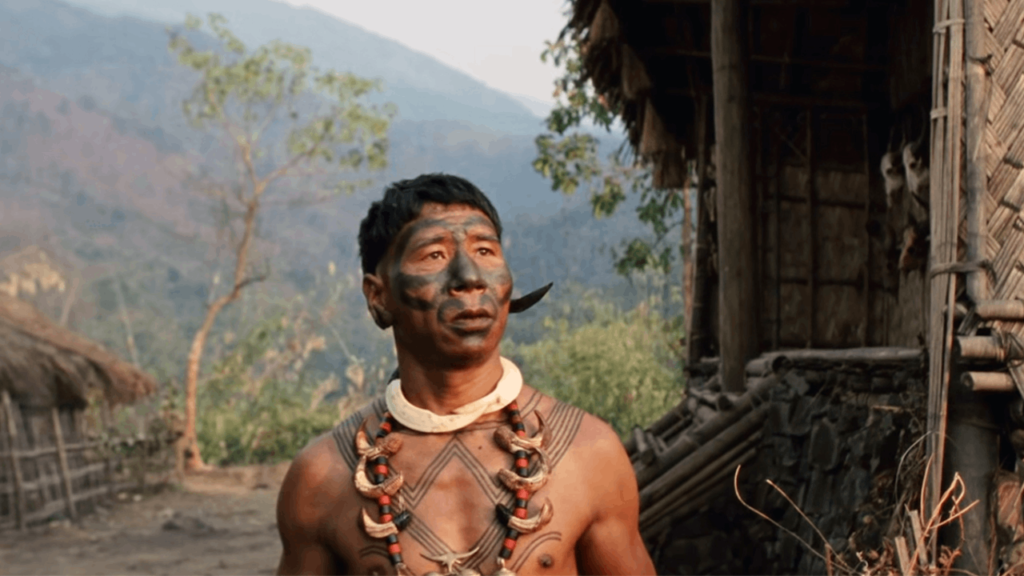
Coming from Nagaland, a place without an established film industry like the larger industries in India, the film was made in the Konyak language, with a largely local cast, and with a production that brought together people from different parts of the world. It has now travelled to the Toronto International Film Festival, won its prestigious Platform Prize, and earned a direct route to consideration for the 2027 Academy Awards.
The interesting part of this journey is not that Angh was made without resources. It is that it came from a place where the kind of film infrastructure that exists in larger Indian industries is still developing, and yet, the film was able to find the production support and collaborators to take its vision beyond Nagaland.
Rio did not have an established local casting or film ecosystem to simply step into. Instead, the filmmakers travelled to villages and found people from the Konyak community who had never acted in a film before. They were brought together with BAFTA-winning Scottish actor Douglas Henshall, who plays the missionary in the film.
That combination itself says something about the film’s journey.
The production also made choices that were far from modest.
Angh was shot on 16mm film, a format that requires careful planning and comes with a significant cost because every shot uses physical film stock. The decision to shoot on film meant that the team had to prepare their scenes and shots carefully, but it also gave the film a distinct visual quality. International collaborators, including Polish cinematographer Adam Pietkiewicz, were brought into the process, allowing the film to retain its local identity while being made with a wider filmmaking perspective.
So, while Angh came from a place without an established film industry, it is not a film made by simply working around what was missing. It is a film that found a way to bring together the resources, people, and collaborators needed to make the kind of film Rio wanted to make.
But Angh did not begin as a feature film.

Rio first made it as a short film in 2021, after visiting the remote Mon district of Nagaland. The place and the people he encountered stayed with him, and he described the experience as feeling “a bit like a time machine,” where the past and present seemed to exist alongside each other. The short film went on to screen internationally and receive recognition at festivals. But Rio felt there was more to explore, and even while making the short, he knew it could become a feature. He completed the feature script in 2024, turning an idea that had begun as a short into his first feature film.
That is where the journey of Angh starts to become interesting in another way.
The film was first in contention to become India’s official entry for the Best International Feature Film category at the Academy Awards. It reached the final three films considered by the Film Federation of India, alongside Santosh Davakhar’s Marathi thriller Gondhal and Sriram Raghavan’s Ikkis. The official selection eventually went to Gondhal.
For Angh, the usual route towards the Oscars had therefore closed.
Until this year, the International Feature Film category followed the country-submission route, where each country or region could submit one official film through an Academy-approved selection committee. That is how Gondhal became India’s official entry for the 2027 Oscars. But for the 99th Academy Awards, the Academy introduced a second route. A non-English-language film can now also become eligible for consideration by winning a qualifying award at one of six designated international festivals: Cannes, Berlin, Venice, Sundance, Busan, and Toronto. This opened another path for films to enter the Oscar conversation without being their country’s official selection.
And Angh was heading to Toronto.
It became the only Indian film selected for the Platform Competition at the Toronto International Film Festival in 2026. For a film from Nagaland, this was already a significant step outside the usual journey of Indian cinema. It was now being placed in a competition alongside films from different parts of the world, with Rio’s filmmaking being seen on an international platform.
Then, on September 20, Angh won the Platform Prize.
It became the first Indian film to receive the honour, with the jury praising it for its “refreshing perspective, strength of filmmaking, and deeply resonant portrait of a world.” The jury also recognised Rio’s “vision, audacity, and courage.”
The award gave the film something that went beyond the recognition of winning at TIFF.
Because of the Academy’s new rules, the Platform Prize gave Angh a direct pathway to consideration for the 2027 Academy Awards in the Best International Feature Film category, alongside India’s official entry, Gondhal.
It is important to note that Angh has not been nominated for an Oscar. It has earned eligibility for consideration, after which the Academy will determine which films make the shortlist and eventually the five nominations. But the fact that the film has reached this stage is already a change in where the journey that began in Nagaland can go.
View this post on Instagram
A film made in the Konyak language, rooted in a community that very few people outside the region may know much about, is now being considered alongside cinema from across the world.
And that is where the film’s journey becomes bigger than just its awards.
When Rio accepted the Platform Prize, he spoke about coming from a small town in the Northeast of India “where dreams don’t often come true for my people.” He dedicated the award to everyone back home and ended his speech by saying, “This is just a beginning.”
There is something fitting about that line because Angh has already crossed several beginnings.
It also, in some ways, feels like the beginning of possibilities for aspiring filmmakers from India and around the world to believe in something larger than themselves and the small places they might come from.
Nagaland may not have the established infrastructure of Mumbai, but Angh shows that a film does not necessarily have to come from an established centre to be made at a level that can travel internationally. With the right people, collaborators, and production support, a filmmaker can remain rooted in a place like Nagaland while making a film that can enter a global conversation.
And there is something else that happens when a film travels this way.
A place that audiences may know very little about begins to become visible through its cinema. The Konyak language, the people who appear on screen, the landscape and the filmmaking voice all travel with the film. The audience does not have to be told everything about where it comes from. They encounter it through the film itself.
That may be one of the most meaningful parts of Angh’s journey.
It is not simply a film from Nagaland that might reach the Oscars. It is a film that has shown that cinema from a non-established industry can enter the same international spaces as cinema from industries that have had decades to build themselves.
Whatever comes next, the distance Angh has already travelled is significant.
It is not a film that had nothing and somehow made it. It is a film that found its way.