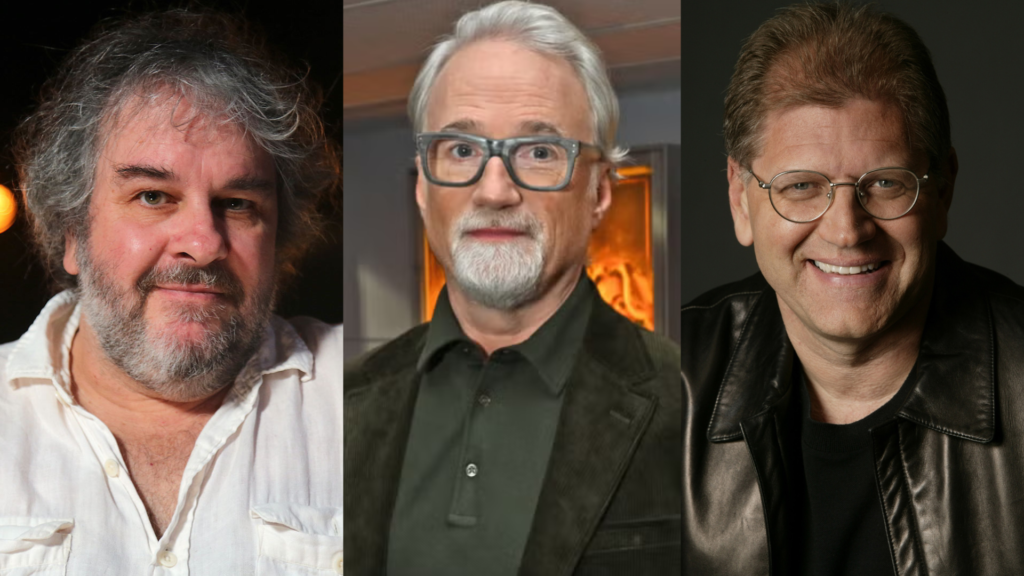
For much of cinema’s history, a filmmaker’s choices have been shaped by what could be captured on camera. An actor might deliver an extraordinary performance, but if the dialogue did not quite work, the scene could require another take. A camera movement could be repeated, a face digitally altered or an old recording restored, but each process came with its own limitations. Artificial intelligence is beginning to expand those possibilities. David Fincher, Robert Zemeckis, Peter Jackson and James Cameron have approached the technology in different ways, bringing it into conversations about editing, visual effects, sound restoration and the relationship between actors and digital filmmaking.
The latest example comes from David Fincher, who discussed his use of AI in The Further Mis-Adventures of Cliff Booth, starring Brad Pitt, during an appearance on The Ringer’s The Big Picture podcast on November 25, 2026. The director revealed that AI helped clean up dialogue tracks in the film and described a more unusual possibility involving an actor’s lip movements. The idea challenges a familiar limitation in editing: the strongest visual performance and the most effective delivery of a line do not always come from the same take.
Fincher explained that he allowed his editor, Kirk Baxter, to select the strongest visual performance from one take and the most effective audio delivery from another. If the two did not match, AI could potentially adjust the actor’s lip movements to fit the selected dialogue. Conventional automated dialogue replacement (ADR) accounted for approximately five per cent of the film, according to the director, who also said the actors spent four or five days recording additional dialogue. He did not identify the software used or establish how many shots ultimately required AI-based lip adjustments.
What makes this particularly interesting is the creative freedom it could offer an editor. Traditionally, a mismatch between sound and image might require another recording, a carefully placed cutaway or the sacrifice of an otherwise convincing performance. Fincher’s approach suggests that these choices may no longer always be mutually exclusive. The technology could help preserve the expression, timing and emotional quality of a moment without being restricted by the technical limitations of the original take.
His ideas extend further into the filmmaking process. Fincher imagined a production in which actors perform a scene together while their movements are captured simultaneously. The crew could then move on to preparing another setup while the director works with the recorded performances to create additional coverage, including close-ups and over-the-shoulder shots. He even suggested that a scene could be performed around 20 or 25 times before the remaining coverage is developed digitally. Focus corrections and unwanted objects entering the frame could also become easier to address. This is a proposed direction for filmmaking rather than a workflow confirmed for Cliff Booth, but it offers an intriguing glimpse of what a future production might look like.
A different application has already reached the screen through Robert Zemeckis’s Here (2024). Starring Tom Hanks and Robin Wright, the film follows several generations of characters within the same location. Its narrative required the actors to appear at different stages of their lives, making facial transformation an essential part of the production. Using Metaphysic’s AI-assisted Live technology, the filmmakers could alter their appearances in real time during filming. Rather than waiting until post-production to see the completed effect, the crew could examine younger versions of the actors on set. The technology effectively brought a form of digital makeup directly into the production process.
The possibilities of machine learning extend beyond faces and performances. In Peter Jackson’s The Beatles: Get Back (2021), the technology helped recover conversations and musical details that had remained difficult to hear in archival recordings. Much of the original material consisted of mono recordings in which voices, guitars and drums were mixed together. At Park Road Post Production in New Zealand, the team developed a machine-learning programme capable of distinguishing these sounds and separating them into individual components. This allowed conversations from the Beatles’ 1969 recording sessions to become considerably clearer while also helping restore the musical performances. Rather than generating material that had never existed, the technology made previously buried content accessible.
James Cameron, meanwhile, offers an important distinction in this discussion. The filmmaker has clarified that the Avatar films did not use generative AI to create their finished images. However, his productions have relied on machine-learning techniques for crowd management and algorithms that help develop digital character models based on actors’ physical appearances. These processes have supported the creation of Pandora without replacing the performances that bring its inhabitants to life. Cameron has repeatedly emphasised that actors remain central to this process, drawing a distinction between performance-driven visual effects and artificially generating an actor or an entire performance.
What connects these filmmakers is not a common approach to artificial intelligence, but the different problems they are trying to solve. For Zemeckis, it offered another way to portray the passage of time. For Jackson, it opened up recordings that had remained difficult to access for decades. Cameron has used machine learning within an artist-led visual effects process, while Fincher is exploring how far the technology could reshape the relationship between filming and editing.
There is, of course, a larger question surrounding these developments. If an editor can alter an actor’s lip movements, a filmmaker can reconstruct camera coverage after a performance, and an old recording can reveal sounds once thought inseparable, where should the creative boundaries lie? Technology may offer filmmakers more choices than before, but the decisions that give a film its character still belong to the people making it. The real measure of these experiments will be whether they allow cinema to explore new possibilities without losing sight of the human performances and creative judgement at its centre.