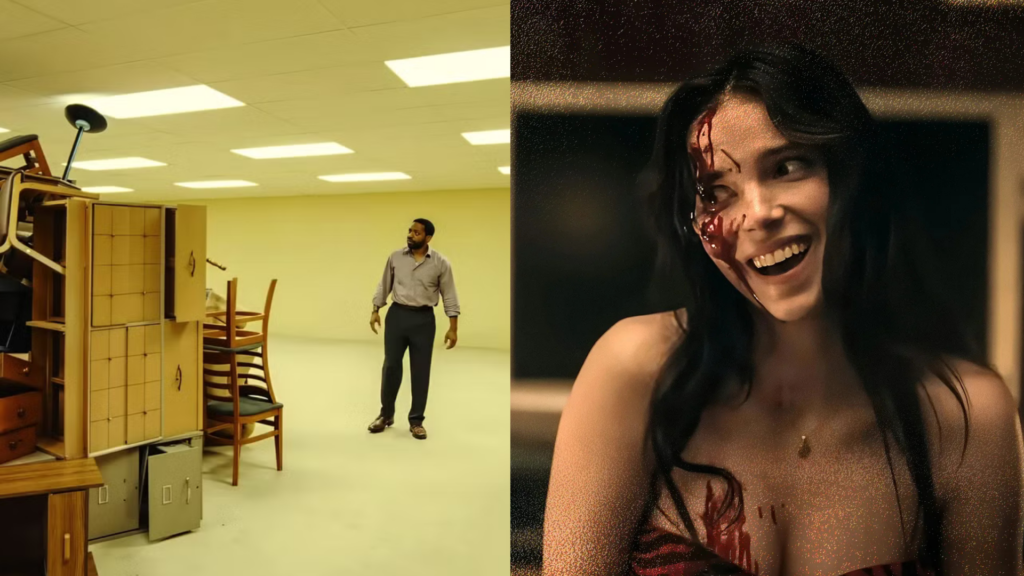
Two films that originated in internet horror have become theatrical hits, and their latest achievements have now been recognised by horror fans. At the 32nd annual Fangoria Chainsaw Awards, held on October 25, 2026, Curry Barker’s Obsession led the winners with five awards, while Kane Parsons’ Backrooms collected three. Hosted by Devon Sawa and streamed on Shudder and YouTube, the fan-voted ceremony celebrated horror films that captured audiences’ attention while highlighting filmmakers who developed their craft online before making the transition to cinemas.
Obsession won Best Wide Release Movie, Best Director, Best Screenplay and Best Lead Performance for Inde Navarrette. It also received the write-in award for Best Kill for its notorious “Brick Kill.” The five-award haul recognised both the film’s overall impact and the specific elements that made it a talking point among horror audiences.
Backrooms won Best First Feature, Best Cinematography for Jeremy Cox and Best Score for Kane Parsons and Edo Van Breemen. For 20-year-old Parsons, the awards mark another milestone in a career that began with unsettling videos on YouTube. Barker also built an audience online before directing Obsession. Both filmmakers have since become among the youngest directors to take a film to the top of the US domestic box office, marking an unusual route from online audiences to theatrical success.
The ceremony also recognised established names in the horror genre. Lin Shaye presented the final award to Obsession, while Dee Wallace, known to genre audiences for Cujo, presented the special “Goodest Boy” award to Indy, the canine star of Good Boy. The moment provided a lighter counterpoint to the violent set pieces associated with the genre.
The films’ box-office performances help explain why their wins carry significance beyond a typical awards-night sweep. Made on a reported production budget of $750,000, Obsession has earned more than $400 million worldwide and become Focus Features’ highest-grossing film. Its worldwide gross represents more than 500 times its reported production budget, before marketing and distribution costs are taken into account. For a horror film made on such a modest budget, the scale of its commercial performance is striking.
Backrooms followed a different but equally unusual path to cinemas. As a teenager, Parsons developed a YouTube series inspired by the internet’s Backrooms myth, which grew out of an eerie image posted on 4chan in 2019. A24 subsequently brought the concept to theatres with a reported production budget of $10 million.
The film opened to approximately $81.4 million in North America, setting a record for A24 and becoming the biggest opening for an original horror film from a first-time feature director. It has since grossed more than $400 million worldwide, making it A24’s highest-grossing theatrical release.
Together, Obsession and Backrooms have earned more than $800 million worldwide against a combined production budget of approximately $10.75 million. The figures are striking, but their significance extends beyond the commercial returns. Both films began with ideas that attracted audiences online before making the transition to cinemas, without relying on an established blockbuster franchise.
The careers of Barker and Parsons illustrate how online communities can provide an entry point into the film industry. Their success does not guarantee that every viral concept can be turned into a theatrical hit. However, it demonstrates that filmmakers who develop an audience through internet platforms can carry that interest into cinemas and reach viewers at a scale the established industry cannot ignore.
The 2026 Fangoria Chainsaw Awards therefore celebrated more than two popular horror films. Their results highlighted a changing route into filmmaking, in which internet subcultures can become the starting point for theatrical releases. The combination of a distinctive idea, an engaged audience and a comparatively modest production budget has created opportunities beyond the traditional pathways into Hollywood.
Barker and Parsons represent a generation of filmmakers bringing online horror to the big screen. Their achievements suggest that future theatrical hits may emerge from digital communities and creative spaces that the film industry has historically overlooked.