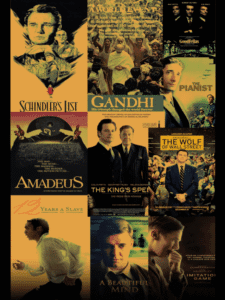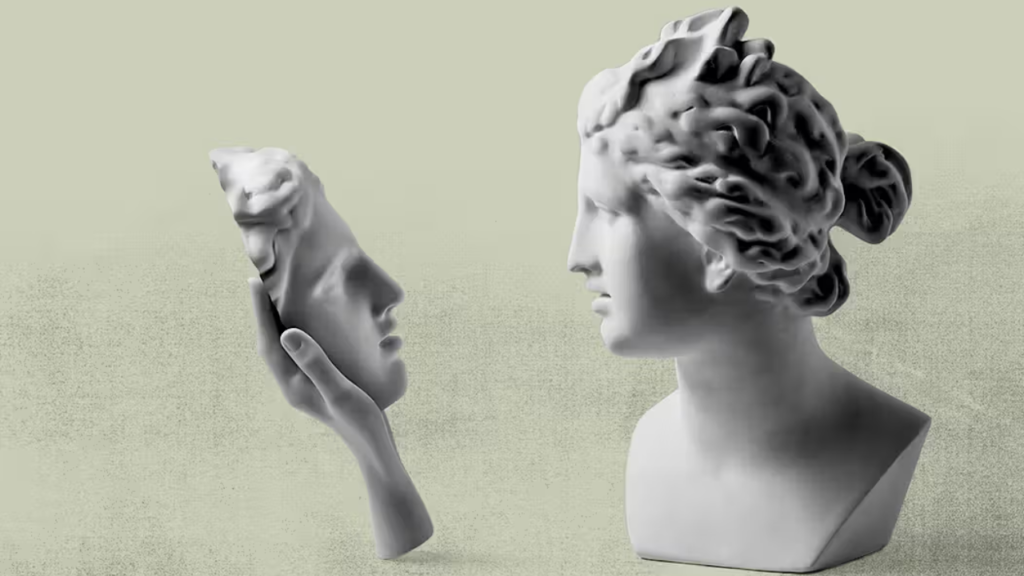
Is looking at films shaping our opinion of what we call beauty?
When we look at someone and decide whether they’re attractive or not, are we really making that decision on our own? Or are we unknowingly relying on years of visual conditioning from the films we’ve watched?
It’s an uncomfortable question because most of us would like to believe our preferences are entirely personal. But films have always played a larger role in shaping our perception than we realise, or want to accept.
Cinema doesn’t just tell us stories. It also somehow influences us.
The way films have presented beauty for decades through a carefully constructed lens have worked in shaping minds if not fully, then in some ways. Camera angles, lighting, makeup, editing, and even the way a character is introduced on screen, all of it influences how we perceive them. A slow-motion entrance, different lighting, a perfectly framed close-up, the first shot of a certain something, these techniques signal to us whether this person is desirable, important, or beautiful, and in what capacity. Similarly, the opposite is true as well. The reveal of somebody not that important to either the plot or from an attractive standpoint of a film, is entirely different. The lighting, makeup, no close-ups, they’re often shown as giving the feeling of dull and boring. We absorb these visual cues so often and from an impressionable age that they begin to feel natural.
The more we see certain faces, body types, and features being celebrated on screen, the more we begin to associate them with attractiveness. Slowly, and often without realising it, films can influence what we consider beautiful and what we don’t.
What’s fascinating is that films rarely tell us outright what beauty should look like. Instead, they repeat visual patterns. The conventionally attractive character gets the romantic storyline. The beautiful person is framed like a spectacle. Youth is celebrated, while aging is treated as something to overcome.
Aging is not just treated as something to overcome but also as something entirely alien, and hence scary, and something one needs to be protected from. I even see people around me trying different things so as not to age, or delay it somehow. Which is all good as skincare is important and great. But the fact remains that aging is the truth of life. Every single person is going to age one day or another, and that’s also in a way the beauty of life, that you don’t look the same at every stage of your life, and I find that that in itself is beautiful. I mean, I think my granddad is the epitome of beauty at the age of late eighties. But that brings up another truth that beauty lies in the eyes of the beholder.
However, when those patterns appear repeatedly across cultures and generations, they stop feeling like creative choices and start feeling like reality.
This is why films have such a powerful influence on beauty standards. Not because they force us to think a certain way, but because they quietly reinforce ideas until they become familiar and natural.

The Substance is one incredible example of a film portraying how beauty standards are viewed all around us. Written and directed by French filmmaker Coralie Fargeat, The Substance became one of the most talked about films of 2024. The body-horror film premiered at the Cannes Film Festival, where Fargeat won the award for Best Screenplay. It later received five Academy Award nominations, including Best Picture, Best Director, Best Original Screenplay, and Best Actress for Demi Moore, eventually winning the Oscar for Best Makeup and Hairstyling.
At its core, The Substance is about society’s obsession with youth and physical perfection. Through an extreme and unsettling premise, the film explores what happens when beauty becomes a need rather than a preference. It takes the pressures that many people experience in everyday life and pushes them to a horrifying extreme.
What makes the film so effective is that it doesn’t simply criticise beauty standards. It exposes how deeply embedded they are in the systems around us, entertainment, advertising, celebrity culture, and even our own self-perception. And it portrays what happens if those systems explode and are spread all around.
While the film is set within Hollywood, its theme resonates far beyond it. That is what makes The Substance feel so universal. The film uses the exaggeration to make the anxieties of an important issue, that are often brushed under the carpet, heard.
The genius of the film lies in how it, with a nuanced idea and a never-seen-before way, comes to confront the ways in which appearance influences value, attention, and acceptance. The message is simple, yet the way of storytelling is so layered.
And perhaps that’s where the larger conversation about cinema begins.
Films are not solely responsible for beauty standards, but they are undoubtedly one of the most influential forces shaping them. The images we consume affect the images we admire. They influence who gets noticed, who gets celebrated, and sometimes even how we see ourselves.
The influence is subtle, which is precisely why it is so powerful. Without realising it, we often learn what beauty looks like long before we ever decide what beauty means to us.
Read More: