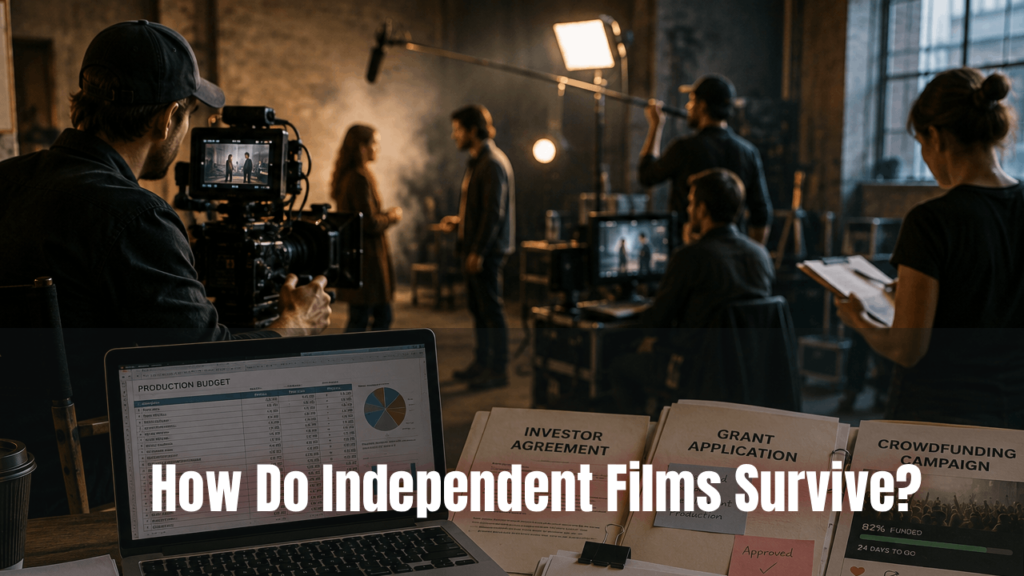
Filmmaking is a tough business for sure. Not every film works, and not every film is able to generate enough ROI to sustain the cost of making it. Filmmaking is probably not an industry one would enter with the expectation of making constant profits. More often than not, when you look at the scale of films being made, a lot of them go down the drain, financially speaking.
And yet, films continue to get made. Independent films, in many ways, exists within this contradiction. The economics of independent cinema is therefore not simply about finding money. It is about finding ways to distribute risk. The filmmaker, investor, distributor, audience and sometimes even the cast and crew can each become part of that financial equation.
But first, what is independent cinema?
Independent cinema operates without the financial security of a major studio, often with smaller budgets, fewer resources and a much higher dependence on the filmmaker’s ability to find money from different places. But independence is not simply about having less money. An independent film is generally made outside the major studio system, with its own production and distribution structures, and is often distinguished by its content, style and the way the filmmaker’s artistic vision is realised.
A film does not coin the title independent merely because it is cheap. It’s coined independent when the way it is made allows a different kind of creative decision-making. The filmmaker might have fewer resources, but they can have greater control over what shape the film takes. Sometimes, even established actors choose to work for considerably less money because they believe in the story, want to work with a particular filmmaker or see something in the project that a studio film cannot offer them.
So, if the money is not coming from a studio, where does it come from?
This is where the economics of independent cinema becomes interesting. There is rarely one single source of money. Independent films are generally built through a combination of financing methods, with producers putting together a financial package from whatever sources are possible and fit the project. Private investors, grants, film funds, crowdfunding, pre-sales, tax incentives, personal savings, deferred payments and co-productions can all become answers to the same question.
The budgets themselves can vary enormously. There are micro-budget films made for relatively small amounts and premium independent films that can run into several crores. The point is not necessarily how little money can be spent, but how efficiently that money can be utilised. Since a large percentage of independent films do not turn a profit, financial survival often starts before the camera is switched on. Keeping the budget under control and reducing the financial risk before production begins becomes as important as the filmmaking itself.
One of the most direct ways of putting together this money is through private investors.
Private investors provide equity capital when traditional studio backing or public funding is not enough. They can fund everything from pre-production and shooting to post-production, essentially helping turn a script into a living and breathing film. But unlike a grant, this money comes with expectations. This is one of the fundamental realities of independent film financing, money is rarely neutral. Every source of financing comes with its own expectations. An investor may want a return. A distributor may want commercial appeal. A grant may come with conditions. A pre-sale may provide money early but commit certain rights before the film is even made. For an independent filmmaker, the question is therefore not simply where the money comes from, but what that money asks for in return.
This is also where the standard independent financing structure comes in. Investors generally do not receive their return immediately. Revenue first goes through exhibitors and distributors and the various costs associated with releasing the film. Outstanding production expenses and loans are paid, after which investors may receive their initial investment along with an agreed premium. Only then does the back-end profit-sharing structure come into play.
But not every source of money wants its money back.
Grants and film funds are important precisely because they can give independent filmmakers financial support without asking them to operate under the same commercial pressure as a private investor. Grants are generally non-repayable and do not take a percentage of the film’s profits. They can support development, production or post-production, and are often directed towards stories, filmmakers or subjects that may struggle to find conventional commercial backing.
This is especially important for films that highlight underrepresented voices, regional languages, documentaries, social issues or experimental storytelling. A grant can also do something beyond putting money into the bank account. Being selected by a recognised institution can validate the project and make it easier to approach other investors, sales agents or international partners.
At the same time, grants have their limitations. They are rarely large enough to finance an entire film, which means they are more often one part of a larger financial package. This is where film funds become useful. Government-backed bodies, cultural organisations and regional film commissions can provide development money, production support, subsidies or tax incentives. Apart from reducing the financial burden, these funds can help preserve stories and voices that may not fit properly into mainstream commercial cinema.
Then comes crowdfunding, which has changed the relationship between filmmakers and audiences.
Crowdfunding allows filmmakers to go directly to people and ask them to invest in the making of a project. In return, filmmakers can offer rewards, exclusive content, merchandise or credits. But the larger value of crowdfunding is not always the money itself. A successful campaign can demonstrate that there is an audience interested in the film even before it exists. This makes crowdfunding less of a digital shortcut and more of a relationship between a filmmaker and an audience.
A campaign requires the filmmaker to communicate the film, explain why it needs to exist and convince people to support it. The people who contribute can then become the first audience, the first promoters and, in some cases, the people who carry the film forward through word of mouth. And that is also why crowdfunding can be difficult. It is not simply a matter of putting up a campaign page and waiting for money to arrive. It requires constant communication, marketing and a pre-existing or actively built relationship with an audience. Raising a higher budget this way is rare, but for short films and smaller independent productions, it can make a significant difference.
Then there are pre-sales. A producer can sell distribution rights for particular territories before the film is made. An international buyer may agree to purchase the rights based on the script, director, cast or genre. The deal can provide an upfront minimum guarantee, which can be added to the production budget. In some cases, these contracts can also help producers get loans based on the expected revenue.
Pre-sales can also show that there is a market for the film. If buyers from different regions are willing to pay for the film before it is made, it suggests that the film has commercial value beyond its home market. Recognisable actors, established directors and commercially viable genres such as drama, thrillers, romance, and action can make this process easier. Sales agents often become an important part of this equation, taking projects into international film markets and negotiating territory-by-territory deals.
There are other ways to fill the gaps as well. Filmmakers can use their personal savings, borrow from family and friends, negotiate deferred payments with cast and crew, use corporate sponsorships and product placement, take advantage of tax incentives, partner with larger production companies or use profits from earlier projects. An independent film’s financing package can contain several of these methods at once.
A grant might fund development. A private investor might finance the shoot. A crowdfunding campaign might pay for post-production. A pre-sale might help close the remaining gap. A regional incentive might reduce the overall cost. The film is then not financed by one person or institution, but by a network of different financial interests coming together for the same project.
And making the film is only half the problem.
An independent film also has to find its audience. Festivals can become the first major platform for a film, helping it gain critical attention, attract buyers and create a market around it. Theatrical distribution can follow, but independent films often struggle to secure screens against large studio releases. Digital platforms and video-on-demand have therefore become increasingly important, while television, educational licensing and airline rights can provide additional revenue.
This makes the economics of independent cinema fundamentally different from simply asking whether a film made money at the box office. A film can have a festival run, sell international rights, find a streaming deal, earn from television and still have a very different financial outcome from what its theatrical performance suggests.
Independent filmmaking is built around risk. There is no guarantee that the audience will arrive, that the distributor will recover the investment or that the film will even find the right platform. The filmmaker is constantly balancing artistic freedom against financial reality. Every funding source brings something to the table, but it can also create another expectation, condition or obligation.
Yet, this is also exactly why independent cinema continues to exist.
Its economics are not built around one perfect financing model. They are built around finding enough different pieces to make one film possible. Sometimes the money comes from an investor. Sometimes from a grant. Sometimes from a distributor who believes in the project before it is made. And very often, it comes from a combination of all of them.
Funding an independent film requires perseverance, innovation and a willingness to look beyond conventional financing. The path to getting an independent film made can be as unpredictable as the film itself.
Read More: