
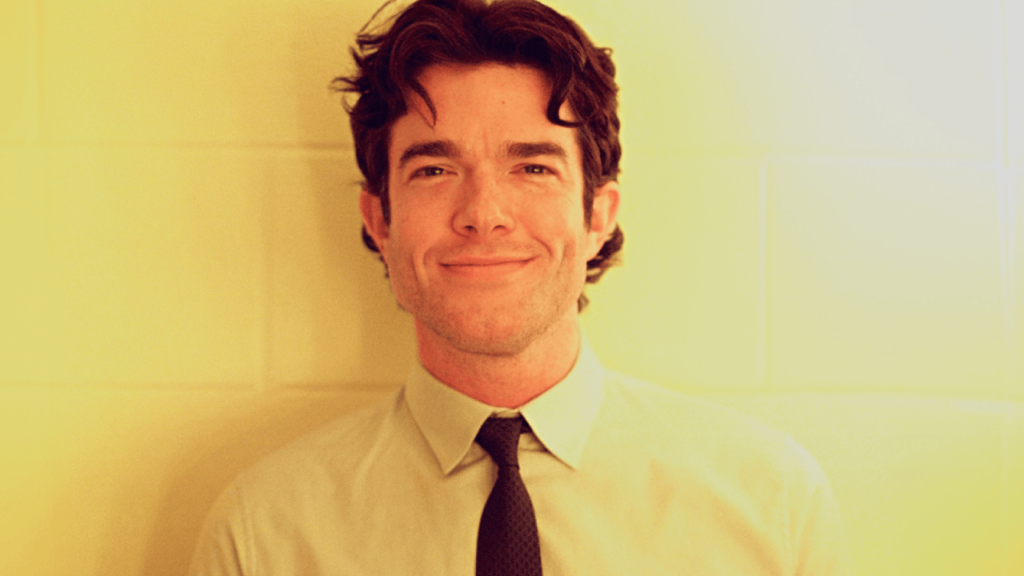
John Mulaney could be the next actor to step into the shoes of Maxwell Smart as Warner Bros. develops a new version of Get Smart. The comedian is being eyed for the lead role in what has been described as a reimagining of the classic spy comedy, although the project remains in the early stages and no casting deal has been announced yet. Seth Grahame-Smith is writing the screenplay, with Charles Roven and Andrew Lazar producing.
There is little known about the story at this point, and Warner Bros. has not announced a director, additional cast or release date. That makes Mulaney’s potential involvement the project’s first major piece of casting news. The decision to revisit Get Smart also brings the franchise back to the big screen after the 2008 feature adaptation starring Steve Carell.
The original Get Smart was created by Mel Brooks and Buck Henry and premiered on NBC in 1965. Don Adams played Maxwell Smart, a well-meaning CONTROL agent whose confidence rarely matched his ability to function as a conventional secret agent. The series turned the increasingly popular spy genre into comedy, combining espionage plots with slapstick, absurd situations and a deliberately incompetent hero. It ran for five seasons, ending in 1970, and won seven Emmy Awards during its run.
Barbara Feldon played Agent 99, Smart’s far more capable partner, while Edward Platt portrayed the Chief of CONTROL. The show’s appeal came partly from the contrast between the serious machinery of a traditional spy thriller and Smart’s repeated ability to make even simple assignments unnecessarily complicated. That comic formula made the character distinctive enough to survive well beyond the original television run.
Hollywood first brought the property to cinemas in 2008, with Carell taking over as Maxwell Smart. Anne Hathaway played Agent 99, while Dwayne Johnson and Alan Arkin were among the supporting cast. Directed by Peter Segal, the film gave the material a contemporary action-comedy treatment while retaining the basic premise of an inexperienced Smart being pushed into the field.
The 2008 film was also a solid commercial performer. It opened in North America with approximately $38.7 million and eventually earned $130.3 million domestically and $230.7 million worldwide against an $80 million production budget.
The new film would give the character another interpretation, and Mulaney’s potential casting could make that particularly interesting. Known primarily for his stand-up career and dry, highly verbal comic style, Mulaney has built a screen career that extends well beyond his comedy specials. His television and film work has included Documentary Now!, Big Mouth, Spider-Man: Into the Spider-Verse and Chip ’n Dale: Rescue Rangers. He also recently hosted Netflix’s Everybody’s Live with John Mulaney.
Maxwell Smart is also a role that depends heavily on comic timing rather than simply playing a conventional action hero. The character’s fundamental joke is that he wants to be an exceptional spy but is often the least prepared person in the room. Mulaney’s possible interpretation would therefore give Warner Bros. an opportunity to approach the character through a different comedic sensibility from both Adams and Carell.
Mulaney is also continuing to expand his acting work. His upcoming credits include David O. Russell’s Madden, in which he plays Trip Hawkins, the founder of video-game company Electronic Arts. A starring role in Get Smart would represent another sizeable studio opportunity for the comedian as he continues moving between stand-up, television and film.
Behind the new Get Smart project is Grahame-Smith, whose recent screenwriting credits include Now You See Me: Now You Don’t. Roven, whose producing credits include Oppenheimer, and Lazar are attached to produce. However, the filmmakers have yet to reveal how closely the new film will follow the original series or how it will distinguish itself from the 2008 adaptation.
For now, Mulaney remains only in talks to potentially become Maxwell Smart. If the deal moves forward, Warner Bros. will be giving one of television’s most recognisable comic spies a new cinematic identity, nearly two decades after Carell’s version and more than 60 years after Adams first made Agent 86 a household name.
Read More:
- World War II: The Story That Hollywood Never Stops Telling
- How Do Independent Films Survive? The Economics Behind the Movies
- Batwara 1947: How Hindi Cinema Kept Remembering The Scar Of PartitionTHE SEED OF THE SACRED FIG: When Politics Enters the Home
- How a Film Is Born: The Journey from an Idea to the Big Screen