
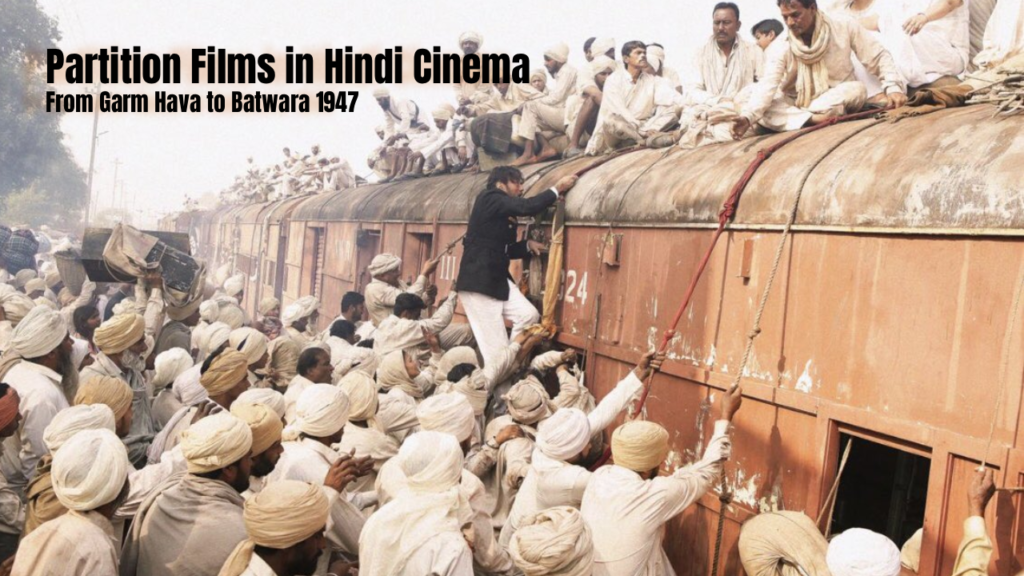
1947 is the year that is imprinted in the hearts of Indians as one of the most terrifying and unreal periods of violence that the country saw. On one end, there was excitement for the fact that the country was finally marking its independence from British rule. The country was going to be democratic from that point on. Elections would be held to decide who would look after the people, fight for them and stand for them. On the other hand, while freedom was granted, 15th August 1947 continues to often remind people first of the terror that this land saw and went through. Women raped and murdered; men, women, the old and children killed and crushed. Millions were displaced from the homes they had known, and families were separated in the process.
Cinema, as it has always done, has acted as a reflection of society and has time and again been a mirror to the horrors of Partition. It has not covered this subject in one regular way. It has often taken the reality of Partition and set it within a fictional story. Other times, it has adapted a story from real life or the biography of someone who lived through it. Sometimes, it has looked at the chapter of Partition alongside the freedom struggle through the lives and stories of freedom fighters.
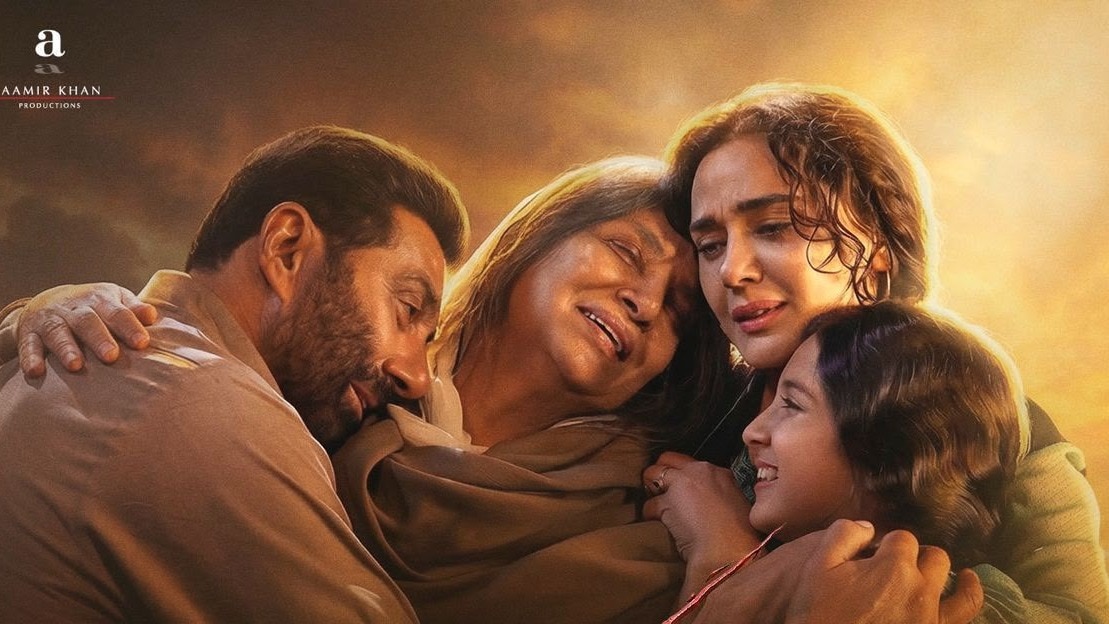
After nearly 80 years of independence, Hindi cinema continues this tradition. Because the artists know, and so do the audiences, that the value of Partition and the value of independence can never be removed from history or the present, let alone diminished. Today, a film like Batwara 1947 is being made around the same backdrop, years after India claimed its independence. Directed by Rajkumar Santoshi and produced by Aamir Khan, the film is set during the upheaval of 1947 and follows a family forced to leave its home and move to Lahore. The film centres around an old Hindu woman who continues to live in the haveli allotted to the family after they arrive. The story then becomes more than just one about migration. It becomes a story about displacement, belonging, humanity and the strange human connections that can survive even when everything else around them has been broken.
The subject around Partition still continues to stay relevant, and probably will for years to come. Batwara 1947 is another addition to a long line of films that have tried to understand what happened when an entire population was suddenly asked to leave behind everything that made a place home. Its story of Sikander Mirza and his Muslim family moving to West Punjab, Pakistan, brings the larger history of Partition down to the level of one family, one house and the people living inside it. And that is also why Partition has continued to find its place in cinema. History can surely tell us how many people migrated, how many lives were lost and how many homes were abandoned. But cinema shows us what one home meant to one person.
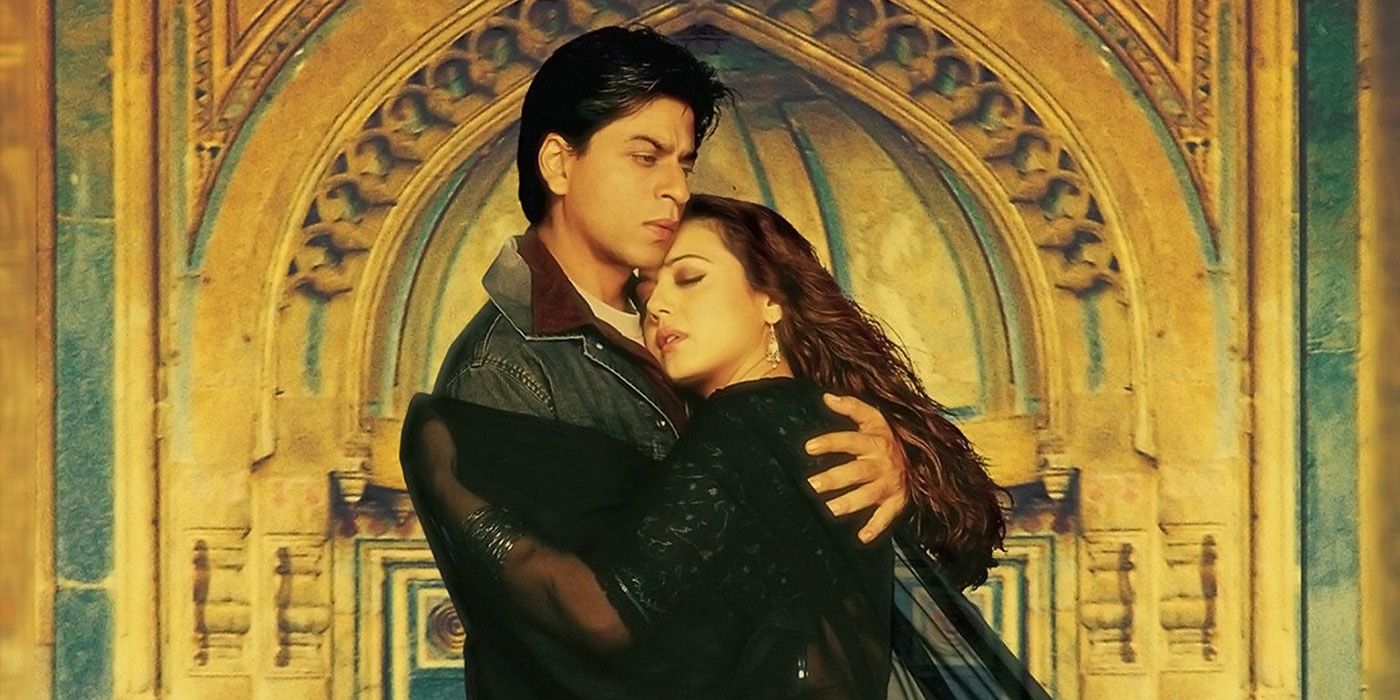
Over the years, there have been different and similar such films. Gadar: Ek Prem Katha (2001) and Veer-Zaara (2004) are great examples of separation and love being shown through the eyes of Partition that also fall in the mainstream cinema. Gadar: Ek Prem Katha turned the period into a larger-than-life love story, where Tara Singh crosses the border to bring his wife and son back, while Veer-Zaara looked at the same division through a love that is kept apart by the borders created between two countries. Both films used romance to approach a history that was otherwise filled with violence and loss. The difference was in how they looked at the same wound. One made it loud and dramatic, while the other made it quiet and emotional.
Early cinema had already begun approaching this turbulent chapter through films like Chhalia (1960) and Nastik (1954). These films came at a time when Partition was still a relatively fresh memory for the audience. The wounds had not disappeared, and cinema became one of the spaces where separation and the idea of a divided country could be brought back to the screen.
But as time passed, filmmakers also began moving away from simply showing the event itself. They began looking at the people who were left behind by it. What happens to a person after their home is gone? What happens to a child who has seen violence that they cannot understand? What happens to love, identity and family when the place you belong to suddenly exists across a border?

Innocence is the purest form of emotion, and through the film Earth (1998), Deepa Mehta used that emotion to tell a poignant story, adding to the pile of Partition films. Seen largely through the eyes of a young girl, the film slowly watches the world around her change as communal tensions rise. The innocence of the child makes the violence around her feel even more disturbing because she is witnessing the destruction of friendships and relationships without fully understanding why the people, she knows are suddenly turning against each other. Earth did not need to make Partition a distant historical event. It made it personal.
The idea of personal trauma has appeared in several other films as well. By means of showing how the trauma of Partition can affect a life, long after the actual event, films like Bhaag Milkha Bhaag (2013) and Hey Ram (2000) were constructed. In Bhaag Milkha Bhaag, the Partition becomes a deeply personal memory for Milkha Singh. The violence he’s forced to witness as a child stays with him and becomes a part of who he is as he grows up. His running is therefore not simply about sport or achievement. It also becomes an attempt into moving forward or running away from something that he can never truly escape from.
Hey Ram, on the other hand, looked at the violence of Partition through a much darker and more complicated personal journey. The film dealt with communal violence, revenge and the psychological consequences of hatred. It blatantly showed how hatred and violence can travel in a person’s mind and slowly change the way they see the world and every little thing around them. Partition, in these films, is no longer just a historical event. It becomes something that stays inside people.
Cinema also found another way of remembering Partition through stories of home. Loss of home is the greatest loss there is. Your sense of belonging, your foundation and the place you call home all snatched away. Covering that are films like Garm Hava (1974) and Mammo (1994), both of which deal with the emotional consequences of displacement and the complicated relationship between home and identity. Garm Hava especially remains one of the most important films on Partition because it did not approach the subject through spectacle. It showed the slow, everyday repercussions of Partition on a Muslim family that chooses to stay in India. The violence is not always visible with grand moments, but its presence can be felt in the family’s shrinking options, relationships, and loneliness.
Mammo, meanwhile, looked at Partition through memory and the distance created by time. The film understood that displacement does not necessarily end when a person reaches a new country. Sometimes, it continues through memories, through the places one cannot return to and through the feeling of being caught between two homes.
There have also been films that chose to remember Partition through the people who stood at the centre of India’s struggle for freedom. Kartar Singh (1959), Sardar Udham (2021), The Legend of Bhagat Singh (2002) and Gandhi (1992) are some examples of films that have approached the larger history of India’s freedom through the lives of individuals. These films are equally substantial to the larger conversation around independence, even when Partition is not their only subject. Gandhi is different because the film moved away from Hindi cinema. A director like Richard Attenborough made the film, somehow making that history a universal one. The story of India’s freedom was no longer just an Indian story. It became a story that could be watched and understood by audiences across the world.
The more recent years have not made Partition disappear from cinema either. Instead, filmmakers have continued to find newer emotional entry points into the same history. Imtiaz Ali’s Main Vaapas Aaunga (2026) uses Partition as the backdrop for a story of love and longing. The film draws from memories of Partition survivors and looks at how feelings of love and attachment can remain alive even after decades have passed, especially when they’re forcibly stripped from a home or an individual.
This is what makes the cinematic memory of Partition so interesting. The event remains the same, but the stories around it keep changing. One filmmaker looks at it through a child. Another looks at it through lovers. Someone else looks at it through a family losing its home. Another looks at the trauma carried by a person for the rest of their life. And Batwara 1947 looks at it through a house that already belonged to someone else and the two people who are suddenly forced to share the same space because history has made their homes part of the same tragedy.
The story of Partition is also a story of people who had very little say in what was happening around them. Borders were drawn, homes were left behind and millions had to make choices they never expected to make. That is why the human stories within Partition continue to matter more than the dates and numbers alone. They give a face to a history that can otherwise become just another chapter in a textbook.
Today, these films still carry emotion, heartbreak, and our history. Cinema will most likely continue to make films on the subject of Partition as it is a history that defines India, especially after finding that freedom through so much struggle and loss after nearly two centuries of British rule. Batwara 1947 is one such addition to this genre of cinema. It does not come at a time when Partition is forgotten. It comes at a time when the generation that directly experienced it is slowly becoming smaller, making the responsibility of remembering it even more important.
Because 1947 was not only the year India became independent. It was also the year millions of people lost the India they knew. And that is why, almost 80 years later, cinema is still trying to remember what was lost.
Read More:
- Harry Potter and the Question Every Reboot Must Answer
- Top 10 Sequels That Elevated Cinema: When Hollywood Got Better the Second Time
- Top 10 Visually Stunning Films Ever Made, Ranked by PoF
- From Water to Fire: How Avatar’s Visual Language Is Evolving
- Why India Still Doesn’t Have Its Own Pixar












7 Responses