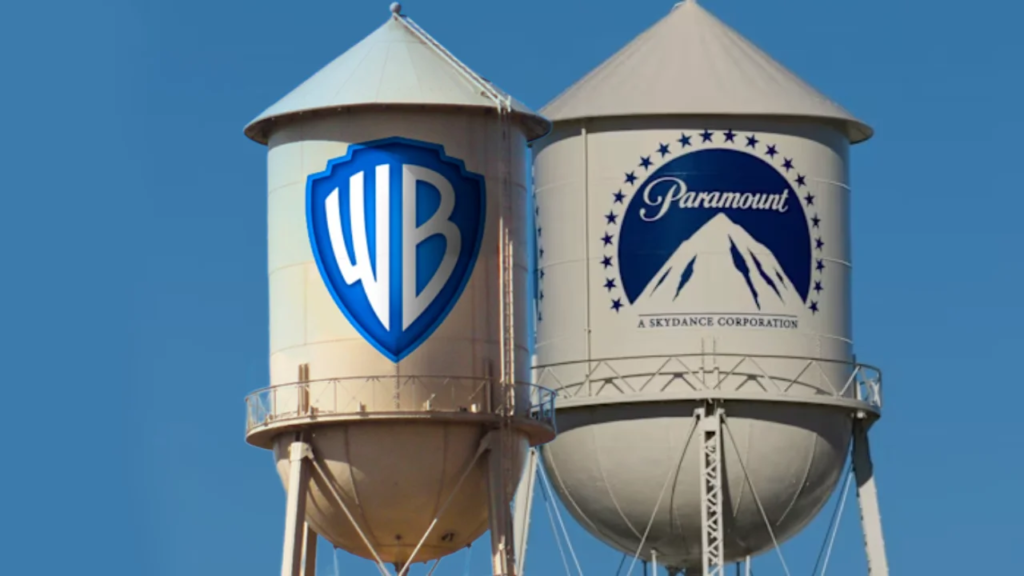
David Ellison’s Paramount Skydance has secured a major victory in its proposed $111 billion merger with Warner Bros. Discovery after the U.S. Department of Justice officially approved the transaction following an extensive antitrust review. The decision marks the biggest regulatory breakthrough for the deal so far and moves the merger significantly closer to completion. However, despite clearing one of its most important hurdles, the transaction is not yet finalized, with legal challenges and international regulatory reviews still standing in its way.
The latest development comes after months of twists and turns surrounding one of Hollywood’s most consequential corporate deals. Before Paramount emerged as the winning bidder, several major media companies were linked to Warner Bros. Discovery. Earlier reports suggested that companies including Netflix and Comcast had explored potential acquisition opportunities before Paramount and Skydance ultimately secured the agreement to combine the two entertainment giants.
The proposed merger would bring together an extraordinary collection of assets under one corporate umbrella. Paramount’s portfolio includes Paramount Pictures, CBS, CBS News, Nickelodeon, MTV, Comedy Central, and Paramount+, while Warner Bros. Discovery controls Warner Bros. Pictures, HBO, HBO Max, CNN, TNT, TBS, Discovery, HGTV, Cartoon Network, and several other major brands.
The transaction had already crossed a significant milestone earlier this year when shareholders of both companies approved the merger, reflecting strong investor support for the deal. Since then, attention has largely shifted toward regulatory reviews and whether government agencies would allow such a large consolidation within the entertainment industry.
That question now appears to have been answered, at least at the federal level in the United States. According to the Department of Justice’s Antitrust Division, the agency completed an eight-month investigation and determined that the merger is unlikely to harm competition or American consumers. The review reportedly involved more than two million documents and included examinations of streaming services, linear television operations, and theatrical film production and distribution.
In its statement, the DOJ said the transaction is “not likely to result in harm to competition or American consumers,” concluding that the combined company would not significantly reduce competition across key entertainment sectors.
Notably, regulators approved the merger without requiring any divestitures, behavioral remedies, asset sales, or other concessions. That outcome represents a significant win for Paramount, which had faced questions about whether regulators would demand structural changes before granting approval.
The decision also reflects the changing nature of the media landscape. While traditional Hollywood studios once competed primarily against one another, companies today are increasingly battling technology and streaming giants such as Netflix, Amazon, Apple, and YouTube for audience attention, advertising revenue, and subscriber growth.
Paramount has argued throughout the review process that combining with Warner Bros. Discovery would create a stronger competitor capable of operating more effectively in a rapidly evolving entertainment market. The company maintains that the merger is pro-competitive and would strengthen its ability to compete against larger digital platforms.
Despite the DOJ’s approval, the deal has faced significant opposition from parts of the entertainment industry. More than 5,500 filmmakers, actors, writers, and industry professionals reportedly signed an open letter opposing the merger, arguing that it could reduce competition, eliminate jobs, and further concentrate power among a shrinking number of major media companies. Labor groups have also expressed concerns about potential layoffs, particularly after Paramount indicated that the merger could generate more than $6 billion in cost savings.
Critics argue that such savings often come through workforce reductions and operational consolidation. Supporters, however, contend that the combined company would be better positioned to survive and compete in a market increasingly dominated by global technology companies.
While the DOJ’s approval removes a major obstacle, the merger still faces additional challenges before it can officially close. State attorneys general, including officials in California, have indicated that they may pursue legal action to challenge the transaction on antitrust grounds. Such lawsuits could create additional delays and potentially lead to court battles even after federal approval.
The merger is also undergoing regulatory reviews outside the United States. Authorities in the United Kingdom have opened an investigation into the proposed transaction, while regulators in the European Union continue to examine various aspects of the deal, including foreign investment considerations.
Those reviews mean the merger’s future is not yet fully secure, despite the latest victory. The development is particularly significant because it follows months of regulatory scrutiny surrounding the proposed combination. Questions about media consolidation, competition, streaming dominance, and consumer impact have remained at the center of discussions since the merger was first announced.
Now, with the Department of Justice giving its approval, Paramount and Warner Bros. Discovery are closer than ever to completing one of the largest entertainment mergers in modern Hollywood history. For David Ellison and Paramount Skydance, the decision represents a major step toward creating a media powerhouse that spans film, television, streaming, news, sports, and entertainment brands across the globe. Whether the merger ultimately reaches the finish line will depend on the outcome of the remaining regulatory reviews and potential legal challenges, but one thing is clear: the biggest federal hurdle has now been cleared.
Read More: