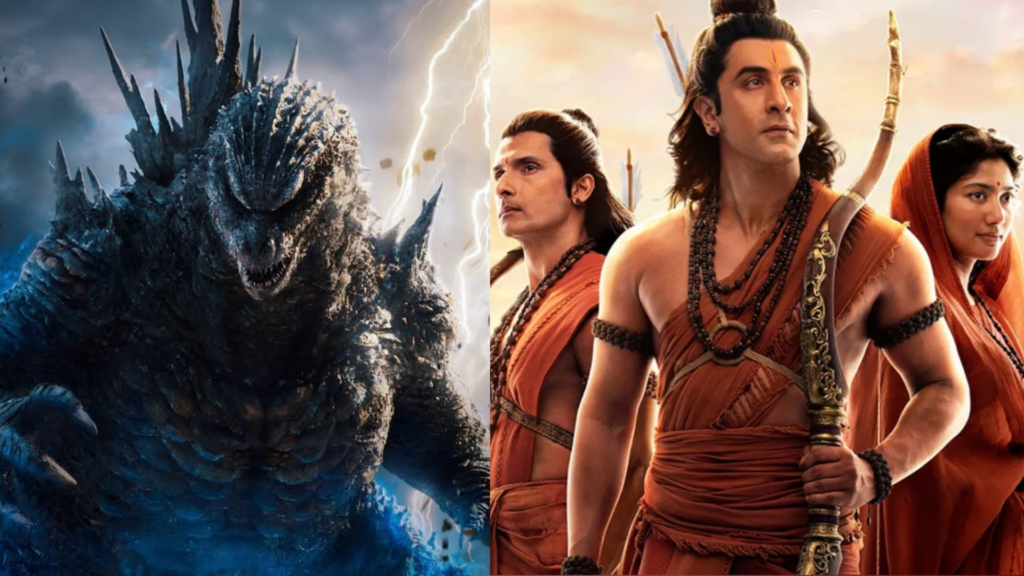
The reported possibility of Godzilla Minus Zero shifting its Indian release to avoid a clash with Ramayana: Part One highlights a box-office reality for films built around scale and visual effects: access to premium screens can matter almost as much as the release date. Directed by Takashi Yamazaki, the Japanese sequel was expected to open in India on November 6, a day after Nitesh Tiwari’s mythological epic. However, a report published by Sacnilk on October 27, 2026, stated that the Indian release could move to late November, with November 19 mentioned as a tentative date. Distributors have not confirmed the change.
The pressure point is the limited availability of IMAX screens and the number of shows each title can secure during a crowded release period. Trade reports suggest that Godzilla Minus Zero could have been left with just one show a day at several major IMAX cinemas, while Ramayana received most of the remaining slots. For a film designed to deliver a large-scale visual experience, restricted access to premium screens could limit its visibility and affect its opening-weekend momentum.
A release shift would represent a practical distribution decision rather than necessarily a retreat from competition. PVR INOX Pictures has been linked to the reported scheduling change in India, but no official announcement has confirmed a revised date. If the move takes place, it could give both films more room to reach audiences instead of requiring exhibitors to divide a limited premium-screen schedule between two large-format releases.
The overlap in premium formats is particularly significant. Ramayana is being made for IMAX, while Godzilla Minus Zero is the first Japanese production filmed for the format. According to IMAX and the film’s official distributors, Yamazaki used IMAX-certified digital cameras, with selected sequences presented in the expanded 1.43:1 aspect ratio. For both productions, the format is central to how their visual scale will be presented to audiences. The competition is therefore not simply about release dates, but also about securing the screens capable of displaying these images as intended.
The financial contrast between the two projects adds another dimension to the scheduling question. Ramayana is among the most expensive Indian film projects ever mounted. Estimates for its two-part production have placed the combined cost as high as $500 million, or approximately ₹4,000 crore, although reported figures vary. This estimate refers to the two-part production and should not be mistaken for the budget of Ramayana: Part One alone.
Godzilla Minus Zero, by comparison, has been associated with estimated production costs of around $30 million to $50 million. Toho has not publicly confirmed this range, so it remains an estimate rather than an official budget. The difference in reported production costs does not, by itself, determine which film will perform better at the box office, but it illustrates the different financial contexts in which the two productions are being released.
Ramayana brings a familiar Indian epic, a major domestic release window and a large-scale production designed to reach a broad audience. Godzilla Minus Zero follows Godzilla Minus One, which won the Academy Award for Best Visual Effects and demonstrated the international reach of a Japanese genre film made without a Hollywood-sized budget. The sequel offers another monster spectacle rooted in postwar Japan, with Yamazaki returning as director.
Some claims surrounding Godzilla Minus Zero have also circulated ahead of its release, including reports that the film has received an official R rating from the Motion Picture Association and that this would mark the first restricted rating in the franchise’s 72-year history. However, these claims have not been established by the official materials reviewed for the source report. Confirmed information centres on the film’s postwar setting and IMAX presentation. Distinguishing verified details from speculation is particularly important while the reported Indian release change itself remains unconfirmed.
A potential scheduling change in India would not end the films’ competition for international audiences. According to official announcements from Toho and GKIDS, Godzilla Minus Zero is scheduled to open in Japan on November 3 and in North America on November 6. Ramayana is also targeting international markets, with Sony Pictures handling distribution outside India. The films could therefore continue competing for attention in overseas territories even if their Indian release dates are separated.
For exhibitors, the situation highlights the value and limitations of premium screens. An IMAX release can help define a film’s theatrical experience, but it also makes access to those screens an important part of distribution planning. When multiple large-scale productions target the same period, distributors and exhibitors must weigh audience demand, local release calendars and the economics of large-format cinema.
If Godzilla Minus Zero moves its Indian release, the decision would illustrate how these considerations can shape a film’s theatrical strategy. The contest between Ramayana and Godzilla Minus Zero is not simply between a mythological world and a giant monster’s destruction. It is also about where, when and how audiences get to experience both films on the biggest screens available. In a market where premium-format access is limited, release timing can become a crucial part of that equation.