South Africa’s Oscar entry, Variations on a Theme (Variasies op ’n Tema), demonstrates how compelling cinema can emerge from unexpected creative choices. Directed by Devon Delmar and Jason Jacobs, the Afrikaans-language film won the prestigious Tiger Award at the 2026 International Film Festival Rotterdam and screened at the BFI London Film Festival. Now selected as South Africa’s official submission for the 99th Academy Awards, the film has another unusual distinction: its narrative was mapped out using Microsoft Excel, with the spreadsheet helping shape not only its structure but also its musical rhythm.
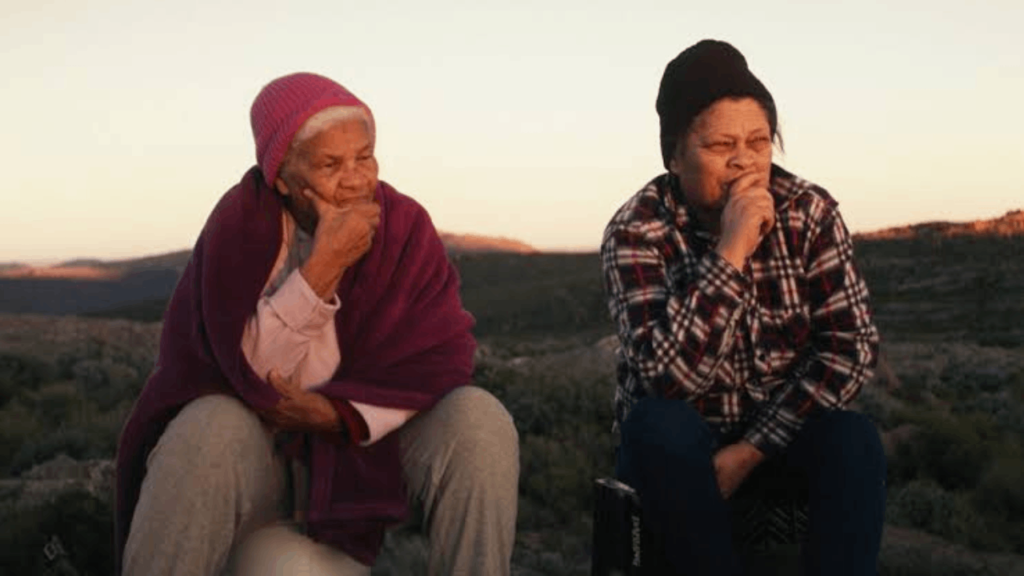
At the centre of the film is Ouma Hettie, an elderly goat herder living in the remote Kamiesberge region of South Africa. When a scheme promising reparations for her father’s service during the Second World War draws her in, her quiet life takes an unexpected turn. What follows is a story shaped by family, history and the consequences of broken promises, told through a filmmaking process as unconventional as its setting.
The spreadsheet served as more than a place to store ideas; it became the film’s blueprint. Delmar and Jacobs organised the story around five days, assigning each day its own column and mapping 30 shots that recur throughout the film. Rather than writing every scene in a traditional screenplay, they entered brief descriptions of the action into the relevant cells. This method allowed them to track what would repeat, what would change and how those variations could move the story forward.
That approach also shaped the film’s rhythm. As shots recur, viewers can notice shifts in light, movement and behaviour, much as a musical phrase changes through subtle variations each time it is repeated. The directors wanted the film to unfold from a central idea rather than rely on conventional plot twists. Excel allowed them to visualise this design before filming, turning an everyday office tool into a means of planning a carefully measured cinematic pattern.
The title reflects this musical approach. The directors drew inspiration from variations on a recurring theme, including Johann Sebastian Bach’s Goldberg Variations and the work of Estonian composer Arvo Pärt. A central idea remains recognisable even as its details shift. The film’s recurring images work in a similar way, using everyday routines to reveal how Ouma Hettie’s world has changed.
The structure also left room for improvisation. Although the filmmakers knew the purpose of each scene, they developed the dialogue on set rather than fixing it in a conventional script. This approach suited a story rooted in a specific community. Jacobs grew up in the village depicted in the film, while the lead role is played by Hettie Farmer, his grandmother. Their personal connection gives the film an intimate foundation, even as its concerns extend beyond one family.
At the heart of the story is a cruel echo between generations. Ouma Hettie is drawn into a scheme offering compensation for her father’s wartime service, but the promise becomes another form of exploitation. The scam threatens her independence and draws her family into a problem she would rather handle herself. Set in the rural landscape of Namaqualand, the film connects her personal struggle to a longer history of broken promises and people waiting for what they are owed.
The film’s unconventional method has accompanied it onto the international stage. Variations on a Theme won the Tiger Award at the 2026 International Film Festival Rotterdam, where it premiered in competition. It subsequently screened at the 70th BFI London Film Festival in October. On September 30, 2026, the National Film and Video Foundation announced the film as South Africa’s official submission for the 99th Academy Awards. The selection does not guarantee an Oscar nomination, but it places the film in the international feature race.
What distinguishes Variations on a Theme is the way an everyday tool became part of an unconventional cinematic vision. By using Microsoft Excel to organise recurring scenes and shape the film’s rhythm, Delmar and Jacobs found a way to make repetition meaningful, allowing small changes in ordinary life to reflect a much larger story about family, history and injustice.
As the film enters the Oscar race, its journey offers an example of how filmmaking can move beyond established methods. Sometimes, an unexpected creative choice can give a story its own distinctive voice.