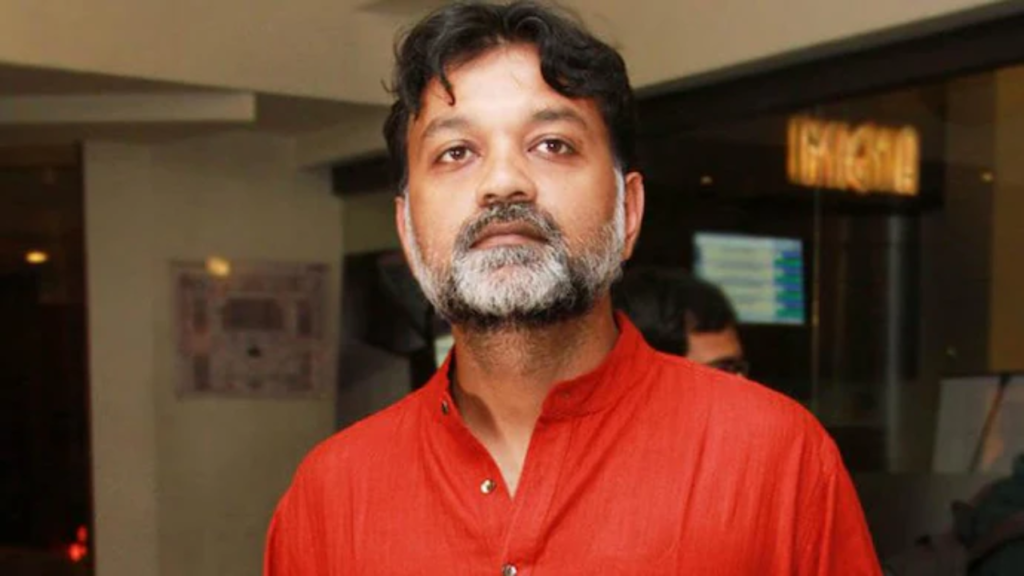
One of Indian cinema’s most beloved classics is getting an extraordinary tribute. National Award-winning Bengali filmmaker Srijit Mukherji has announced a new film titled Maharaja Tomare Selam, named after one of the most famous songs from Satyajit Ray’s Goopy Gyne Bagha Byne, which will chronicle the making of the landmark 1969 film. The announcement was made this week and has already generated significant excitement among Bengali cinema lovers and film historians alike.
Maharaja Tomare Selam will not be a remake or a sequel. It is an entirely different kind of project—a film about a film. Specifically, it will center on Satyajit Ray himself, the pressures he faced, the choices he made, and the circumstances he navigated in a politically charged Kolkata as he willed Goopy Gyne Bagha Byne into existence. Srijit Mukherji described the project simply and beautifully: “I am just trying to tell the incredible true story of how one of the greatest classics of Indian cinema, Goopy Gyne Bagha Byne, came to be made.” Principal photography is set to commence in January 2027.
For anyone unfamiliar with the source of this story, Goopy Gyne Bagha Byne was released on May 8, 1969. Directed and written by Satyajit Ray, and based on a story by his grandfather, Upendrakishore Ray Chowdhury, the film follows two inept village musicians—Goopy, played by Tapen Chatterjee, and Bagha, played by Rabi Ghosh—who are banished from their homes and granted magical powers by the King of Ghosts, including the ability to freeze anyone in place and the power to teleport anywhere in the world. Their journey takes them through rival kingdoms on the brink of war, where their music ultimately becomes the force that averts conflict and brings peace.
The film carried sharp social and political undertones, exploring class, the power of art and the absurdity of war. Ray expanded those themes into a direct satire of authoritarian rule with his 1980 sequel, Hirak Rajar Deshe. His son, Sandip Ray, later concluded the trilogy with Goopy Bagha Phire Elo in 1992. The original film was made on a budget of just ₹600,000—approximately $80,000 at the time—and went on to become one of Ray’s most commercially successful and widely loved works.
The title Maharaja Tomare Selam, which translates to “O King, I Salute You,” is taken directly from one of the most iconic songs in the original film. Written and composed by Satyajit Ray himself, the song was performed by Anup Ghoshal and Rabi Ghosh and has remained one of the most recognizable pieces of Bengali film music for nearly six decades. Choosing it as the title of this new film is a gesture of deep reverence for Ray and the world he created.
The film stars Jeetu Kamal, Ritwik Bhowmik, Rudranil Ghosh, Satakshi Nandy, Sairity Banerjee and Arijit Dutta. Further casting and character details have not yet been disclosed.
Maharaja Tomare Selam is produced by Hoichoi Studios and Friends Communication in association with Piyali Films Pvt. Ltd.—notably, the same production company that originally produced Goopy Gyne Bagha Byne in 1969. That connection is not incidental; it gives the new film a direct lineage to the original and adds weight to what is already a significant undertaking.
Satyajit Ray built a body of work over more than three decades that stands among the finest in world cinema. His films, including Pather Panchali, Charulata, Agantuk, Devi and many others, brought international recognition to Indian filmmaking and influenced generations of directors around the world. In 1992, just weeks before his death, Ray received an Honorary Academy Award for Lifetime Achievement, becoming the first Indian filmmaker to receive the honor.
There is something deeply fitting about the idea of a film exploring how Goopy Gyne Bagha Byne came to be made. Satyajit Ray himself was navigating financial, political and creative pressures while making what would become one of his most joyful works. That tension between difficult circumstances and the lightness of the finished film is a story worth telling. With Srijit Mukherji, one of the most accomplished and prolific Bengali filmmakers working today, at the helm, Maharaja Tomare Selam has the potential to become something genuinely special.
Filming begins in January 2027. Bengali cinema is already waiting.
Read More: