Films can often be more than just a way to express yourself; they can also express a part of who you are. When someone tells you they like the same film as you, you can often understand something about them through that shared liking. There is a certain kind of connection that comes from finding someone who sees something in a film the same way you do. You may not understand them entirely, but you can get a sense of who they are, what moves them, and whether there is a certain like-mindedness between the two of you.
Possibly that is also where the idea of timeless cinema begins. “Timeless” is a beautiful word, often used to describe films. The ones we call timeless are often films that refuse to be confined to a particular bracket, period, place, or way of thinking. They may be deeply rooted in the time they were made in, but somehow, they manage to travel beyond it. They may belong to a particular time, yet never feel trapped within it.
The foremost thing, one could argue, that makes a film timeless is the touch of human emotion in it.
One universal substance that will forever remain a part of the world, now and in the future, is human emotion. Periods can change. People are born, then they die. You marry and you get divorced. You change cities, move countries. Cultures evolve. Technology changes. Languages change. The way people speak, dress, work and live changes. The stagnant piece is feelings. Every new person that comes into the world carries some emotion.
Let’s sideline the specific nature of these emotions because those can be different for every person, and rightfully so. What matters is that they exist, and that the presence of emotion itself remains universal.
There’s a reason why we call it humanity in the first place. It’s how humans are structured. Having feelings is what’s natural and factual. The same way, people having different types of feelings is also another fact. Empathy, sympathy, compassion, guilt, shame, anger, frustration, hatred, fear, disgust, sadness, anxiety, joy, adoration, love, and so many more. Human emotion is something that can’t be defined, subjected to a time period, or put in a box.

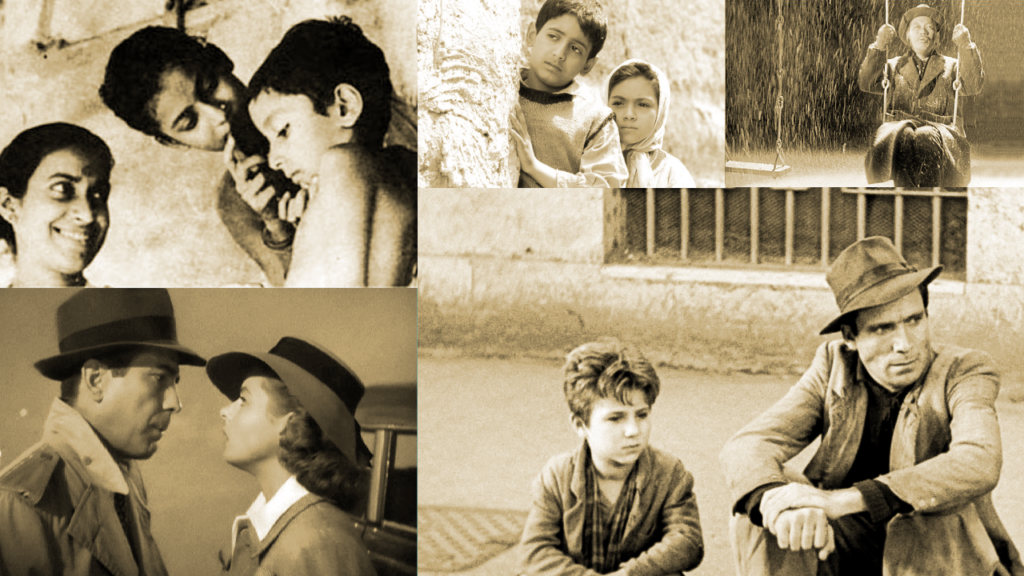
A film about a specific time, incorporating that time’s vision, its culture and its infrastructure very minutely can still be timeless because of the emotions the film speaks to. The example in mind is Satyajit Ray’s Apu Trilogy, from India. It remains timeless even today. It continues to reach people and resonate with them because of its human value and poetic symbolism, no matter how rooted the film is in its time period and in the lifestyle of a small Bengali family. The world around Apu changes as he grows, but the feelings of loss, love, loneliness, hope and growing up remain recognisable.
This could be why cultural specificity does not necessarily work against timelessness. In fact, sometimes it does the opposite. The more honestly a film understands its own world, the more deeply it can communicate something beyond that world. Vittorio De Sica’s Italian film Bicycle Thieves (1948) is deeply rooted in post-war Italy, in unemployment, poverty and the social conditions of the time. Yet the anxiety of a father and a husband trying to provide for his family does not belong only to post-war Italy. The desperation, humiliation and helplessness travel far beyond the period in which the film was made. The same can be seen in Bimal Roy’s Indian film Do Bigha Zamin (1953). It covers a very specific social and economic reality, a particular India and a particular period. Yet the fear of losing one’s home, the struggle to survive, the dignity attached to work and the desperation of a person trying to protect his family are not limited to that particular India. The world changes, but the emotional truth stays.
This emotional truth is also what allows some films to speak to us even when their stories are far removed from our own lives. Frank Darabont’s American film The Shawshank Redemption (1994) is set inside a prison. Most people watching it have never lived inside a prison and unlikely ever will. However, hope, loneliness, friendship, dignity and the desire for freedom are not alien emotions. The film uses confinement to talk about something much larger than confinement.
Similarly, Michel Gondry’s American film Eternal Sunshine of the Spotless Mind (2004), uses an almost fantastical premise to explore something extremely ordinary: love and the inability to completely let go of it. Two people finding each other over and over, and even after knowing the impending, perhaps even unavoidable, end of separation, still choosing each other. When you feel something by simply reading that idea on paper, imagine watching it on screen.
That is where strong storytelling enters the picture. A timeless film is not timeless simply because it has an emotion in it. Almost every film has emotions. What matters is how honestly and effectively those emotions are translated on the screen. A story needs to make you feel something rather than simply tell you what you are supposed to feel.
And sometimes, that comes through characters.

The extraordinary range of characters that cinema has given us is another factor of timeless films. Some characters can move us in ways that are hard to comprehend even. Characters from films like the Iranian film Children of Heaven (1997) by Majid Majidi, the cinema of Iranian filmmaker Abbas Kiarostami, Roberto Benigni’s Italian film Life Is Beautiful (1997), Martin Scorsese’s American film Taxi Driver (1976), James Cameron’s Titanic (1997), and the classics of French filmmaker François Truffaut have examples of characters that stay with you. These characters plant themselves in you, making you feel with them joy, innocence, sorrow, loss, loneliness, romance, sacrifice, love, fervour. The characters that can do that, needless to say, become timeless.
Take Peter Weir’s American film Dead Poets Society (1989) for instance. The world of an elite boarding school belongs to a particular setting, but the struggle between what one is expected to become and what one wants to become is not restricted to that school, country or generation. Similarly, Gus Van Sant’s American film Good Will Hunting (1997) is about a young man with extraordinary ability, but underneath that is a story about fear, self-worth, vulnerability and allowing yourself to be loved when you have spent your entire life blaming yourself for the life you were given.
This is also why films about very specific historical moments can continue to live far beyond those moments. Steven Spielberg’s Schindler’s List (1993), Michael Curtiz’s Casablanca (1942), and Roberto Benigni’s Life Is Beautiful, while using war as their backdrop, are about so much more. They are about love, morality, sacrifice, survival, humanity and the choices people make when the world around them is falling apart. Which is why, despite being about something as specific as war, they continue to remain timeless.
Casablanca is a particularly interesting example because its emotional core does not depend on the audience knowing the political circumstances of its time. The war matters, but so do sacrifice, separation and choosing someone else’s future over your own happiness. The historical setting gives the story its shape, while the emotion gives it its longevity. The same can be seen in Akira Kurosawa’s Japanese film Ikiru (1952). It is about a bureaucrat who discovers that he is dying and suddenly begins questioning what he has done with his life. The specifics belong to post-war Japan, but the question underneath it is almost frighteningly universal, what does it mean to have lived a meaningful life?
Timeless cinema also does not equate to popular cinema. Popular cinema, or in other words commercially viable cinema earning crores, does not mean it would be timeless. In fact, in more cases than not, the opposite might be true. A popular film crossing insane box-office numbers might fade away slowly and not be revisited at all later, even after having unimaginable collections at the time of its release. Popularity may belong to just a moment, whereas timelessness can survive the moment.

A film that precisely covers this matter is Guru Dutt’s Indian film Pyaasa (1957). Pyaasa follows the story of an artist who is given close to no recognition or attention from the society around him when he is alive. But the tables turn only when he is believed to be dead. It covers the harsh reality of a world that often attributes greatness and fame to you once you leave the earth, even though your value remains the same because, of course, the work remains the same. The work carried the same merit and depth even when he was alive. But the harshness reveals the truth. What makes Pyaasa endure is that this criticism is not restricted to the 1950s. The relationship between art, recognition, money and society continues to exist. The world around the artist has changed, but the question of whether we value the work or the person’s perceived importance remains.
This is one of the strange things about timeless cinema. It can become more relevant with time without actually changing.
Similarly, technologies come in. Different camera angles can be developed and innovative lighting techniques can be brought in. Digital filmmaking replaces film. Visual effects become more advanced. The world changes with the times we live in, and so do the generations that inhabit it. But cinema remains. And the cinema that enables strong, powerful, poignant emotion to move through the audience becomes timeless.
Technical excellence, therefore, does matter, but maybe not in the way we usually understand it. A film does not become timeless simply because it has the most advanced technology. Technical choices become timeless when they serve the story and the emotion. The camera, editing, sound, production design, music and performances all contribute to how deeply a story is felt. Christopher Nolan’s Inception (2010), for example, uses an elaborate visual and narrative structure, but what keeps the film emotionally accessible is its exploration of grief, guilt, memory and the inability to let go. Technical innovation can date a film, but when the technique is deeply connected to human experience, it can also help the film survive its time.
Then there are films that become more meaningful with every watch. The more times you watch them, the more you find in them, something extra, something new, a different perspective or a point of view you may not have noticed before. Perhaps you understand a character differently. Perhaps something that seemed insignificant the first time becomes the centre of the film the next time. Perhaps you are different yourself, and therefore the same film reaches you differently.
That is another quality of timeless cinema, the film stays the same, but the person watching it does not.
Ritwik Ghatak’s Indian films are an example of cinema that can reveal itself differently with time. His films, deeply concerned with displacement, partition, memory, family and loss, were born from a very particular historical and personal context. Yet, the feelings they contain continue to find new audiences because displacement and the longing for a home are not emotions that belong to only one generation.
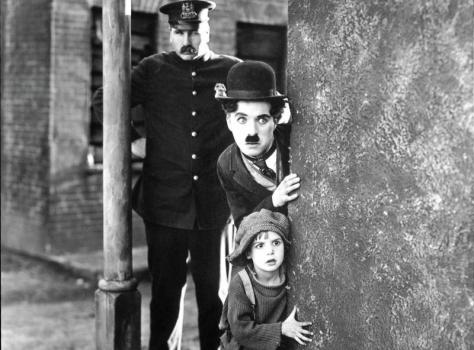
There is also something to be said about honesty. A film can be technically brilliant, well-written and beautifully performed, but if the emotion feels manufactured or mechanical, it becomes difficult for it to survive. Timelessness often comes from emotional honesty. The audience can sense when a film genuinely understands the people it is portraying. It does not necessarily have to be subtle, nor does it have to be realistic. Even a highly stylised film can be emotionally honest. This is why Chaplin’s cinema continues to work. The situations can be exaggerated, the performances can be comic, and the world can feel almost unreal, but hunger, loneliness, poverty, dignity and the desire for companionship remain real. The language of the comedy may belong to another century, but the human being inside it does not.
And most likely that is the biggest contradiction of timeless cinema. It is both deeply rooted and completely free.
It can be a film about one city, one family, one country, one historical moment or one particular social reality, and still find someone thousands of kilometres away who sees themselves in it. It can speak in a language the viewer does not understand and still make them cry. It can be made decades before someone is born and still somehow describe a feeling they have experienced. A film does not have to escape it’s time to become timeless. It can belong completely and honestly to its time and still journey beyond it.
The feeling that one has when experiencing these films is that of something familiar. And that something is us. Maybe that is what makes a film timeless. Not the fact that it refuses to age, but that something inside it refuses to disappear. Grief, love, loneliness, hope, the desire to be understood, to belong, to be remembered, to be loved, and to matter can never become outdated.
Stories may find new forms to carry these feelings. Cinema may continue to change its grammar. But if there is someone watching, there is someone feeling. And hence, the existence of timeless films.
Read More: