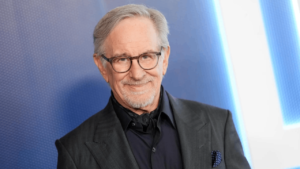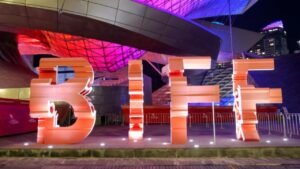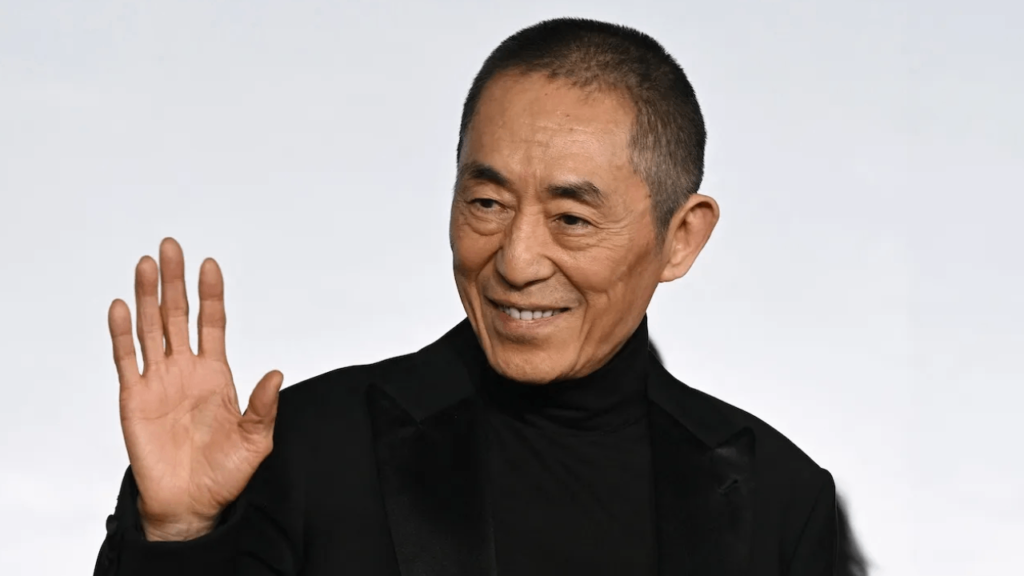
Zhang Yimou has offered the first substantial update in nearly two years on his long-gestating adaptation of Liu Cixin’s The Three-Body Problem, speaking from the stage of the Busan Cinema Center at the opening ceremony of the 31st Busan International Film Festival on Tuesday night. The Chinese filmmaker, who is serving as president of the festival’s main competition jury this year, confirmed that the project is moving steadily ahead even as it continues to take shape behind the scenes.
The Three-Body Problem is a great work of science fiction, but it’s hard to photograph, so we spent several years polishing the script,” Zhang said. “Hopefully this film will live up to everyone’s expectations and satisfy the audience.” He also revealed an unusually data-driven approach to shaping his take on the material, telling the crowd that once word got out that he would be directing the adaptation, his company collected online audience commentary, gathering roughly 400,000 fan comments in the span of a single week to help guide his creative decisions.
The project was first announced at the Shanghai International Film Festival in 2024, but little concrete news has surfaced about it since. The novel itself has had a difficult road to the screen in China. An earlier Chinese-language film adaptation, directed by Zhang Fanfan on a roughly $30 million budget, began shooting in 2015 but was shelved indefinitely following production issues and reportedly poor early cuts, never reaching theaters.
A Chinese television adaptation produced by Tencent did make it to air in 2023, while the English-language Netflix series, developed by Game of Thrones creators David Benioff and D.B. Weiss alongside writer Alexander Woo, premiered to strong reception and has since been renewed for additional seasons.
Zhang’s comments came as he opened his tenure leading Busan’s seven-member competition jury, which also includes Chinese filmmaker Bi Gan, Korean actress Moon Choi, Japanese director Kei Ishikawa, Korean director July Jung, Vietnamese producer Tran Thi Bich Ngoc and Kazakh actress Samal Yeslyamova.
The jury is tasked with judging 13 films in this year’s Competition lineup, with the Busan Award given across five categories: Best Film, Best Director, Special Jury Prize, Best Actor and Artistic Contribution. Following a recent change to Academy Awards eligibility rules, this year’s Best Film winner at Busan will be automatically submitted for Oscar consideration in the Best International Feature category, raising the stakes of the jury’s decisions considerably.
At a jury press conference the following day, Zhang also weighed in briefly on a separate controversy that has erupted in South Korea around Hur Jin-ho’s political thriller The Assassin(s), which is playing in this year’s festival lineup and has drawn criticism over its dramatization of real historical events. Zhang offered a notably diplomatic response to questions on the matter, while fellow jury member July Jung spoke more candidly, saying she felt “discouraged by this situation as a filmmaker.”
Zhang, one of China’s most celebrated living directors, has won major prizes at all three of Europe’s top festivals. His achievements include the Golden Bear at Berlin for his 1987 debut Red Sorghum, two Golden Lions at Venice for The Story of Qiu Ju and Not One Less, and the Grand Prix of the Jury at Cannes for To Live.
He also directed the opening and closing ceremonies of both the 2008 Beijing Summer Olympics and the 2022 Beijing Winter Olympics. Zhang remains prolific well into his 70s, having released three films domestically within the past year and a half that together grossed more than $1.15 billion in China alone. His history with Busan dates back to 2010, when his film Under the Hawthorn Tree opened the festival.
With the script still being refined years into development and a filmmaker of Zhang’s stature now fully leading Busan’s competition jury, The Three-Body Problem remains one of the most anticipated Chinese film projects currently in the works. However, fans continue to wait for a firmer indication of when the adaptation will actually reach theaters.
For now, Zhang’s comments provide the clearest indication yet that the project remains active. The years spent refining the screenplay, combined with the extensive audience feedback gathered by his company, suggest that the filmmaker is approaching the adaptation with considerable care. The challenge remains translating Liu Cixin’s ambitious science-fiction novel to the big screen in a way that satisfies existing fans while making the material accessible to a wider theatrical audience.