If history tells us what happened, cinema often tells us what it felt like.
Films preserve more than stories. They preserve the mood of an era. They remember the anxieties people carried, the dreams they pursued and the questions they were afraid to ask aloud. Decades after governments fall and slogans fade, a film can still tell us what hope looked like, what fear sounded like and what ordinary people believed the future might become. Perhaps that is why cinema has never remained confined to the darkness of a theatre. It spills into conversations, classrooms, newspaper columns and family dinner tables.
Filmmakers across the country were asking uncomfortable questions. They questioned authority without always naming it. They questioned institutions without delivering speeches. Questioning power was never an exception in Indian cinema. It was one of its oldest instincts. The remarkable thing is that the establishment itself has never remained the same.
Across more than a century, power has repeatedly changed its face. It has worn the uniform of an empire, the authority of a newly independent nation, the confidence of bureaucracy, the rigidity of institutions, the influence of corporations. Power kept reinventing itself. The camera simply kept looking. And wherever power settled, cinema eventually followed, not to celebrate it or condemn it automatically, but to ask a deceptively simple question.
What happens to the people living beneath it?
That question has travelled through generations of Indian filmmaking. It echoes through celebrated classics, parallel cinema, commercial entertainers and independent films alike. Sometimes it whispers. Sometimes it screams. But it rarely disappears.
To understand why today’s conversations around cinema have become so heated, we must first understand that this conversation did not begin today.
It began almost as soon as cinema itself arrived in India.
When moving images first appeared in the country in the early years of the twentieth century, India was still under British rule. Politics occupied every public space, whether people wished to engage with it or not. Laws were written elsewhere. Decisions were taken elsewhere. Even everyday life carried the unmistakable shadow of an empire.
Cinema entered this landscape as a young art form still discovering its own language.
Under colonial censorship, filmmakers learned that silence could be remarkably expressive. A glance could become resistance. A journey could become a metaphor for freedom. An ordinary individual confronting injustice could represent an entire nation’s emotional landscape without ever mentioning the Empire by name.
Perhaps that was Indian cinema’s first lesson. Power does not always need to be confronted directly. Sometimes it only needs to be observed honestly.
Then came 1947.
Freedom did not erase inequality overnight. The Empire departed, but hardship remained. Villages continued to struggle. Farmers remained burdened by debt. Workers still searched for dignity.
The camera noticed this almost immediately.
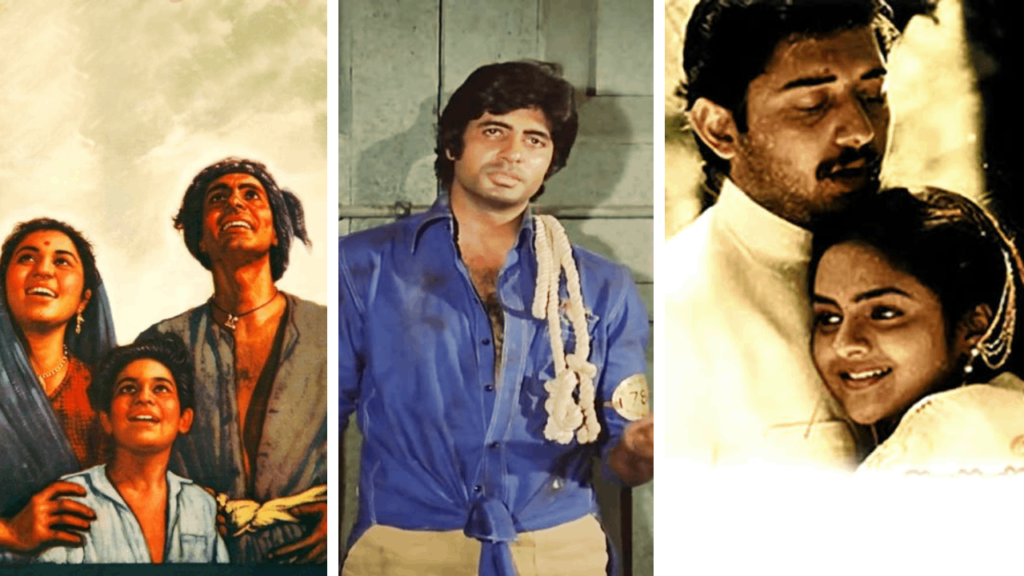
One of the finest examples arrived in 1953. Bimal Roy’s Do Bigha Zamin did not ask whether India had become independent. It asked a far more uncomfortable question.
Independent for whom?
The film follows an ordinary farmer desperately trying to save his small piece of land, but its emotional power lies in something much larger than one man’s tragedy. Roy gently reminds us that freedom measured only through national symbols means very little if ordinary lives remain trapped by the same economic realities.

Soon afterwards came Mother India.
At first glance, it appears to be a celebration of the newly independent nation. And in many ways, it is. But beneath its patriotic imagery lies another question entirely. What does nation-building mean if the people expected to build it continue carrying impossible burdens?
Around the same period, another filmmaker was looking at power from a completely different direction.
Guru Dutt was less interested in governments than in society itself. His films asked what happens when a civilisation begins rewarding ambition more than compassion, success more than sensitivity and popularity more than truth. In Pyaasa, the establishment is not Parliament or bureaucracy. It is a society that celebrates a poet only after deciding he is dead. It is a world that has forgotten how to recognise humanity while it is still alive.
By the end of the 1950s, Indian cinema had already established something extraordinary. It had survived colonial censorship.
It had welcomed Independence without becoming blind to its unfinished promises. And it had begun asking difficult questions, not only about governments, but about society itself.
The decades that followed changed India in ways few could have imagined.
Villages slowly emptied into cities. Mills rose where fields once stood. Concrete replaced open skies. A generation born after Independence inherited a country that was optimistic on paper but increasingly restless in practice.
Naturally, cinema began looking there.
By the late 1960s and early 1970s, the questions were no longer confined to farms and villages. They had arrived in crowded streets, government offices and factory gates. The Indian city became a character in itself. Impatient, unforgiving and constantly negotiating with power.
No figure embodied this mood more than the angry young man.
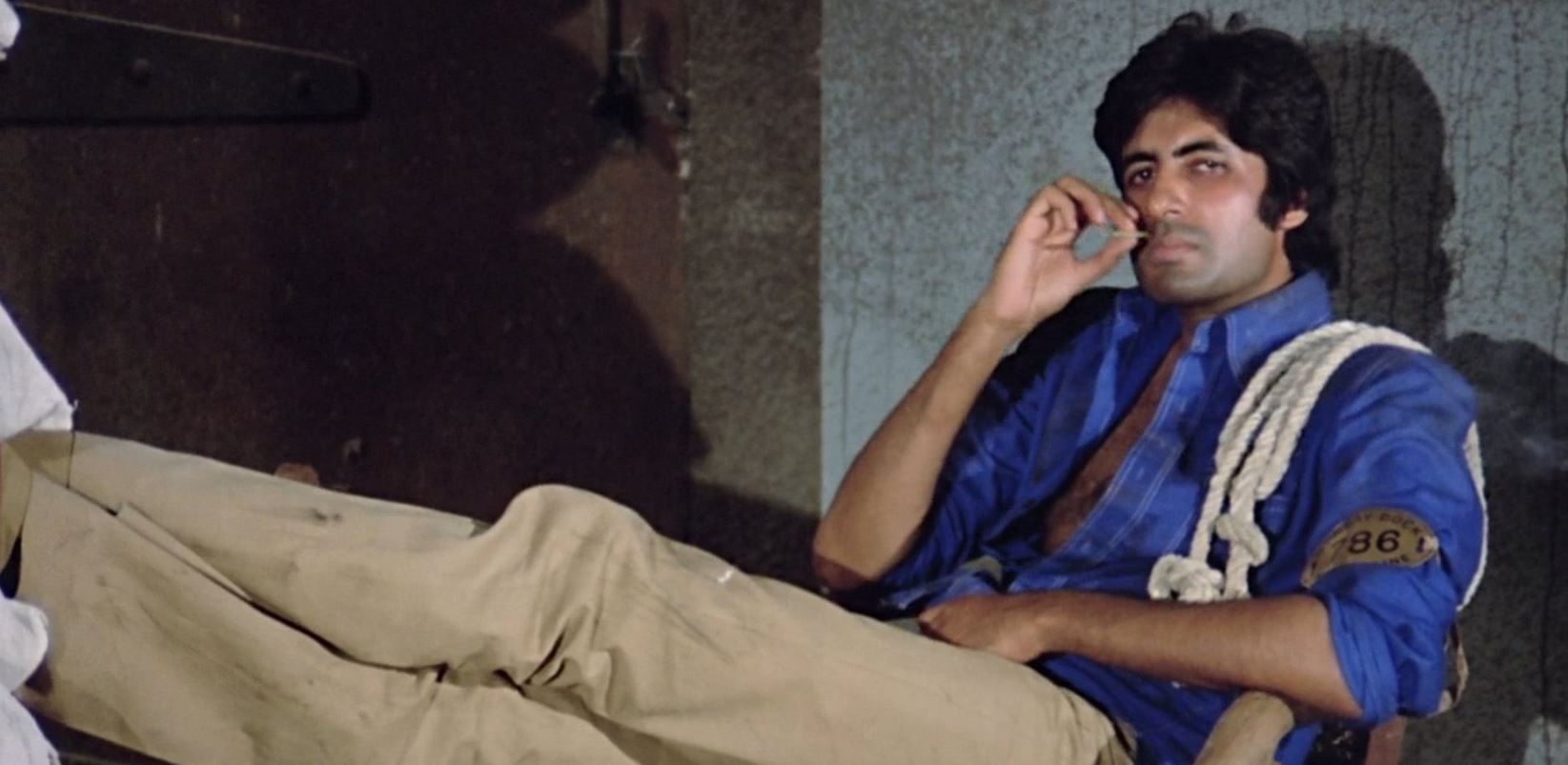
It is tempting to think that Amitabh Bachchan’s characters were angry because they were fighting villains. They weren’t. They were angry because they were fighting systems. In Deewar, the conflict is never simply between two brothers or between a hero and a smuggler. The real antagonist is something far more elusive. It lives inside economic inequality, institutional failure and broken promises. Vijay’s anger is the anger of a generation that believed honesty alone was no longer enough. The system had become so vast that defeating one individual changed very little.
For perhaps the first time in mainstream Hindi cinema, the establishment itself had become the invisible villain.
History, however, had another turn waiting.
In 1975, India entered the Emergency. Civil liberties were suspended. Censorship tightened. Newspapers fell silent. Fear entered public life in ways both visible and invisible. Cinema, unsurprisingly, felt its presence too.
But art has an unusual relationship with pressure.
The more tightly it is contained, the more inventive it becomes. Around the very years when mainstream cinema gave audiences larger-than-life heroes, another movement quietly transformed Indian filmmaking.
It would later be called Parallel Cinema.
This found conflict in everyday existence, in villages, courtrooms, police stations, government offices and homes where power revealed itself not through spectacle, but through routine.
It was here that filmmakers like Mrinal Sen, Shyam Benegal and Govind Nihalani expanded Indian cinema’s conversation with authority in extraordinary ways. Mrinal Sen questioned privilege with unusual honesty, exposing the contradictions of the urban middle class and asking uncomfortable questions about responsibility.
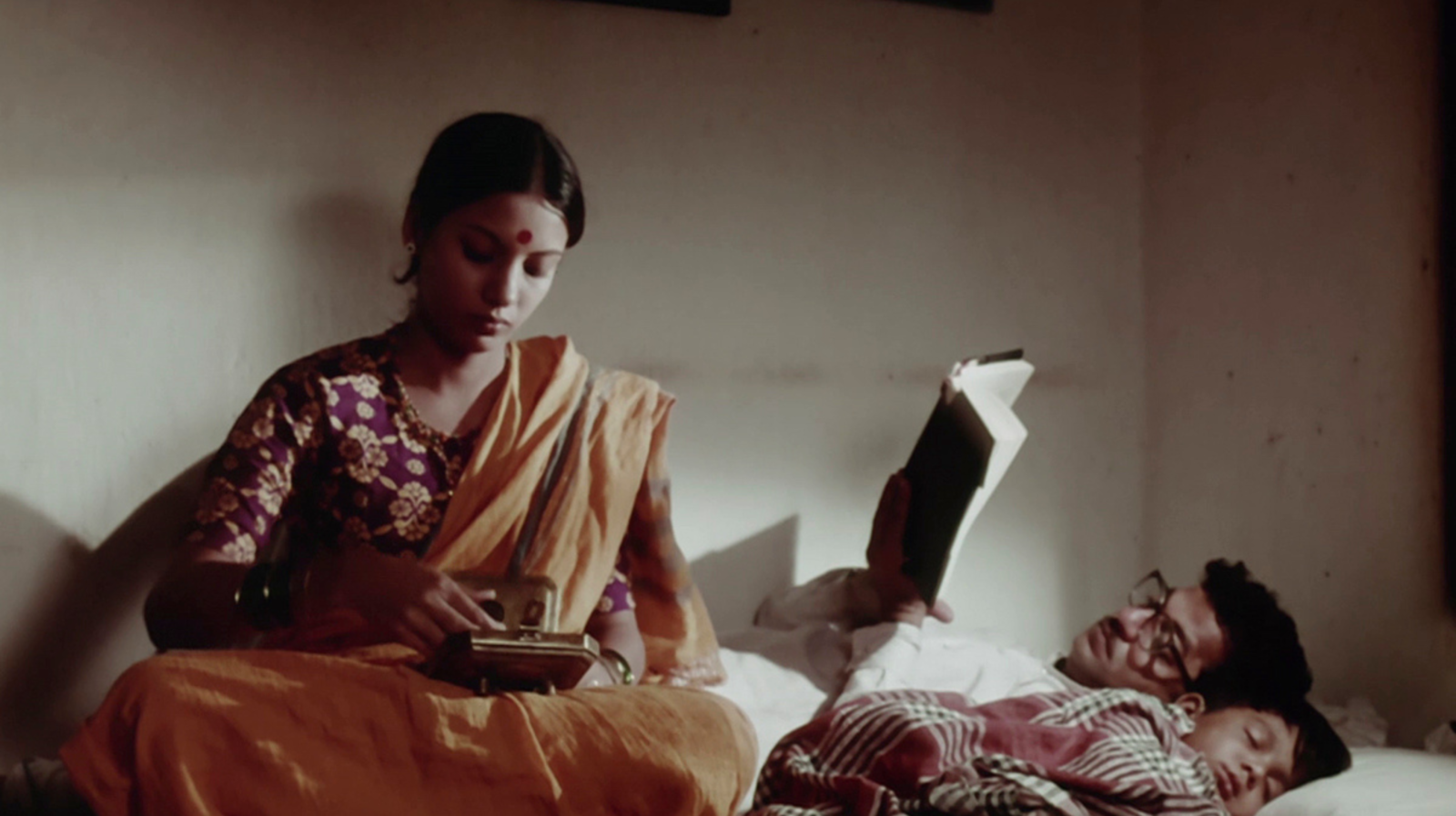
Shyam Benegal approached power differently. Whether through Ankur, Nishant or Manthan, he looked carefully at the invisible structures shaping ordinary lives. His films rarely announced who the villain was. They trusted viewers to discover that power often survives precisely because it appears ordinary.
Govind Nihalani took that conversation into darker territory. Ardh Satya remains one of Indian cinema’s most devastating portraits of institutional power.
By now, Indian cinema had travelled a remarkable distance. It had questioned colonial rule. It had questioned the promises of Independence. It had questioned bureaucracy, policing, corruption and social hierarchy. But it had never become repetitive. Because history itself refused to stand still.
The India that entered the 1990s was almost unrecognisable from the one that had entered the 1950s.
Economic liberalisation transformed the country’s imagination. Markets opened. Satellite television entered homes. Success acquired a new vocabulary. Consumption became aspiration. Corporations, advertising agencies and media networks began influencing everyday life as profoundly as governments once had.
Power had shifted again.

And, almost instinctively, the camera shifted with it. Mani Ratnam arrived at this moment with remarkable sensitivity. Whether exploring insurgency in Roja, communal violence in Bombay, political extremism in Dil Se or the emotional aftermath of war in Kannathil Muthamittal, he consistently searched for the human being standing in the middle of history.
As India stepped into the new millennium, another generation inherited a country transformed by globalisation. Their cities were louder. Their ambitions were larger. Their inequalities had become more complex.
Among the most distinctive voices to emerge was Anurag Kashyap.
His films are messy because the world they observe is messy. Order itself has become an illusion.
Looking back now, one begins to notice something almost beautiful. None of these filmmakers resemble one another. Bimal Roy and Anurag Kashyap could hardly be more different. Guru Dutt’s melancholy has little in common with Govind Nihalani’s realism.
Their cinema speaks different languages. Their aesthetics belong to different times. Their politics emerge from different moments in history. And yet, they all seem to be engaged in the same conversation.
What power does to ordinary people?
That conversation has continued for more than a hundred years. Every generation inherited it. Every generation added its own chapter. And then, almost without anyone noticing, something else began to change. Not the films.
The conversation around them.
For most of its history, Indian cinema was allowed to be messy. A film could provoke disagreement. It could anger one section of the audience and move another to tears. Critics could admire its craft while questioning its politics. Viewers could dislike its message and still acknowledge its brilliance. Films lived in that wonderfully uncertain space where art often lives between agreement and disagreement, certainty and doubt.
Today, that order often seems to have been reversed.
Long before a film reaches theatres, it has already been placed inside an ideological camp. A casting announcement becomes a political statement. A poster becomes evidence. A trailer becomes a battlefield. By the time audiences finally sit in a cinema hall, the conversation has often been happening for weeks.
The question is no longer, “What is this film trying to say?” It has quietly become, “Whose side is this film on?” It leaves little room for ambiguity. And cinema has always depended on ambiguity.
Social media, however, rewards something else. Speed. Certainty. Immediate judgement. A thirty-second clip travels farther than a two-hour film. A provocative screenshot gathers more attention than an entire narrative. Context, which cinema patiently builds over hundreds of scenes, is often replaced by a single image circulating without the story that gives it meaning.
Somewhere between television debates, trending hashtags and endless timelines, films have become symbols before they become stories. And symbols rarely receive the generosity that stories do. None of this means cinema has suddenly become political.
It always was.
The difference is that they invited us into a conversation. Today, we often arrive carrying conclusions.
We speak as though questioning authority is a recent invention, forgetting that Indian cinema has been doing exactly that for over a century. It questioned not because it belonged to one ideology. But because questioning power has always been one of cinema’s oldest responsibilities. That was never the exception. That was the tradition.
Maybe that is the real lesson hidden inside the history of Indian cinema. Power will continue changing. It always has. Empires fall. Governments come and go. Institutions evolve. Corporations rise. Technologies reshape the public sphere. Tomorrow’s establishment will almost certainly look different from today’s. And somewhere, another filmmaker will point a camera towards it.
Maybe that has always been cinema’s quiet promise. Not that it will tell us what to think. But that it will ask us to think again.
Read More:
- Spotlight: Making Injustice Heard in a World of Untouchable Power
- Harry Potter and the Question Every Reboot Must Answer
- Good Films Are Often Bad Experiences
- Top 10 Sequels That Elevated Cinema: When Hollywood Got Better the Second Time
- How much does responsibility seep into filmmaking? Or does it at all?