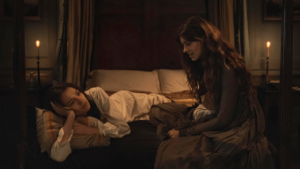
Kamal Amrohi’s 1972 classic Pakeezah, starring Meena Kumari in one of Indian cinema’s most celebrated performances, is getting a new life on the international festival circuit. The Film Heritage Foundation (FHF), in association with the Amrohi family, has completed a two-year 4K restoration of the film. The restored version will have its world premiere at Festival Lumière in Lyon, France, before a gala screening at the BFI London Film Festival at BFI IMAX. The Lyon presentation will be led by Thierry Frémaux, while FHF director Shivendra Singh Dungarpur and members of the Amrohi family will present the London screening. The festival journey comes 54 years after Pakeezah first reached theatres, making the restoration an important moment for Indian film preservation.
The restoration was far from a simple digital upgrade. When the FHF team inspected the original camera negative in 2024, it was found to have almost melted and could not be used. Other surviving elements had also suffered from faded colours, scratches and mould. Original film stills and memories shared by Kamal Amrohi’s children, Tajdar Amrohi and Rukhsaar Amrohi, helped the team understand the intended colours and visual details. The work was completed at L’Immagine Ritrovata, with the aim of making the different surviving sources look consistent.
The care invested in the project becomes even more meaningful when the history of Pakeezah is considered. The film took about 14 years to complete, beginning in 1956 and finishing in 1971. Its production changed considerably during that period, moving from black and white to colour and then Cinemascope. The long process also brought technical challenges as filmmaking technology evolved. Kamal Amrohi’s determination to realise his visual plan became a defining part of the film’s story.
The production was also closely tied to Meena Kumari’s life. As the years passed, her health deteriorated, making the final stage of filming especially difficult. Padma Khanna was used as a body double for some wider dance shots, allowing production to continue while Meena Kumari’s performance remained central to the film.
Its visual richness is particularly important to the restoration because Kamal Amrohi treated colour, costume, architecture and movement as essential parts of the storytelling. The restored presentation can therefore help viewers appreciate details that weakened copies could no longer show clearly on a large cinema screen with renewed clarity.
Music gave Pakeezah another lasting dimension. Ghulam Mohammed composed its celebrated songs, but he died before the film was completed and released. Naushad later contributed to the background score and final musical work. Songs such as “Inhi Logon Ne” and “Chalte Chalte” became inseparable from the film’s identity, alongside its elaborate sets, costumes and carefully composed images.
The film’s journey after completion was almost as unusual as its production. Pakeezah opened in February 1972 and did not immediately achieve the enormous response associated with its later reputation. Meena Kumari died only weeks after its release, and the public mourning surrounding the actress helped renew attention around the film. It subsequently grew into a major success and became a landmark of Hindi cinema.
Now, the 4K restoration offers audiences outside India the chance to encounter Pakeezah with greater visual and sonic care. Its journey from a fragile collection of surviving film elements to major international festival screens shows why preservation matters. More than five decades after its release, Kamal Amrohi’s painstaking creation is returning not merely as nostalgia, but as a carefully preserved work of Indian cinema history, ready to be seen anew by audiences around the world.