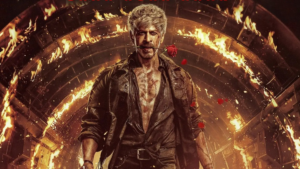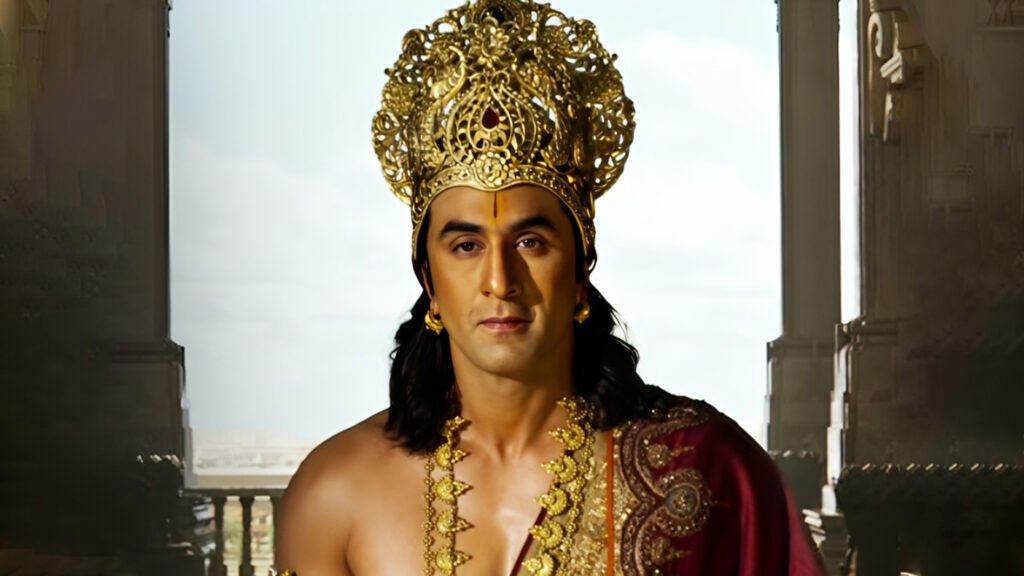
The much awaited trailer for ‘Ramayana’ has been pushed to a later date, right after its makers announced a big international deal. Prime Focus Studios revealed that Sony Pictures will now handle the film’s release across the world, in every country except India. The news came out at San Diego Comic-Con, where a version of the trailer was also shown to the crowd.
According to the new deal, Sony will manage the film’s release outside India, while Karan Johar’s Dharma Productions will handle its release within the country. Ramayana is set to arrive in two parts, with the first part expected during the Diwali season this year and the second part following next year. The film will also release in multiple languages, including a full English version, showing that the makers want it to reach far beyond the usual Indian film audience.
The film’s producer Namit Malhotra shared the update himself, saying this was a special moment for the film and that his dream of taking Ramayana to the world had finally come true through the partnership with Sony. He added that the trailer’s global release, earlier planned for the public on July 24, will now happen later so it can be launched properly as part of this bigger worldwide plan. He called it a proud moment for Indian cinema, since Ramayana would now be shown around the world just like a major Hollywood release.
This deal is being seen as one of the biggest international tie-ups an Indian film has ever had. Sony Pictures already has experience releasing global franchises like “Spider-Man, Jumanji, Ghostbusters and Venom”, and that network is expected to help ‘Ramayana’ reach audiences well outside the usual Indian diaspora crowd. The film has also reportedly become the first Indian production to get the “Filmed for Imax” label, as Imax looks to grow its presence in Indian cinema.
Reports suggest the deal is structured so that Sony isn’t paying an upfront fee to the makers. Instead, the studio is expected to put a large amount of money into marketing the film worldwide, with combined marketing spending reportedly touching close to Rs 375 crore, a scale rarely seen for an Indian release. Between production and marketing, industry estimates suggest the two Ramayana films together could cost close to Rs 3000 crore, making it one of the most expensive Indian film projects ever attempted.
Directed by Nitesh Tiwari, Ramayana stars Ranbir Kapoor as Rama, Sai Pallavi as Sita, and Yash as the demon king Ravana. The film retells the classic tale of a prince exiled from his kingdom, whose wife is kidnapped by Ravana, leading to a war between good and evil. The project brings together a big global crew, with music by Oscar winners Hans Zimmer and A.R. Rahman, action choreography by Terry Notary and Guy Norris, and production design by Ramsey Avery and Ravi Bansal. Malhotra, who also runs the Oscar-winning visual effects company DNEG, is producing the film.
The story being told in Ramayana has a history stretching back over 2,500 years. It comes from a Sanskrit epic written by the poet Valmiki, considered one of the foundational texts of Hindu literature and one of the most widely retold stories across generations in India. The tale follows the exiled prince Rama, believed to be an avatar of the Hindu god Vishnu, as he sets out to rescue his wife Sita from the demon king Ravana. Given how central this story is to Indian culture, taking it to a truly global audience through a studio like Sony is being seen as a major moment, not just for the film, but for how Indian mythology gets presented on the world stage.
With Sony now on board and a global rollout being planned, Ramayana is being positioned as one of the biggest Indian film releases in recent memory. While fans will have to wait a little longer to see the trailer, the makers say the delay is meant to set up a launch worthy of the film’s scale, one that can introduce the epic to a truly worldwide audience.
Read More:
- Spotlight: Making Injustice Heard in a World of Untouchable Power
- Harry Potter and the Question Every Reboot Must Answer
- Good Films Are Often Bad Experiences
- Top 10 Sequels That Elevated Cinema: When Hollywood Got Better the Second Time
- How much does responsibility seep into filmmaking? Or does it at all?