There are films we remember for years, and then there are films we remember through the people we were when we watched them. A film we once found beautiful may hurt us when we return to it years later. A scene that meant very little to us at one point in life may suddenly feel closer than we would like it to. The film has not changed. We have.
And somewhere in that difference lies an interesting question about cinema: when a film is made, where does it really come to exist? On the screen, where its story unfolds, or within the people who watch it, carrying away something different from what they came in with?
A film takes a long time to make. An idea first takes shape in someone’s mind, sometimes remaining there for years before finding its way onto paper. Then comes the writing, pre-production, production, post-production, and everything else that goes into bringing a film to life. There are people working in front of the camera and people working far away from it, each contributing something to its making. The time it takes varies, too. An animated film can demand years of work, while a small, intimate drama may follow a very different journey. A period film, a psychological thriller, a horror film, and a large-scale spectacle each bring their own demands. No two films take precisely the same path to completion.
Throughout this journey, the film belongs to the people making it. It carries their thoughts, their labour, their disagreements, their compromises, and the many little decisions that eventually become part of what we see. For a long time, it exists almost entirely within their world. They know the scenes that were rewritten, the performances that took several attempts, the ideas that never made it to the final cut, and the moments that came together in ways no one had anticipated.
And then the film is released. It leaves the hands of the people who made it and enters a world they can no longer control.
Of course, the film remains theirs. Its authorship does not disappear when an audience walks into a theatre. But its existence begins to mean something different. What was once a shared labour becomes an individual experience for thousands, sometimes millions, of people. The film is no longer encountered only as something that was made. It is encountered as something that is felt.
And this is where the question becomes more interesting. The screen is where a film appears, but is it where the film truly exists?
A screen can hold an image of a woman waiting for someone who may never return. It can hold the silence of a person who has lost everything they once believed in, or the face of a child trying to understand a world that has already asked too much of them. But the screen cannot contain the memories that surface, the grief that finds an unfamiliar shape, or the tenderness that arrives when we least expect it.
These things happen elsewhere. They happen within us.
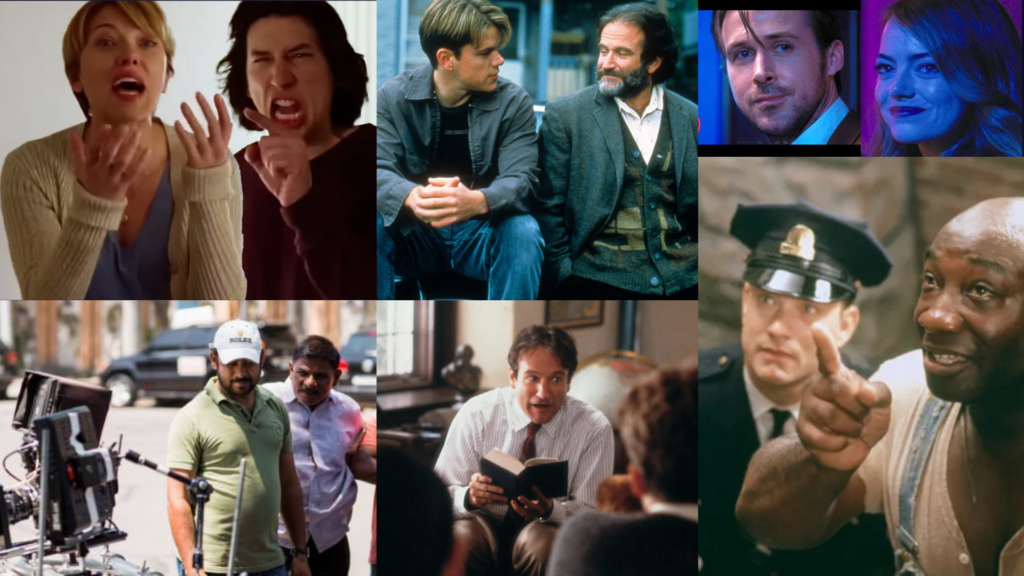
Consider a film like Awakenings (1990), directed by Penny Marshall, where the patients’ return to consciousness after years spent in a catatonic state brings with it a complicated kind of hope. The joy of rediscovering life exists alongside the sadness of knowing how much time has been lost. Depending on what we have experienced, we may find ourselves thinking about the fragility of life, the pain of watching someone suffer, or the little things we often take for granted. Similarly, Good Will Hunting (1997), directed by Gus Van Sant, may mean something different to someone who has struggled to accept love than to someone who knows what it feels like to be understood for the first time. For someone who has spent their life blaming themselves for everything they have been through, finding someone as warm, kind, and intelligent as Sean Maguire, who tells them with firmness, honesty, and genuine belief that none of it is their fault, is bound to make the film hit differently. The stories remain the same, but what they bring out in us depends on the lives we have lived.
Something similar happens with The Green Mile (1999), directed by Frank Darabont, a film that leaves us thinking about injustice, compassion, and cruelty that people can inflict on one another. Its emotional weight is shaped by the story, but also by our own understanding of unfairness. Someone who has experienced being judged without being understood may find a particular ache in its treatment of innocence. Someone who has witnessed kindness in an unforgiving world may hold on to its gentler moments. The film does not change, but what we recognise in it does.
A filmmaker can spend years creating a world, carefully deciding what the audience will see and hear. But they cannot determine every feeling that the world will produce. They cannot know the memories it will stir or the personal histories it will brush against. There is a point at which the film reaches beyond its maker’s intentions and begins to live through the people watching it.
And each person arrives with a life of their own.
We watch films with everything we have lived through, including the things we have never spoken about. We bring our childhoods, our relationships, our disappointments, our triumphs, and the people who have left us. We bring the things we are still trying to understand about ourselves. Sometimes, we bring a hurt we have spent years learning to live with or bury deep down, only to find a small part of it reflected in a scene we never expected to mean so much.
A film about separation might feel different to someone who has recently lost a loved one than it does to someone who has never experienced such a loss. A story about finding one’s place in the world might reach a person who has spent years feeling out of place in a way it does not reach someone who has always felt they belonged. A character’s quiet act of courage may seem ordinary to one viewer and feel almost impossible to another, depending on what courage has demanded of them.
Even our present circumstances become part of the experience. A film watched on a difficult evening may feel entirely different when revisited years later, after life has taken us somewhere else. We might once have understood a character’s anger and later recognise the sadness underneath it. We might have dismissed a parent’s behaviour when we were younger, only to see the same scene differently after growing older.
And sometimes, a film finds us at precisely the moment we need it. Not necessarily because it offers an answer or makes anything easier, but because it gives shape to something we have struggled to articulate. There is a certain comfort in seeing a feeling that has existed privately within us take form on a screen. It can make an emotion feel less lonely, as though someone, somewhere, has known a version of what we have been carrying. We may not share the character’s circumstances, but we recognise something of ourselves in their experience.
This is also why the same film can mean so many different things to different people without losing what makes it what it is. Our individual readings do not erase the filmmaker’s vision. Rather, they meet it. The story provides the ground on which these experiences become possible, while our own lives determine, in part, what grows there.
Of course, not every film leaves us with something profound. Some entertain us for a few hours, some give us a welcome escape, and others fade from memory almost as soon as the film is finished. There is nothing lesser about this. A film does not have to alter our understanding of life to have served its purpose. Even the joy of being transported somewhere else has its own value. But when a film does stay with us, when it finds a place in our memories and returns to us unexpectedly, its existence begins to extend beyond the time we spent watching it.
The film becomes part of our inner landscape, sometimes so quietly that we no longer recognise where its influence ends and our own thoughts begin. And this is where cinema’s relationship with time becomes especially moving. A film can be completed in a particular year, released to an audience at a particular moment, and preserved in precisely the same form for decades. Yet the people who encounter it keep changing.
The film does not need to change for its meaning to deepen. It is enough for the person watching it to have lived a little more.
So, where does a film actually exist?
It exists on the screen, certainly, in the images the filmmaker creates and the story they choose to tell. It exists in the work of everyone who helped bring it into being. But it also exists in the people who watch it, in the memories they attach to it, the feelings they discover through it, and the parts of themselves they come to recognise in its characters.
The screen gives a film its form. What we carry away gives it another kind of life. And while the images may remain unchanged, the lives they enter never do.