The trailer for Rajkumar Santoshi’s much-anticipated historical drama Batwara 1947 was unveiled on Tuesday, offering a powerful blend of action, emotion and humanity set against one of the darkest chapters in Indian history. Led by Sunny Deol, the film also stars Preity Zinta, Shabana Azmi, Ali Fazal and Karan Deol, and is scheduled to arrive in cinemas on August 14, coinciding with the Independence Day weekend.
More than a conventional Partition drama, the trailer positions Batwara 1947 as a story about compassion and coexistence amid communal violence. Based on Asghar Wajahat’s acclaimed play Jis Lahore Nai Vekhya, O Jamya E Nai, the film explores how ordinary people navigate extraordinary circumstances after India and Pakistan are divided in 1947.
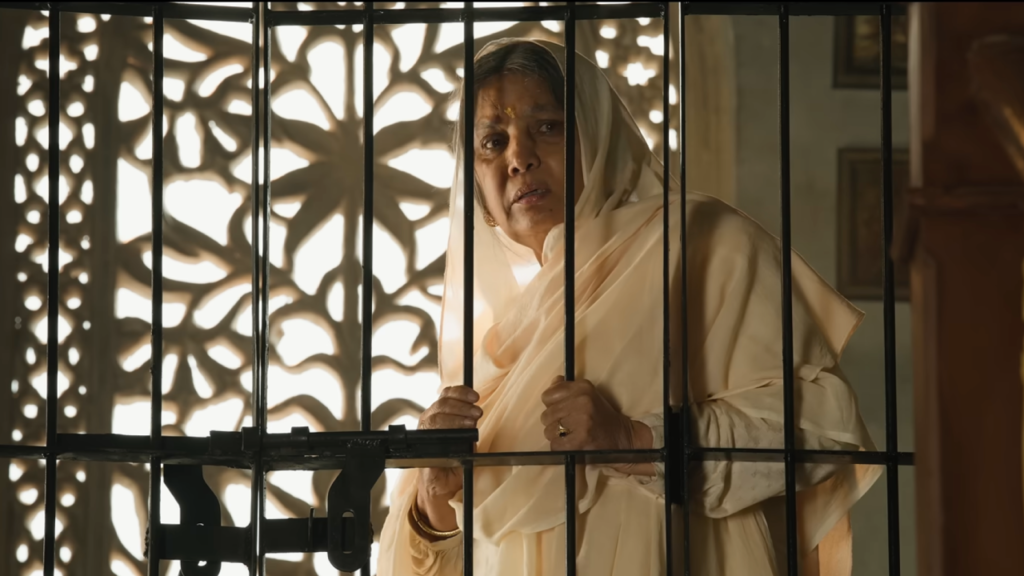
The trailer opens on a hopeful note as Sunny Deol and Preity Zinta’s characters celebrate India’s independence, only for their joy to be shattered by the announcement of Partition. Forced to leave their home, the family migrates to the newly formed Pakistan, where they are allotted a sprawling haveli that still houses an elderly Hindu woman, played by Shabana Azmi.
As communal tensions escalate, Sunny’s character refuses to abandon Shabana’s character despite growing hostility from those around them. One of the trailer’s defining moments sees him confront attackers attempting to destroy the home’s temple, declaring, “Mandir todna Islam nahi hai” (Breaking temples is not Islam).
Another emotional scene has him protecting Shabana from an angry mob while describing her as a mother beyond religious identity.
“Her bachche ka pehla mazhab maa hota hai.”
(Every child’s first religion is their mother.)
Rather than presenting Partition purely through political conflict, the trailer places its emotional weight on relationships, empathy and the human cost of displacement.
The trailer also embraces the larger-than-life screen persona that has defined Sunny Deol’s biggest hits. Packed with explosive action sequences, emotional speeches and his trademark intensity, the film inevitably evokes memories of Gadar: Ek Prem Katha and its sequel.
Sunny’s character is once again portrayed as a fearless protector who refuses to back down in the face of violence, delivering powerful dialogues while taking on overwhelming odds. His action scenes and commanding screen presence appear designed to appeal to audiences who have embraced his patriotic roles over the years.
The connection becomes even more apparent when Karan Deol, playing Sunny’s on-screen son, warns a rival about his father, saying:
“Tu mere baap ko nahi jaanta. Na ghar dekhenge na sarhad, seedha ghus ke maarenge.”
The dialogue deliberately echoes the fearless image associated with Sunny Deol’s most iconic performances, reinforcing the film’s mass-market appeal.
One of the film’s biggest attractions is the reunion between director Rajkumar Santoshi and Sunny Deol, whose collaborations on Ghayal, Damini and Ghatak produced some of Hindi cinema’s most celebrated action dramas.
Known for blending social issues with emotionally driven storytelling, Santoshi appears to be returning to familiar territory by pairing large-scale drama with intimate human relationships. While Batwara 1947 features the action expected from a Sunny Deol film, the trailer also suggests a more restrained emotional core centred on loss, family and communal harmony.
Unlike many Partition dramas, Batwara 1947 draws its story from Asghar Wajahat’s celebrated stage play Jis Lahore Nai Vekhya, O Jamya E Nai, one of the most widely performed works in modern South Asian theatre.
The play examines questions of identity, belonging and shared cultural heritage through the story of a Muslim refugee family and an elderly Hindu woman who refuses to leave her ancestral home after Partition. By adapting this literary classic, the film brings a deeply human perspective to a historical tragedy that continues to shape the subcontinent.
While Sunny Deol anchors the action, Shabana Azmi appears to be the emotional heart of the film. Her character represents those who chose to remain in their homes despite the upheaval of Partition, becoming a symbol of resilience and shared humanity.
Preity Zinta, meanwhile, marks one of her most prominent mainstream film appearances in recent years. Playing Sunny’s wife, she appears central to the family’s emotional journey as they struggle to rebuild their lives in unfamiliar surroundings.
The ensemble is rounded out by Ali Fazal and Karan Deol, who both feature prominently throughout the trailer.
The trailer successfully combines large-scale action with an emotional message of communal harmony. While it delivers the powerful dialogues and high-energy action expected from a Sunny Deol film, it repeatedly reinforces the idea that humanity transcends religious identity.
Rather than portraying communities as irreconcilable enemies, the trailer emphasises compassion, coexistence and the moral responsibility to protect the innocent, regardless of faith. That balance between commercial spectacle and emotional storytelling could become one of the film’s defining strengths when it reaches audiences.
Directed by Rajkumar Santoshi, Batwara 1947 stars Sunny Deol, Preity Zinta, Shabana Azmi, Ali Fazal and Karan Deol. The film is based on Asghar Wajahat’s acclaimed play Jis Lahore Nai Vekhya, O Jamya E Nai, with music composed by A.R. Rahman and lyrics by Javed Akhtar. Produced by Aamir Khan Productions, the historical drama is scheduled to release in cinemas on August 14, 2026, during the Independence Day weekend.
Watch Batwara 1947 Trailer:
Read More:
- Hollywood Box Office Failures 2025 Explained — What The Year’s Biggest Misses Taught Us
- From Water to Fire: How Avatar’s Visual Language Is Evolving
- Why James Cameron’s Films Refuse to Fade — Even When the Box Office Is Done
- Best Santa Claus Movies of All Time, Ranked by Impact and Legacy
- When Beauty Becomes a Prison: The Eternal Relevance of Jalsaghar