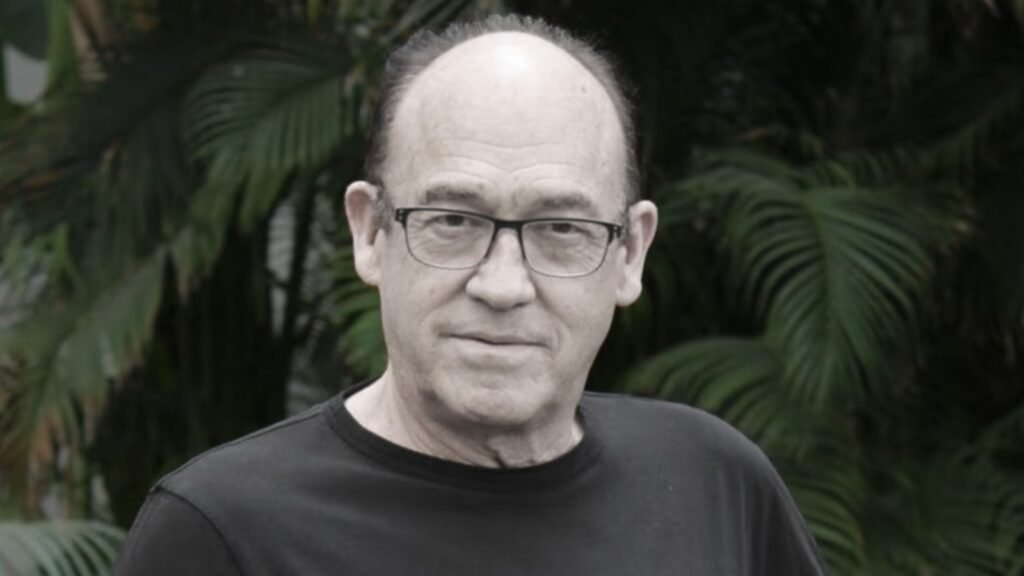
Chuck Russell, the director behind genre favorites including “A Nightmare on Elm Street 3: Dream Warriors, The Blob, and The Mask”, has died at the age of 74. His death was first reported by TMZ and later confirmed by both Variety and The Hollywood Reporter through his family and attorney.
Chuck Russell died unexpectedly on Wednesday, July 22, at his home in the San Diego area. His wife, Ania, told The Hollywood Reporter that she found him unresponsive and called 911, but fire department personnel were unable to revive him. “He was such a wonderful guy, he meant everything to me,” she said. The cause of death has not been disclosed.
Jim Carrey, who starred in Chuck Russell’s 1994 film The Mask, paid tribute to the director in a statement. “I consider it a privilege to have worked with Chuck Russell, who during the shooting of The Mask created an ebullient, childlike atmosphere of wonder and camaraderie on his set”, Carrey said. “The entire cast and crew were touched and inspired by his playfulness. Every one of us has been many years blessed by that buoyant and timeless moment. I consider The Mask one of the jewels of my creative life. Thank you, Chuck.”
Born Charles Raymond Russell in Park Ridge, Illinois, on May 9, 1952, he studied at the University of Illinois, where he wrote and directed one-act plays. He broke into Hollywood as a production assistant before writing the screenplay for the 1984 thriller Dreamscape. He made his directorial debut in 1987 with A Nightmare on Elm Street 3: Dream Warriors, a film that reinvigorated the Freddy Krueger franchise and grossed nearly as much as the first two films combined.
Chuck Russell followed that with a 1988 remake of The Blob, co-written with his longtime collaborator Frank Darabont, before directing The Mask in 1994. Made on an $18 million budget, The Mask went on to gross $351.6 million worldwide and earned an Academy Award nomination for Best Visual Effects, created in partnership with George Lucas’s Industrial Light and Magic. The film also confirmed Jim Carrey’s ability to open a blockbuster, following the earlier success of Ace Ventura: Pet Detective that same year, and marked Cameron Diaz’s feature film debut. Chuck Russell later said he had to fight the studio to cast Diaz, recalling that her chemistry with Jim Carrey in early readings was too strong to ignore.
Chuck Russell went on to direct Eraser, starring Arnold Schwarzenegger, in 1996, followed by Bless the Child with Kim Basinger in 2000 and The Scorpion King in 2002, which gave Dwayne Johnson his first major leading role. After a lengthy break from filmmaking, he returned to direct I Am Wrath with John Travolta in 2016, the Hindi-language action film Junglee in 2019, and Paradise City, reuniting with John Travolta alongside Bruce Willis, in 2022. His final film was a 2024 remake of the cult horror title Witchboard, which he also wrote.
Chuck Russell often described his decades in film with a sense of wonder. “I always compare a career in films to running away to join the circus; every movie is an entirely different experience”, he once said. “There are amazing people to work with, from truck drivers to ballerinas to movie stars, everyone is essential to the process and eternally fascinating to me.” He added that he never wanted to be defined by one genre, noting that while his horror debut led some to expect him to follow a path similar to John Carpenter’s, he found more fulfillment in exploring different kinds of stories throughout his career.
Chuck Russell is survived by his wife of nearly 19 years, his children Logan, Riley, and Carlyn, and his sister, Anne. Across nearly four decades of filmmaking, he left behind a body of work that shaped multiple generations of genre cinema, from Freddy Krueger’s most successful sequel to the role that turned Jim Carrey into one of Hollywood’s biggest comedic stars.
Read More:
- Spotlight: Making Injustice Heard in a World of Untouchable Power
- Harry Potter and the Question Every Reboot Must Answer
- Good Films Are Often Bad Experiences
- Top 10 Sequels That Elevated Cinema: When Hollywood Got Better the Second Time
- How much does responsibility seep into filmmaking? Or does it at all?