What are you and I, if not ordinary people?
Most of us wake up, go to work, return home, meet the same people, go to the same hanging spots, carry the same worries, and repeat much of it the next day. There is very little about our lives that anyone could deem cinematic. No grand adventures. No impossible odds. No villains waiting around the corner. No destiny calling our name. Just life.
Yet, some of cinema’s most unforgettable stories are built exactly from that. Not from extraordinary people doing extraordinary things, but from ordinary people simply living.
But why is that? Why do stories where seemingly nothing monumental happens often stay with us without a huge spectacle ever interrupting them?
One obvious answer is relatability.
Ordinary people often recognise fragments of their own lives in these characters. But cinema has always been about more than recognition alone. Its deeper power lies in helping us notice emotions and experiences we often overlook. A conversation over dinner. A train journey. The silence between two people. A routine that repeats every single day. None of these sound likestories when they happen in our own lives. Yet, when cinema slows down enough to observe them, they begin to reveal emotions we recognize but rarely stop to acknowledge.
Maybe that’s what fascinates us.
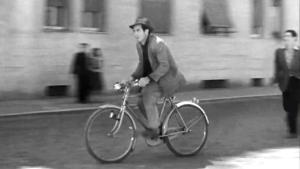
But this fascination with ordinary lives is hardly new. Some of the greatest filmmakers in cinema history built their work around people whose lives appeared remarkably uneventful. The Italian Neorealists, particularly Vittorio De Sica with Bicycle Thieves (1948), found profound drama in the struggles of working-class families after the Second World War. In Japan, Yasujirō Ozu transformed domestic routines and family conversations into deeply moving reflections on time, change, and human relationships through films like Tokyo Story (1953). In India, Satyajit Ray’s Apu Trilogy (1955–1959) discovered extraordinary emotional depth within the everyday experiences of an ordinary Bengali family, while Iranian filmmaker Abbas Kiarostami revealed how the simplest journeys and encounters could become profound meditations on life. Across countries, cultures, and generations, these filmmakers demonstrated that cinema never needed extraordinary heroes to create unforgettable stories. It simply needed an extraordinary way of looking at ordinary people.
Some films discover extraordinary stories through the quiet relationships between ordinary people.
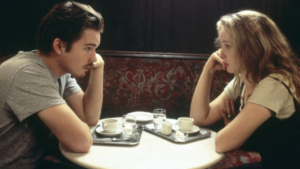
The Lunchbox (2013), an Indian Hindi-language drama written and directed by Ritesh Batra, Before Sunrise (1995), an American romantic drama film directed by Richard Linklater, Past Lives(2023), an American romantic drama film written and directed by Celine Song, Blue Jay (2016), an American romantic drama film directed by Alexandre Lehmann, and Qarib Qarib Singlle (2017), an Indian Hindi-language romantic comedy film co-written and directed by Tanuja Chandra, are all, at their core, about people meeting, talking, sharing moments, and changing each other in ways that almost, a lot of the times, go undetectable. There are no big declarations or major twists. Instead, these films trust conversations, silences, companionship and the emotions hidden behind words.
Others find remarkable depth within the repetitive routines we rarely think twice about.
Perfect Days (2023), a Japanese drama film directed by Wim Wenders, and Paterson (2016), an American drama film written and directed by Jim Jarmusch, spend much of their time observing everyday existence. Doing everyday work. Returning home. Waiting. Remembering. Sitting in silence. Absorbing life. Their stories understand that ordinary life is filled with details that if paid attention to can reveal an emotional richness far greater than spectacle ever could.
Then there are films that unveil extraordinary emotions hidden inside familiar relationships.

Piku (2015), an Indian Hindi-language comedy-drama film directed by Shoojit Sircar, Sir (2018), an Indian Hindi-language romantic drama film directed by Rohena Gera, Three of Us (2022), an Indian drama film co-written and directed by Avinash Arun, Frances Ha (2012), an American satirical romantic comedy-drama film co-written and directed by Noah Baumbach, and Annie Hall(1977), an American comedy-drama film written and directed by Woody Allen, are built upon situations millions of people experience every day. Family. Love. Friendship. Relationship. Marriage. Work. Growing older. Searching for purpose. They find conflict within conversations, growth within routine, and profound emotion within experiences that most of us would simply call life.
Perhaps no film embraces the extraordinariness of ordinary life as honestly as the Indian Malayalam-language drama film, The Great Indian Kitchen (2021), written and directed by Jeo Baby.It explores the everyday life of a woman who is a housewife. There couldn’t be a more common idea. It is the everyday reality of countless women. And oh, what an idea. The film doesn’t make ordinary life extraordinary by changing it. It simply asks us to finally look at it.
In an era where cinema is often associated with superheroes, massive franchises, visual effects, and ever-increasing spectacle, films centred on ordinary people serve as an important reminder of the medium’s original strength. They prove that compelling cinema is not measured by the scale of its action, but by the depth of its observation. Long after the spectacle fades, it is often these quiet, deeply human stories that continue to live in our memories.
Perhaps that is what all these films understand better than anything else. That extraordinary stories do not always require extraordinary events. Sometimes all they require is an extraordinary perspective towards looking at life and stories.
Cinema has the unique ability to slow time down and urge audiences into worlds they otherwise would never have entered so minutely or deeply. It allows us to spend two hours with someone we overlook in everyday life. The office worker. The housewife. The ageing father. The lonely widower. The bus driver. The domestic worker. These are people we pass every day. And this is exactly where the beauty of such stories lies. They trust that ordinary life is already enough. All they need is honesty. An honest character. An honest relationship. An honest moment. Something so familiar that it almost feels too small to notice. Until we truly pay attention to it.
Maybe that’s why these films stay with us.
Because while watching them, we aren’t looking at superheroes or larger-than-life figures. We are looking at ourselves. At our parents. At our neighbours. At the people we cross every day without giving them a second thought. Their lives may never become extraordinary in the traditional sense. Yet within their common struggles exist stories that are every bit as meaningful.
Perhaps that is the precise reason why ordinary characters often make extraordinary stories.
Not because extraordinary things happen to them. But because cinema reminds us that ordinary life has always been extraordinary enough.
Read More: