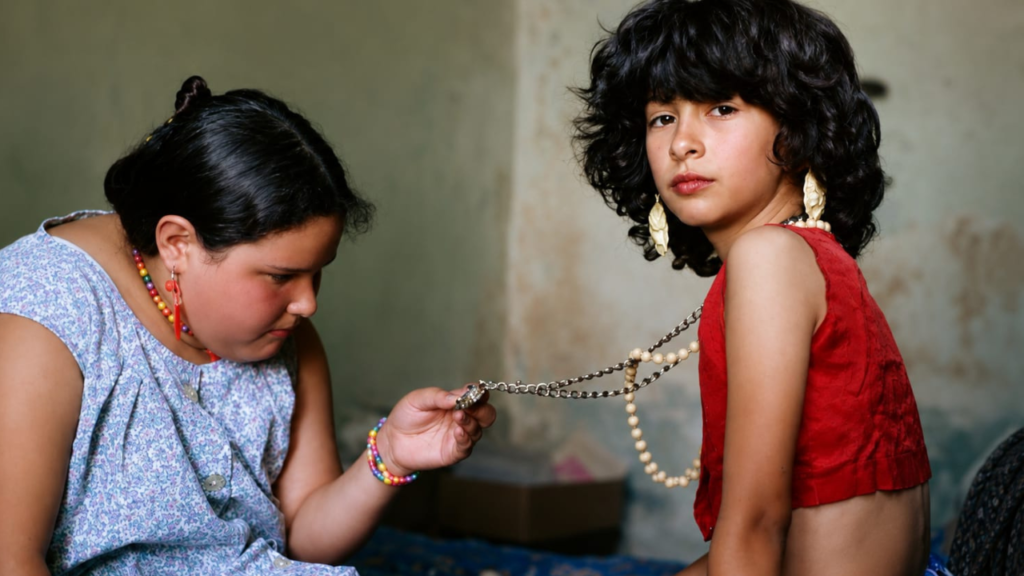
The Illusion of an Everlasting Summer, the feature directorial debut of photographer Alessandra Sanguinetti, had its world premiere at the 79th Locarno Film Festival, where it screened in the Filmmakers of the Present competition. The documentary follows Guillermina and Belinda, two inseparable cousins who have grown up on neighboring farms in Argentina’s Pampas, tracing their lives from childhood into adulthood over a period of more than two decades.
Beginning in 1999, when the girls were just nine years old, the film follows their childhood games and make-believe as they gradually give way to the realities of adult life, including work, family and motherhood. Their lives eventually take different directions, but the relationship between the two women remains at the heart of Sanguinetti’s film. Set against the rural landscape of the Pampas, the documentary offers an intimate portrait of female experience in a region historically associated with gaucho mythology.
The film grows directly out of Sanguinetti’s long-running photographic work with the two women. An Argentine-American photographer, she is known for collaborative projects that explore memory, place and the passage of time. Her work has earned her a Guggenheim Fellowship, a Hasselblad Foundation Grant and the Discovery Award at Rencontres d’Arles, while her photographs are held in public collections including the Museum of Modern Art and the San Francisco Museum of Modern Art.
Sanguinetti has documented Guillermina, known as Guille, and Belinda, or Beli, for more than 20 years. The relationship previously resulted in several photography monographs about the pair, including one that shares its title with the documentary. As a result, The Illusion of an Everlasting Summer does not simply revisit a photographic project; it extends a relationship between filmmaker and subjects that has developed over decades.
Speaking about the two women and the way she has approached their story, Sanguinetti said, “To me, they were just the centre of the universe, and I think that comes through in the work too. If you stop and pay attention to the smallest things, you can make them the centre of the world.”
The move from still photography to filmmaking also changed Sanguinetti’s relationship with the material. She described working with a moving camera as liberating compared with the control she normally exercises as a photographer. With film, she said, she could “let go of that control” and allow events to unfold more naturally.
That approach is closely connected to the trust developed between Sanguinetti and her subjects over the years. Rather than viewing herself as an outsider entering someone else’s life, she described Guillermina and Belinda as people who had become part of her own life. She also noted that, despite being the filmmaker, they retained a strong say in how the story was shaped.
Early response from Locarno has been positive, particularly toward the film’s patient and observational approach. One review described the documentary as a tender examination of how the two women move from childhood into adulthood rather than a broader sociological portrait of rural life. The film’s closing section was also singled out, when Guille and Beli travel to Paris with Sanguinetti for the opening of a gallery exhibition built around the photographs she has taken of them since childhood.
The Paris sequence brings the long-running photographic relationship into the present. The two women visit landmarks and take part in a designer photo shoot, creating a joyful moment after years of physical distance and periods of limited contact. The sequence also connects the women they have become with the girls Sanguinetti first began photographing in Argentina more than two decades earlier.
The Illusion of an Everlasting Summer was produced by director-producer Julia Solomonoff, known for Nobody’s Watching, with financing from Mubi and Impact Partners. Mubi has retained distribution rights for the UK, Ireland and North America, while Autlook has come on board as the film’s worldwide sales agent ahead of its Locarno premiere.
With a production timeline stretching across 25 years, The Illusion of an Everlasting Summer represents a rare kind of documentary filmmaking: a film shaped not only by the passage of time captured on camera, but by the long-standing trust between a filmmaker and the people she has followed. What began with two nine-year-old cousins in Argentina’s Pampas has evolved into a decades-spanning portrait of friendship, womanhood, memory and the ways lives change over time.
Read More: