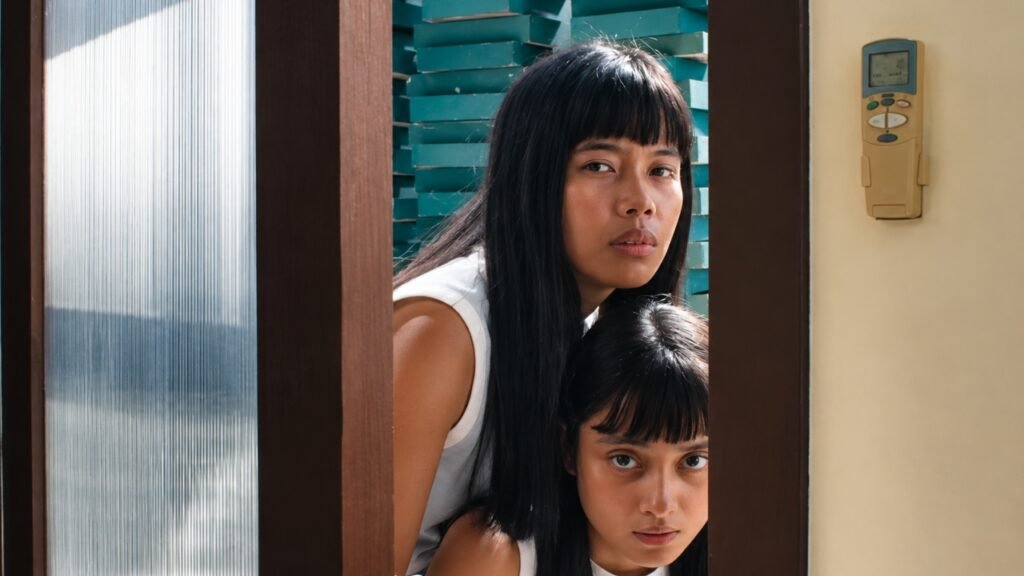
The Philippines’ 2027 Oscars campaign is taking an unusually wide shape. Rafael Manuel’s Filipiñana will represent the country in the Best International Feature Film category, while Australia has selected James J. Robinson’s Filipino-Australian drama First Light for the same category. Separately, Carl Joseph Papa’s 58th brings another Filipino story into the Documentary Feature conversation, creating a season in which Filipino filmmakers are appearing across multiple Oscar pathways.
The Film Academy of the Philippines announced Filipiñana as its official entry, selecting Manuel’s feature debut from eight films considered for the country’s International Feature submission. The committee praised the film’s artistic integrity, visual approach, cultural relevance and examination of class, power, labour and social realities. That choice gives the film substantial international recognition heading into its awards campaign.
At the 2026 Sundance Film Festival, Filipiñana won the World Cinema Dramatic Special Jury Award for Creative Vision. The jury praised Manuel’s visual command and sensitivity to the film’s setting. While the Sundance recognition does not guarantee an Oscar nomination, it gives the film an important international credential as its campaign begins.
Set entirely within an elite Manila country club, Filipiñana follows 17-year-old Isabel, a newly hired tee girl who becomes fascinated by Dr. Palanca, the club’s president. Her curiosity gradually exposes the darker structures beneath the club’s polished surface. By turning one tightly controlled social space into a portrait of a wider society, Manuel examines privilege, labour and the divisions that shape Filipino life.
For the Philippines, the selection also carries the weight of a long-running Oscar pursuit. The country has submitted films to the Academy for decades but has yet to secure an International Feature Film nomination. Filipiñana now has the opportunity to push that record forward, although the path from submission to shortlist and, ultimately, nomination remains highly competitive.
Australia’s First Light adds a striking parallel. Directed by James J. Robinson, the Philippines-Australia co-production is primarily in Tagalog and has become Australia’s official International Feature submission. Ruby Ruiz stars as Sister Yolanda, with Maricel Soriano, Rez Cortez and Kidlat Tahimik also featured. The story follows Yolanda after a young construction worker dies in unusual circumstances, prompting her to question the Church and the community she has devoted her life to serving.
The overlap is notable because two separate countries are now putting Filipino language, performers and social realities before Academy voters in the same category. First Light is also the first Australian Oscar entry to primarily feature Tagalog dialogue, giving the film added significance within Australia’s Oscar history.
Then there is 58th, Carl Joseph Papa’s animated documentary about the 2009 Maguindanao Massacre. Through Reynafe Castillo, daughter of missing photojournalist Reynaldo “Bebot” Momay, the film explores a family’s search for justice after the killing of 58 people, including 32 journalists. Because Momay’s body was never found, he remains officially unrecognized as the massacre’s 58th victim.
Papa uses rotoscope animation, archival material and documentary elements to revisit the tragedy without reducing it to statistics. At Doc Edge, the film won the 2026 Facing the Edge Award, while its festival journey has included international exposure at Rotterdam and Annecy.
Taken together, these films show three distinct ways Filipino cinema is entering the global awards conversation. Filipiñana looks at hierarchy inside an elite Manila club; First Light examines faith and institutional power in a mountain convent; and 58th uses animation to confront memory, justice and press freedom. Their worlds are deeply Filipino, but their questions reach far beyond them.
The 2027 Oscars campaign is still at an early stage, yet the visibility itself marks a meaningful moment: Filipino filmmakers are not arriving through one story or one category, but through several distinct cinematic visions. That breadth may ultimately prove important when the Academy begins narrowing the field towards nominations.
Read More: