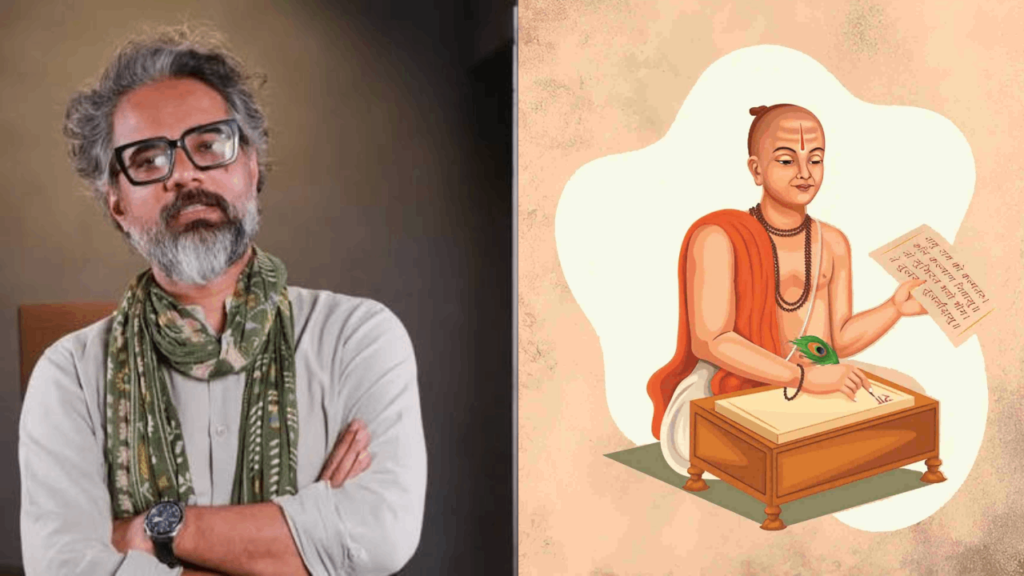
Director Vishal Chaturvedi is turning to another major spiritual figure for his next film, announcing RamBola, a feature based on the life of Goswami Tulsidas. The project follows Hanuman Ansh, which explored 20th-century mystic Neem Karoli Baba. With RamBola, Chaturvedi moves several centuries back to the 16th century, focusing on the saint, poet and author associated with the Ramcharitmanas and Hanuman Chalisa.
The title itself carries a significant connection to its subject. Although Goswami Tulsidas is the name by which the legendary figure is widely remembered, RamBola was his birth name according to historical tradition. The name is linked to the belief that “Ram” was the first word he uttered after being born. By choosing this name, the film places a personal detail from the saint’s early life at the centre of its identity.
The announcement also gives RamBola a clear thematic connection with Chaturvedi’s previous work. Hanuman Ansh focused on Neem Karoli Baba, a spiritual figure from the 20th century, while the new film reaches further into India’s past to explore Goswami Tulsidas and his enduring devotional legacy. The move suggests that Chaturvedi is continuing to explore spiritual personalities and their influence through cinema.
The making of Hanuman Ansh itself included an unexpected turn that became central to the film’s journey. The actor originally cast to portray Neem Karoli Baba fell ill during filming. Shobhinaw Satyaa, who was working as the film’s second assistant director, stepped in to take over the role. The unusual change transformed his position on the production, eventually placing Satyaa at the centre of a film that went on to achieve an extraordinary commercial result.
Made on a reported budget of just ₹2 crore, Hanuman Ansh generated ₹268 crore worldwide. The figures put the film among Bollywood’s most profitable sleeper hits, with a return of more than 6,000% on its investment. Its performance also demonstrated how strong audience response and word of mouth can take a film made on a modest budget far beyond conventional expectations.
The success brought further attention from Hombale Films, the studio associated with major blockbusters including KGF, Kantara and Salaar. Hombale Films acquired the international theatrical rights to Hanuman Ansh, giving the film a wider global distribution reach. This development relates to the earlier film and should be viewed separately from the announcement of RamBola, with no indication in the supplied material that Hombale Films is producing or financing the new project.
For Chaturvedi, RamBola therefore represents a natural creative progression rather than a continuation of the same story. After bringing a modern mystic to the screen in Hanuman Ansh, he is now looking at Goswami Tulsidas, whose writings have played a lasting role in devotional culture. The shift from Neem Karoli Baba to a 16th-century saint broadens the historical and spiritual canvas of his filmmaking.
The new film also creates an opportunity to introduce audiences to Goswami Tulsidas beyond the works for which he is best known. By placing the person behind the Ramcharitmanas and Hanuman Chalisa at the heart of the story, RamBola can explore the life and journey that shaped his enduring legacy. Following the remarkable path of Hanuman Ansh, Chaturvedi’s next project now brings another deeply significant spiritual figure into focus, giving RamBola a distinct place in his evolving body of work.
Its title further signals an intimate point of entry into the saint’s story, while the period setting opens a different historical and visual world for the filmmaker. For viewers, the combination of a familiar spiritual figure, an important literary legacy and Chaturvedi’s recent filmmaking experience makes the announcement worth following as RamBola takes shape and moves towards its eventual presentation to audiences.
Read More: